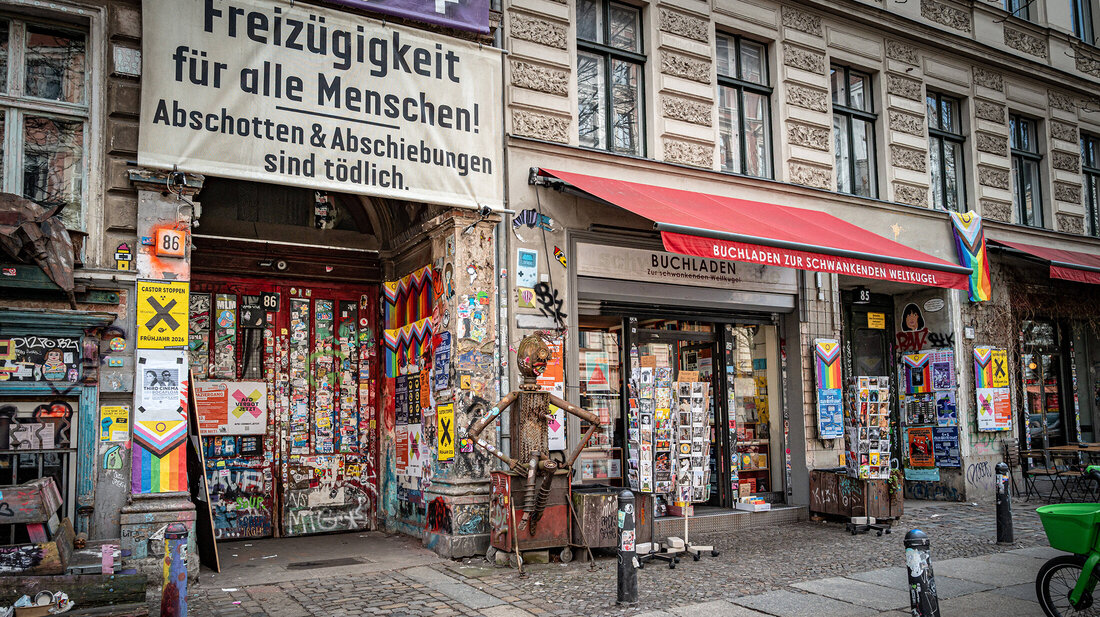
A legal battle over the intersection of state funding, political expression, and administrative oversight has culminated in a significant setback for Germany’s Minister of State for Culture and the Media. The Administrative Court of Berlin has ruled against Minister Wolfram Weimer, prohibiting him from labeling the operators of a specific Berlin bookstore as political extremists
.
The ruling follows a contentious dispute surrounding the Deutscher Buchhandlungspreis (German Bookstore Prize), where the government intervened to override the decisions of an independent jury. The court’s decision marks a critical check on the executive’s power to publicly characterize the political leanings of private businesses when those businesses are candidates for state-sponsored honors.
At the heart of the conflict is the bookstore Zur schwankenden Weltkugel
, located in Berlin. The establishment was one of three bookstores originally selected by an independent jury to receive the prestigious state award. However, Minister Weimer and his agency intervened to strike the bookstore from the list of winners, citing concerns from the Federal Office for the Protection of the Constitution (Verfassungsschutz).
The Legal Conflict: Free Speech vs. State Security
The dispute escalated after Minister Weimer gave an interview to the publication DIE ZEIT on March 18, 2026, in which he justified the removal of the bookstores by suggesting the operators held extremist views. This public characterization prompted the operators of Zur schwankenden Weltkugel
to seek legal recourse to protect their professional reputation.
Represented by attorney Dr. Jasper Prigge, the bookstore filed an urgent application (Eilantrag) with the Administrative Court of Berlin after Minister Weimer refused to sign a cease-and-desist declaration. The legal team argued that the Minister’s public statements exceeded the bounds of administrative necessity and constituted an unfair attack on the bookstore’s reputation.
The court ultimately sided with the bookstore, ruling that the Minister cannot use the term political extremists
to describe the operators. This decision underscores the high legal threshold required for government officials to make such serious allegations in the public sphere, especially when they impact the livelihood of private enterprises.
The Wider Impact on the German Bookstore Prize
The controversy extends beyond a single shop in Berlin. According to reporting by FAZ, three bookstores in total were stripped of their awards despite the jury’s recommendation:
- Zur schwankenden Weltkugel in Berlin
- The Golden Shop in Bremen
- Rote Straße in Göttingen
The decision by the Ministry of State for Culture and the Media (BKM) to override the independent jury has sparked a broader debate within the German cultural sector. Critics argue that the move politicizes a prize intended to honor the cultural and social contribution of bookstores, while the Ministry maintains that state funds and honors should not be granted to entities that potentially undermine the democratic order.
Key Legal and Administrative Takeaways
| Date | Event | Outcome/Action |
|---|---|---|
| March 18, 2026 | Interview in DIE ZEIT | Minister Weimer labels bookstores as extremist. |
| March 19, 2026 | Formal Warning (Abmahnung) | Bookstore files legal challenge and IFG request. |
| March 24, 2026 | Urgent Application | Dr. Jasper Prigge files Eilantrag with Berlin court. |
| April 2026 | Court Ruling | Administrative Court prohibits the term political extremists. |
Analysis: The Precedent for Administrative Communication
From a legal and economic perspective, this case highlights the risks government officials face when blending administrative decisions with public rhetoric. In Germany, the principle of Verhältnismäßigkeit (proportionality) requires that state actions—including public statements—be necessary and appropriate to the goal they seek to achieve.
By attempting to justify a policy decision (the removal of a prize) through the public labeling of a business as extremist
, Minister Weimer crossed a line from administrative action into personal and professional defamation. The court’s ruling serves as a reminder that even high-ranking officials are subject to the laws governing the protection of personality rights and business reputations.
The bookstore’s legal strategy, led by Dr. Jasper Prigge, also involved an Informationsfreiheitsgesetz (IFG) request—a request under the Freedom of Information Act—to uncover the internal government processes that led to the decision to strip the awards. This move suggests that the bookstores are not only fighting the public labels but are also challenging the legality of the Ministry’s internal decision-making process.
What Happens Next?
While the Administrative Court of Berlin has provided an immediate victory for the operators of Zur schwankenden Weltkugel
by silencing the specific “extremist” label, the broader question of whether the bookstores can be reinstated as winners of the Deutscher Buchhandlungspreis remains. The court’s current ruling focuses on the expression used by the Minister, not necessarily the validity of the decision to withhold the prize.
The Ministry of State for Culture and the Media has not yet announced whether it will appeal the court’s injunction or if it will reconsider the status of the three bookstores in Bremen, Göttingen, and Berlin. Further legal filings regarding the IFG request may reveal whether the “security concerns” cited by the Ministry were based on substantiated evidence or political preference.
The next confirmed checkpoint in this saga will be the Ministry’s response to the court order and the potential for further lawsuits from the other two affected bookstores, which may seek similar injunctions against the Minister’s rhetoric.
We invite our readers to share their thoughts on the balance between state security and artistic/commercial freedom in the comments below.
Keep reading