
Clinicians’ compensation rose by 4.3% throughout 2025 as medical groups navigated shifting labor market demands and operational adjustments, according to the latest annual benchmarking data from the American Medical Group Association (AMGA). This growth, which reflects a broader trend in physician and advanced practice provider (APP) remuneration, was fueled by a combination of increased clinical productivity and a genuine expansion in patient demand across various healthcare systems.
The 4.3% increase represents a stabilization in the compensation landscape, balancing the need for competitive recruitment in a tight labor market with the financial realities facing health systems. Data from the AMGA 2025 Medical Group Compensation and Productivity Survey, which analyzed input from 451 medical groups and health systems, indicates that roughly half of this compensation growth is directly attributable to measurable improvements in provider productivity. The remaining increase is tied to market-wide salary adjustments intended to retain talent amid ongoing workforce shortages.
Factors Driving Compensation Growth
The primary driver of the recorded compensation increase is a rise in clinical output. As healthcare systems continue to recover from the operational disruptions of the early 2020s, many have seen a rebound in patient volumes. According to the U.S. Bureau of Labor Statistics, the demand for physicians and surgeons is projected to grow faster than the average for all occupations through 2033, creating a competitive environment where medical groups must incentivize higher productivity to manage patient throughput.

Beyond raw productivity, the “genuine demand expansion” noted by the AMGA refers to an increase in the number of patients seeking preventative care, chronic disease management, and elective procedures that had been deferred in previous years. This surge has forced health systems to increase base salaries and performance bonuses to ensure adequate staffing levels. For many clinicians, this means that while their base compensation has risen, a significant portion of their total take-home pay is increasingly linked to their individual and group-wide performance metrics.
Comparative Analysis of Provider Pay
When comparing 2025 figures to previous fiscal periods, the 4.3% growth rate suggests a move toward more sustainable, long-term compensation models. In the years immediately following the pandemic, many systems implemented aggressive, one-time signing bonuses and retention payments to stabilize their workforce. The current data indicates a pivot away from these volatile, short-term incentives toward more predictable, productivity-based compensation structures.
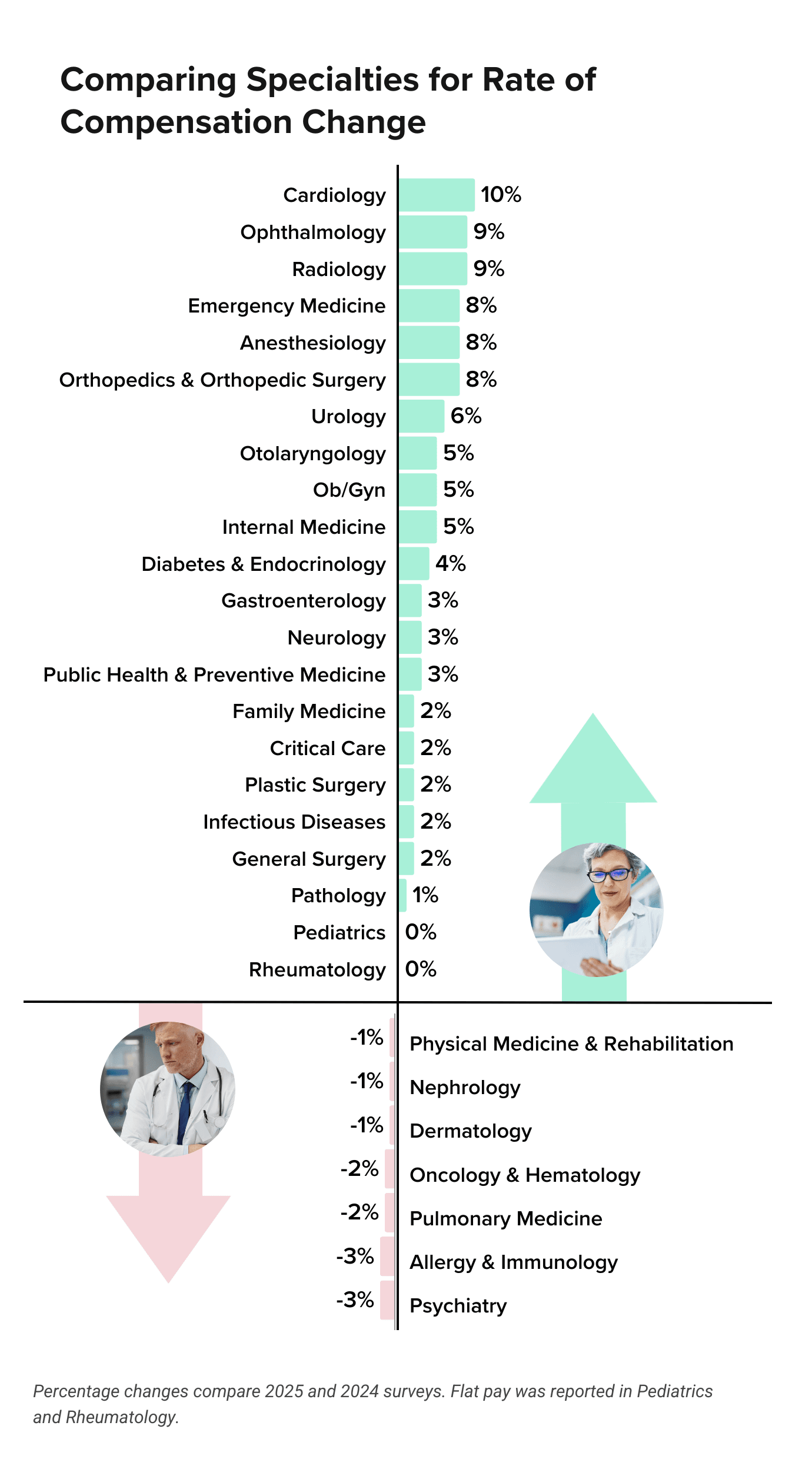
The Medical Group Management Association (MGMA), which also tracks industry compensation trends, has similarly reported that medical practices are focusing on operational efficiency to support physician pay. While the specific percentages may vary by specialty and geographic region, both organizations highlight that the competition for specialized talent remains the most significant factor in maintaining elevated salary levels. This environment requires health systems to be increasingly transparent about how compensation is calculated, ensuring that pay scales remain equitable while attracting high-performing clinical staff.
What This Means for the Healthcare Workforce
For clinicians, the current compensation climate offers both opportunity and pressure. Higher pay, driven by productivity, requires a more efficient use of time in an era where administrative burdens—such as electronic health record (EHR) documentation—remain high. According to research published by the American Medical Association (AMA), balancing clinical productivity with physician well-being is a critical challenge for health system leaders who wish to avoid high turnover rates.

For health systems, the challenge lies in maintaining these compensation levels without compromising financial solvency. Many systems are currently evaluating their payer contracts and administrative overhead to offset the rising costs of personnel. As healthcare policy continues to evolve, specifically regarding value-based care initiatives and reimbursement models from the Centers for Medicare & Medicaid Services (CMS), the link between patient outcomes and clinician compensation is expected to tighten further. This shift may lead to more nuanced compensation packages that reward quality of care alongside traditional volume-based metrics.
Future Outlook and Reporting Cycles
The healthcare sector is bracing for continued volatility in the labor market as demographic shifts—including an aging physician population and a growing number of patients with complex health needs—continue to exert pressure on supply and demand. Industry analysts expect that subsequent reports will focus heavily on how artificial intelligence and administrative automation impact provider efficiency and, by extension, future compensation trends.
The next major update on industry-wide compensation trends is expected in the first quarter of 2026, when medical groups report on their fiscal performance for the current year. These reports will be essential for understanding whether the 4.3% growth rate persists or if economic headwinds force a moderation in salary increases. Readers interested in the latest developments are encouraged to follow the AMGA official portal for upcoming releases and benchmarking updates. Please join the conversation in the comments section below to share your perspective on how these trends are impacting your local healthcare environment.
Keep reading