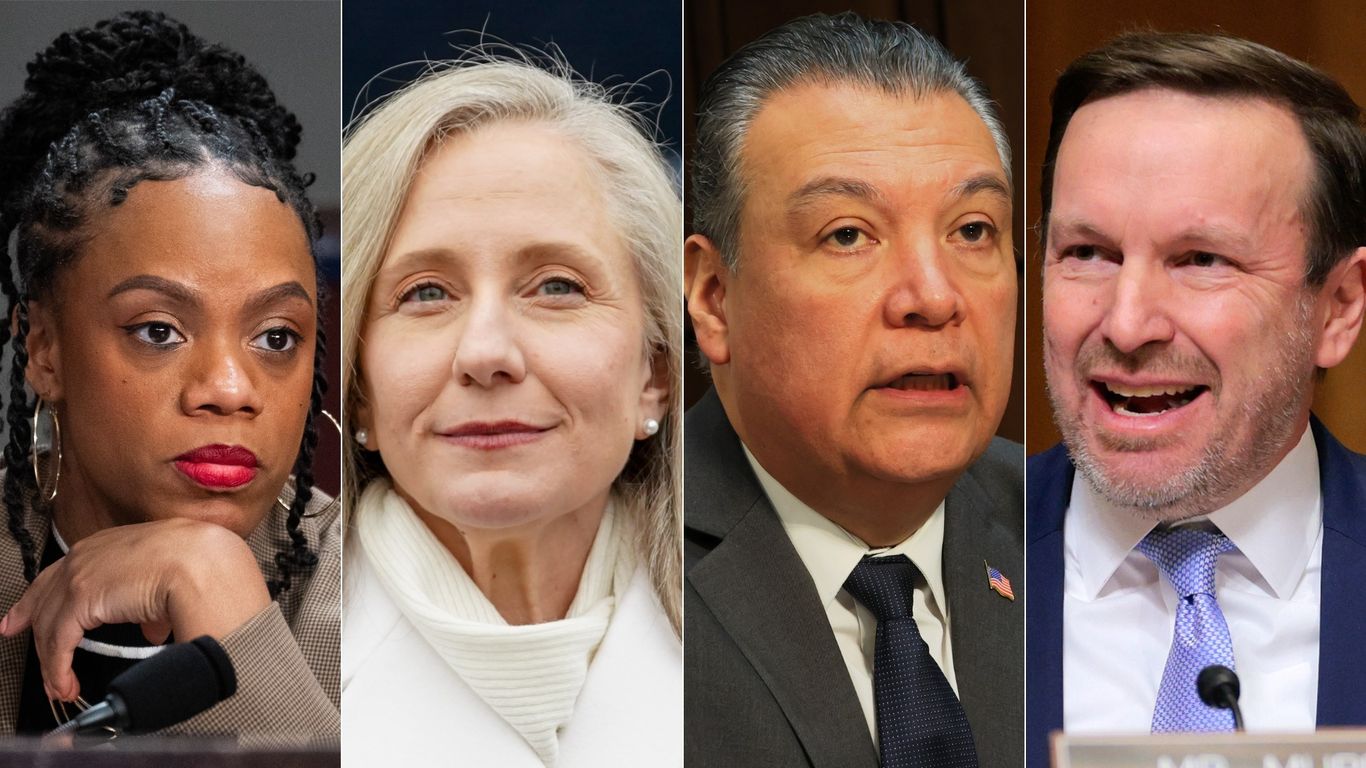
Washington D.C. – As President Donald Trump prepares to deliver his first State of the Union address of his second term on February 24th, a significant number of Democrats are signaling their intent to forgo the traditional address in favor of alternative forms of protest and outreach. This coordinated response underscores the deep partisan divisions that continue to characterize the American political landscape and highlights the Democrats’ strategy to mobilize their base ahead of crucial midterm elections. The planned responses range from delivering individual rebuttals to attending counter-rallies, demonstrating a multifaceted approach to challenging the President’s agenda.
The decision by several Democrats to abstain from the State of the Union address is not merely symbolic. It represents a deliberate effort to deny President Trump the visual unity typically associated with such events and to instead amplify dissenting voices. This year’s response is particularly notable for its decentralized nature, with various factions within the Democratic party opting to express their opposition in distinct ways. The move comes after a series of recent election wins for the GOP, prompting Democrats to actively engage and energize their coalition. The potential for a fragmented message, however, raises questions about the overall impact of their collective dissent.
House Minority Leader Hakeem Jeffries reportedly cautioned against disruptions during the President’s speech, but some members appear poised to defy that directive. This complex dynamic – a desire to challenge the President without descending into chaos – defines the Democrats’ approach to the upcoming State of the Union. The planned responses are a clear indication that the party intends to aggressively contest President Trump’s policies and narrative, even if it means foregoing the traditional decorum of the event. The situation reflects a broader trend of increasingly polarized political discourse and the willingness of both parties to utilize unconventional tactics to advance their agendas.
Official Democratic Response and Key Figures
Virginia Governor Abigail Spanberger will deliver the official Democratic response to President Trump’s address, according to a joint statement released by Jeffries and Senate Democratic Leader Chuck Schumer. The announcement positions Spanberger, the first woman to hold the governorship in the Commonwealth of Virginia, as a key figure in the party’s response. She won her gubernatorial election last year by the largest margin for a Democrat in the state in six decades, demonstrating her appeal to a broad range of voters. Spanberger previously served in the House of Representatives, having flipped a traditionally Republican seat in 2018, and brings a background in national security to the role.
The tradition of an opposition party response to the State of the Union address dates back to 1982, providing a platform for alternative perspectives on the President’s policies and priorities. The Senate website details the history of these responses, noting that while traditionally televised, more members have recently utilized social media to disseminate their rebuttals. Spanberger’s response is expected to focus on issues of economic fairness, healthcare access, and national security, appealing to a diverse electorate.
Addressing Spanish-Speaking Voters
In a move to broaden the reach of the Democratic response, California’s first Latino U.S. Senator, Alex Padilla, will deliver a response in Spanish. This strategic decision underscores the importance of the Hispanic voting bloc and the Democrats’ commitment to engaging with Spanish-speaking communities. Padilla’s involvement is particularly poignant given his recent experiences highlighting concerns over immigration policy and federal accountability. In June of 2025, Padilla was forcibly removed from a Homeland Security press conference while attempting to question the administration’s agenda on immigration, an incident that garnered national attention. As reported by Axios, the incident underscored the tensions surrounding immigration enforcement and the rights of protestors.
Padilla’s response is expected to address concerns within the Latino community regarding the administration’s immigration policies and the perceived lack of accountability for federal agents. Recent reports have highlighted Democratic frustrations over the deaths of two Minneapolis residents following interactions with ICE agents, further fueling calls for greater oversight and reform. Jeffries, in a statement, praised Padilla’s unwavering commitment to challenging the Trump administration, stating that he has “consistently fought back and proven Democrats will not bend the knee to this out-of-control administration.”
The Progressive Wing’s Response
Representative Summer Lee of Pennsylvania will deliver the response on behalf of the Working Families Party, representing the progressive wing of the Democratic party. This move underscores the growing influence of progressive voices within the party and their desire to articulate an alternative vision for the country. Lee has consistently supported progressive policies, including Medicare-for-All and the Green New Deal, and her selection reflects a commitment to amplifying these issues. Her election to the House in 2018, with the backing of the Democratic Socialists of America, signaled a shift in the political landscape of Pennsylvania.
Lee’s speech is anticipated to resonate with voters who believe Democrats need to more forcefully challenge the Trump administration and push for bolder progressive reforms. She joins a lineage of progressive figures who have delivered similar responses in the past, including Representatives Ayanna Pressley (D-Mass.), Rashida Tlaib (D-Mich.), and Delia Ramirez (D-Ill.). Her address will likely focus on issues such as economic inequality, climate change, and social justice, appealing to a base of voters who are eager for systemic change.
Counter-Rallies and Demonstrations
Beyond the official responses, a growing number of Democrats are planning to attend counter-rallies and demonstrations as an alternative to attending the State of the Union address. These events, organized by liberal groups, aim to resist the Trump administration’s policies and mobilize opposition to its agenda. Some Democrats are participating in an event called “People’s State of the Union,” while others are attending a rally dubbed “State of the Swamp.” CBS News reports that participation in these counter-rallies is increasing, indicating a growing desire among Democrats to actively protest the President’s policies.
The decision to participate in counter-rallies reflects a broader strategy of direct action and grassroots mobilization. These events provide a platform for Democrats to connect with their constituents, amplify their message, and demonstrate their opposition to the Trump administration. The decentralized nature of these protests underscores the diversity of viewpoints within the Democratic party and the willingness of its members to engage in a variety of forms of resistance. Representative Alexandria Ocasio-Cortez (D-N.Y.) is among those expected to skip the address altogether, signaling a strong rejection of the President’s policies and a preference for alternative forms of engagement.
The varied responses from Democrats to President Trump’s State of the Union address highlight the challenges of maintaining a unified front in a deeply polarized political environment. While the decentralized approach allows different factions within the party to appeal to their respective constituencies, it also risks diluting the overall message. The coming days will reveal the extent to which these diverse responses can effectively challenge the President’s agenda and mobilize the Democratic base ahead of the midterm elections. The next key date will be February 24th, when President Trump delivers his address, followed by the responses from Governor Spanberger, Senator Padilla, and Representative Lee.
We encourage readers to share their thoughts on the upcoming State of the Union address and the Democratic responses in the comments below. Your engagement is vital to fostering a robust and informed public discourse.
Keep reading