
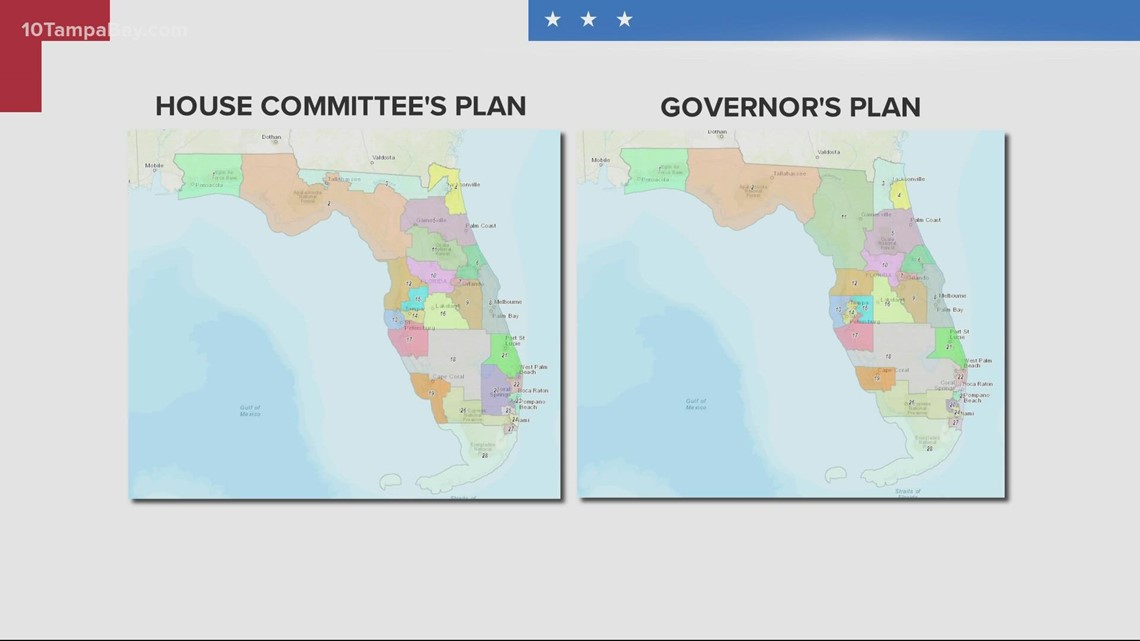
Florida Governor Ron DeSantis is facing renewed pressure from Republican leaders in Washington to redraw the state’s congressional map ahead of the 2026 midterm elections, as the GOP seeks to regain ground lost in recent redistricting battles. Senior Republicans view Florida as their last major opportunity to make gains in the ongoing partisan mapmaking war initiated by former President Donald Trump, with hopes of picking up as many as three additional seats in the Sunshine State.
The push comes after Virginia Democrats flipped potentially four seats in their favor following a referendum that passed in April 2026, shifting the national redistricting balance. According to CNN, Democrats are now estimated to have drawn 10 seats in their favor nationwide compared to Republicans’ nine, intensifying GOP efforts to counterbalance the map in states still under Republican control.
Speaker Mike Johnson told reporters on April 23, 2026, that Florida legislators should absolutely redraw the state’s maps before the midterms, emphasizing the urgency of the situation. “Florida has the right and the intention to do it. And my view is that they should,” Johnson said, adding that a special session to consider redistricting in Florida is slated to start Tuesday, though no map has been publicly released as of yet.
Despite the mounting pressure, DeSantis has remained noncommittal, with his spokesperson not responding to inquiries about the status of any redistricting plans. Key Republicans involved in the effort say they’ve been largely kept in the dark about the governor’s intentions, citing strict state rules around partisan gerrymandering that limit coordination at the state level. One source close to DeSantis’ inner circle told CNN that officials are “just kind of firing up the software now and seeing what they can draw, but it doesn’t seem like anyone has a plan.”
The Florida Constitution includes clear anti-gerrymandering provisions, known as the Fair District amendments, which were approved by voters in 2010 and require legislative and congressional districts to be compact, respect existing political and geographical boundaries, and not favor or disfavor incumbents or political parties. These constitutional constraints have historically made aggressive redistricting efforts in Florida legally precarious, with courts frequently intervening to strike down maps deemed to violate the Fair District standards.
Recent Democratic wins across multiple states have further complicated the GOP’s redistricting strategy, prompting some Republicans to warn DeSantis to tread lightly. The Hill reported that the effort faces an uphill battle due to both recent electoral setbacks and the state’s constitutional safeguards, which have led to judicial overturns of Republican-drawn maps in previous cycles.
Politico noted that all eyes are on DeSantis as Florida could make or break the GOP’s redistricting edge, describing the Sunshine State as the party’s likely best remaining chance to claw back advantages lost elsewhere. The outlet emphasized that Trump’s redistricting war now rests on DeSantis, who was once Trump’s primary rival in the 2024 presidential race.
While DeSantis has not publicly committed to a special session or endorsed a specific map, he has previously signaled openness to engaging in the redistricting process. In a separate development, he responded to an invitation from House Minority Leader Hakeem Jeffries to participate in a bipartisan dialogue on redistricting, though the nature and outcome of that exchange remain unverified in official records.
The upcoming special session, if convened, will mark a critical test of DeSantis’ balance between national Republican pressure and state-level legal constraints. Observers note that any map drawn must withstand scrutiny under both the Florida Constitution and potential federal Voting Rights Act challenges, particularly given the state’s diverse population and history of minority voting rights litigation.
As of April 24, 2026, no official congressional redistricting map has been filed by the Florida Legislature, and no committee hearings have been publicly scheduled regarding map proposals. The Florida Senate and House redistricting committees have not released draft plans or held workshops visible to the public, according to their official websites and meeting calendars.
For ongoing updates on Florida’s redistricting process, readers can monitor the Florida Legislature’s official website, where committee schedules, proposed maps, and public hearing notices are posted. The Florida Division of Elections as well provides guidance on congressional district qualifications and election timelines.
What do you suppose about the renewed push for congressional redistricting in Florida? Share your thoughts in the comments below and help spread awareness by sharing this article with others interested in voting rights and electoral politics.