
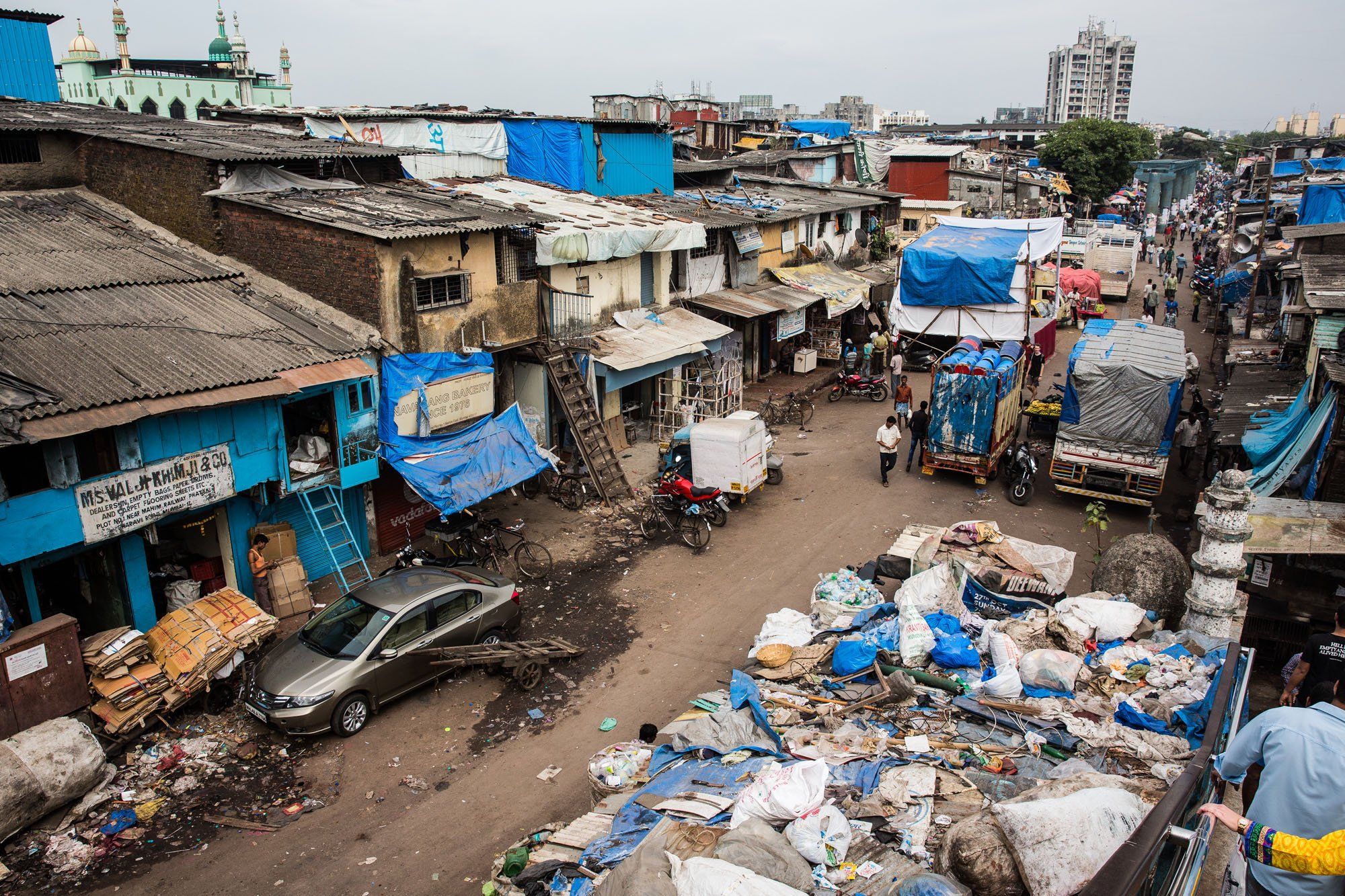
In the geographical center of Mumbai, one of the world’s most expensive real estate markets, lies Dharavi. To the casual observer or the global tourist, We see often framed as “Asia’s largest slum,” a sprawling maze of corrugated metal sheets and narrow alleys that gained international notoriety through the film Slumdog Millionaire. However, for the nearly one million people who call it home, Dharavi is not merely a place of poverty, but a powerhouse of industrial productivity and a complex social ecosystem.
The neighborhood is currently at a historic crossroads. A massive Dharavi redevelopment plan is underway, aimed at transforming this dense urban cluster into a modern residential and commercial hub. The project promises a future of high-rise apartments, integrated sanitation systems, state-of-the-art schools, and hospitals. Yet, beneath the promise of “slum-free” modernization lies a deep-seated anxiety among residents who fear that the pursuit of a skyline will erase their livelihoods and displace thousands of families.
At the heart of this transformation is a partnership between the Government of Maharashtra and the Adani Group, which won the bid to lead the redevelopment. The project is one of the most ambitious urban renewal efforts in Indian history, seeking to balance the desperate need for improved living conditions with the preservation of an informal economy that generates significant annual revenue. As the city moves toward implementation, the tension between corporate development and grassroots survival has become a focal point for human rights advocates and urban planners worldwide.
The Vision: From Shanties to Skyscrapers
The primary objective of the redevelopment is to replace the precarious housing of Dharavi with permanent, RCC (reinforced cement concrete) structures. For decades, residents have lived in extreme density, often sharing a single toilet among hundreds of people and facing chronic flooding during the monsoon season. The new plan envisions a vertical city, where residents are moved into high-rise complexes, freeing up land for parks, wider roads, and public infrastructure.
The project is being spearheaded by the Adani Group, which was awarded the redevelopment contract after a competitive bidding process overseen by the Maharashtra state government. The developer is tasked with providing free housing to “eligible” residents while creating a commercially viable district that integrates with Mumbai’s broader economic goals. This includes the creation of specialized zones for the various industries that currently operate out of home-based workshops.
Proponents of the plan argue that the current state of Dharavi is inhumane and unsustainable. By implementing a structured urban grid, the government aims to provide residents with legal tenure, clean drinking water, and formal electricity connections—basic rights that have remained elusive for generations. The integration of hospitals and schools is intended to break the cycle of poverty by providing the next generation with the infrastructure necessary for social mobility.
The Economic Engine: A Billion-Dollar Informal Economy
One of the most significant risks of the redevelopment plan is the potential destruction of Dharavi’s unique economic structure. Unlike many slums, Dharavi is a thriving industrial hub. It is home to thousands of small-scale enterprises, most notably in the leather goods, pottery, and plastic recycling sectors. Many of these businesses operate in a “home-industry” model, where the ground floor serves as a factory and the upper level as a residence.
Industry estimates suggest that the informal economy within Dharavi generates hundreds of millions of dollars in annual turnover, with products exported globally. The leather industry, in particular, is a cornerstone of the local economy, employing thousands of skilled artisans. Experts warn that moving these businesses into standardized high-rise apartments could kill the productivity of these clusters. The specialized needs of pottery kilns or leather tanning cannot be easily replicated in a 15th-floor apartment unit.
Residents argue that the “slum” label ignores the entrepreneurial spirit of the area. The proximity of suppliers, workers, and distributors creates a symbiotic ecosystem that allows minor businesses to thrive with minimal overhead. There is a growing fear that the redevelopment will prioritize luxury commercial spaces and corporate offices over the small-scale workshops that actually sustain the local population.
The Eligibility Crisis: Who Gets a Home?
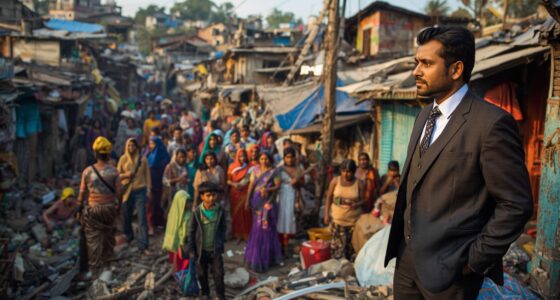
The most contentious aspect of the Dharavi redevelopment plan is the criteria for “eligibility.” Under the guidelines set by the Slum Rehabilitation Authority (SRA), only those who can prove they lived in Dharavi before a specific “cut-off date” are entitled to a free replacement home. This policy creates a precarious divide between “eligible” and “ineligible” residents.
For many, providing documentation from decades ago is an impossible task. In an informal settlement, residency is often established through social recognition rather than formal leases or utility bills. Those who arrived after the cut-off date, or those unable to produce the required paperwork, face the prospect of being evicted without any compensation or alternative housing. This has led to widespread protests and legal challenges, as thousands of families fear they will be rendered homeless in the name of progress.
The dispute over eligibility is not just a bureaucratic hurdle; it is a matter of survival. Many families have spent three generations building their lives and businesses in Dharavi. The prospect of being labeled “ineligible” after decades of contributing to the city’s economy has sparked a sense of betrayal among the community. Activists argue that the government should adopt a more inclusive approach, recognizing “de facto” residency rather than relying on rigid, often unattainable, documentary evidence.
Social Displacement and the ‘Vertical Slum’ Fear
Beyond the economic and legal battles, there is a profound social concern regarding the loss of community. Dharavi’s layout, while chaotic to outsiders, fosters deep social bonds. The narrow alleys are communal spaces where neighbors support one another, and the shared nature of the environment creates a powerful social safety net.
Urban sociologists warn against the creation of “vertical slums.” This occurs when residents are moved into high-rise buildings that lack the social infrastructure to support them. In many previous slum rehabilitation projects across India, the lack of maintenance for elevators and water pumps in high-rises has led to rapid deterioration, leaving residents in conditions that are, in some ways, worse than their original dwellings. The transition from a horizontal community to a vertical one often severs the social ties that provide emotional and financial support to the poorest residents.
The psychological impact of relocation is also significant. For many, Dharavi is not just a place of residence but a heritage. The diverse mix of ethnicities, religions, and linguistic groups living in close proximity has created a unique, multicultural identity. There is a fear that the sterile environment of a modern apartment complex will erase this organic cultural tapestry, replacing it with a homogenized urban experience.
The Political Landscape and Public Resistance
The redevelopment project has become a political lightning rod in Maharashtra. Local political factions and community organizers have frequently clashed over the terms of the Adani Group’s contract. Critics argue that the deal grants too much power to a single private entity, potentially prioritizing profit over the welfare of the residents. There are ongoing demands for greater transparency regarding the land-use maps and the specific locations where displaced residents will be rehoused.
Protests have become a common sight in the neighborhood, with residents demanding a “consent-based” model of redevelopment. They argue that no one should be moved without their explicit agreement and a guaranteed space to continue their business. The tension is further exacerbated by the perceived lack of communication between the state government and the local community leaders.
However, the government maintains that the project is the only way to solve the systemic issues of Dharavi. They point to the lack of basic sanitation and the prevalence of disease as justifications for the urgency of the plan. From the state’s perspective, the redevelopment is a necessary step in transforming Mumbai into a global financial hub, removing the visual and structural “blight” of the slum while ostensibly uplifting its residents.
What Happens Next?
The immediate future of Dharavi depends on the outcome of the ongoing biometric surveys and documentation verification process. The government is currently working to identify every resident and business owner to determine eligibility. This phase is critical, as it will dictate who receives a home and who is left behind.
The next major checkpoint will be the release of the final eligibility lists and the subsequent window for appeals. This period is expected to see a surge in legal petitions as residents fight to prove their residency. Simultaneously, the Adani Group will begin the phased demolition and construction process, which will require the temporary relocation of thousands of people to transit camps.
As Mumbai continues its trajectory toward hyper-modernization, the fate of Dharavi will serve as a global case study in urban renewal. The world will be watching to see if the city can truly integrate its most marginalized citizens into its future, or if the “modern” city is built upon the erasure of those who helped build it.
We invite our readers to share their perspectives on urban redevelopment and the balance between modernization and heritage in the comments below. Please share this article to bring more visibility to the residents of Dharavi.
Keep reading