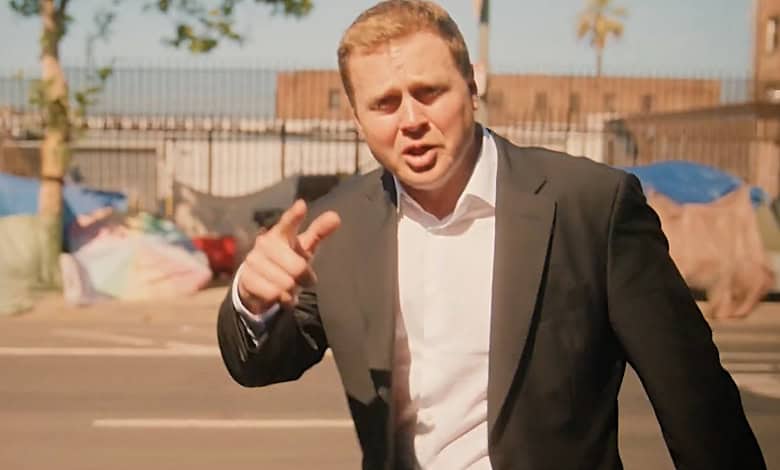
The intersection of reality television, political discourse, and late-night commentary reached a curious new milestone this week as Spencer Pratt—the television personality known for his years on The Hills—appeared on Bill Maher’s popular podcast, Club Random. While the conversation touched on a wide array of topics, the underlying tension revolved around the current state of Los Angeles and the upcoming municipal political landscape. For many observers, the question of whether Bill Maher just influenced the trajectory of the L.A. Mayor’s race for Spencer Pratt has become a flashpoint for a broader debate on how celebrity figures engage with the city’s systemic challenges.
Maher, a self-described liberal and a long-time resident of Los Angeles, has frequently used his platform to criticize what he perceives as the decline of his home city. During the hour-plus interview, the conversation shifted from general societal observations to the specific, often personal grievances Pratt has aired regarding the governance of Los Angeles. Pratt, who has been vocal about his frustrations following personal property losses in recent years, found a surprisingly receptive audience in Maher. The exchange highlighted a growing trend where non-traditional political voices are finding space in long-form media to challenge the status quo.
The Dynamics of the L.A. Political Conversation
The political landscape in Los Angeles is currently navigated by established figures such as Mayor Karen Bass, who assumed office in December 2022 following a high-profile campaign against Rick Caruso. As noted by the Office of the Mayor of Los Angeles, the city continues to grapple with complex issues including housing affordability, public safety, and infrastructure resilience. These are the very issues that Pratt has sought to emphasize in his public commentary, positioning himself as a candidate who prioritizes a “get-it-done” mentality over traditional political maneuvering.
Maher’s approach during the interview was multifaceted. At times, he utilized humor—a signature of his comedic background—to address the intensity of Pratt’s political rhetoric. However, the tone shifted when the discussion turned toward the functional failures of the city. Maher, who has often expressed a sense of “impatience” with the direction of local urban policy, appeared to find a common language with Pratt. This alignment was perhaps most visible when Maher remarked on the “authenticity” of Pratt’s frustration, suggesting that the public’s appetite for a change in leadership is reaching a boiling point.
the political discourse in Los Angeles is governed by strict campaign finance and election rules, as outlined by the Los Angeles City Ethics Commission. Any candidate, whether a career politician or an entertainment figure, must adhere to these rigorous standards to remain on the ballot. While the podcast conversation served as a high-profile platform for Pratt to share his perspectives, the actual mechanics of the election remain firmly rooted in the city’s legal and administrative processes.
Platforming and the Role of Media
The decision to host a personality like Spencer Pratt on a platform as influential as Club Random has ignited a secondary conversation about the role of “platforming” in modern media. In an era where late-night television hosts and podcasters often operate within distinct ideological silos, Maher’s willingness to engage with voices outside the typical political establishment is notable. This stands in contrast to other late-night programs, such as Jimmy Kimmel Live!, which often utilize a more pointed, partisan critique of political figures and celebrities alike.
Critics of this trend argue that providing a microphone to non-traditional candidates can trivialize the gravity of local government. Conversely, proponents argue that the “disastrous status quo,” as described by some residents, necessitates a broader range of voices to force a public reckoning with issues like homelessness and urban decay. By inviting Pratt into a space known for its liberal-leaning host, the interview challenged the conventional boundaries of political discourse in the entertainment capital of the world.
The conversation also delved into specific policy areas, such as the future of energy in California. When discussing the implementation of solar panels and renewable energy goals—a major pillar of the state’s climate strategy under the California Air Resources Board—Pratt indicated that these issues were not his primary focus given the immediate, pressing needs of the city. While Maher pressed him on these points, the lack of a traditional “gotcha” moment allowed the discussion to remain focused on the candidate’s stated priorities rather than a debate on ideological purity.
What Happens Next?
As the city looks toward the next election cycle, the influence of such media appearances remains to be seen. While a podcast interview does not equate to a political endorsement or a shift in polling data, it does signal a shift in the cultural conversation. Los Angeles residents looking for official information regarding upcoming elections, candidate filings, or voter registration can continue to track progress through the Los Angeles County Registrar-Recorder/County Clerk website.
For now, the dialogue between Maher and Pratt serves as a case study in how media personalities are increasingly stepping into the vacuum left by traditional political communication. Whether this leads to a substantial electoral impact for candidates like Pratt or simply provides a temporary injection of energy into the local discourse remains the central question for voters. As the city approaches its next major municipal milestone, the electorate will be the final arbiter of whether these unconventional campaigns gain traction or fade into the background of a crowded political field.
We invite our readers to share their thoughts on the evolving role of celebrity in municipal politics. Does the platforming of non-traditional candidates help or hinder the democratic process in a city as complex as Los Angeles? Join the conversation in the comments section below and stay tuned to World Today Journal for ongoing coverage of the issues affecting our global community.