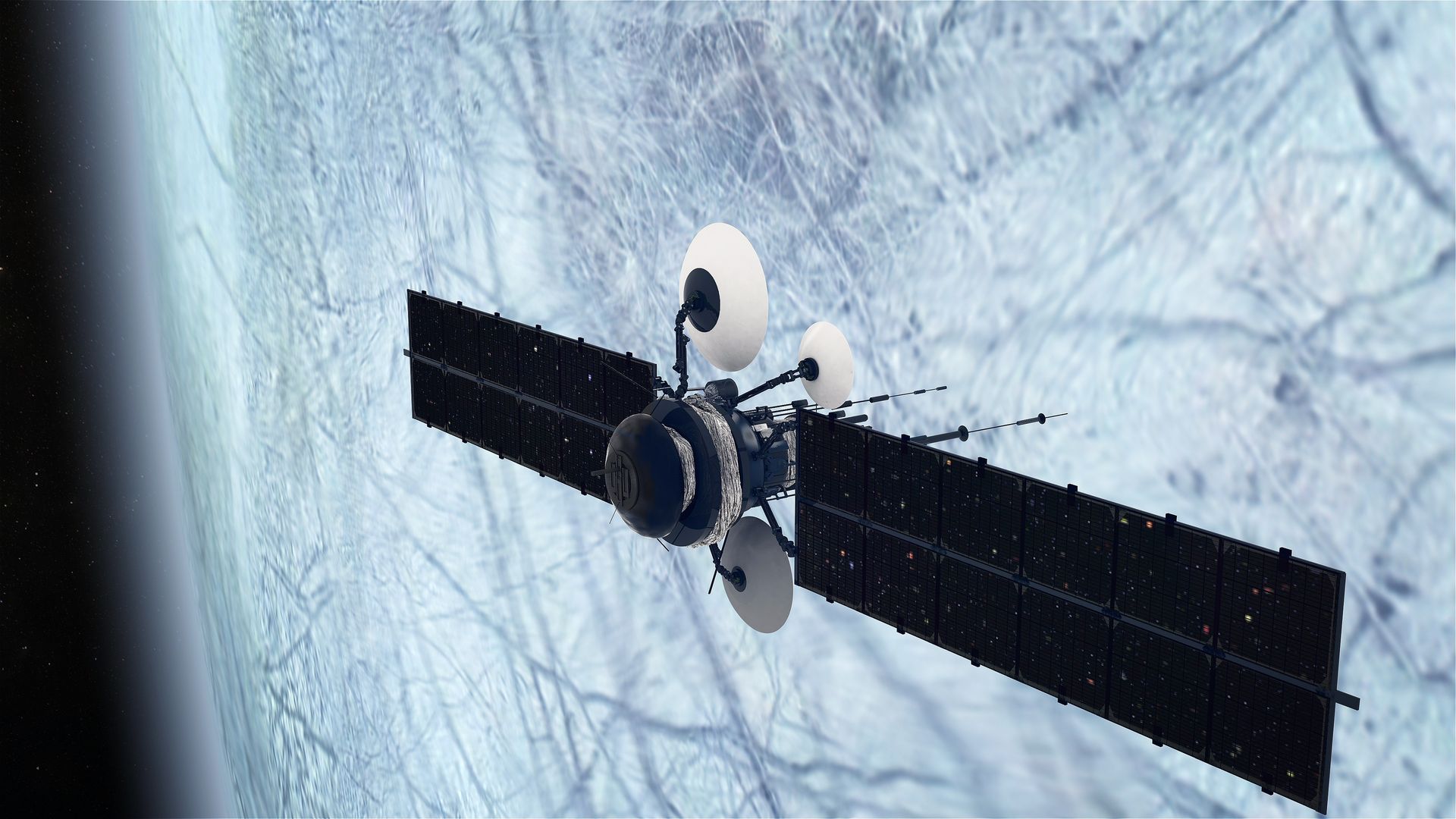
NASA is preparing to investigate whether Jupiter’s moon, Europa, possesses the chemical building blocks necessary to support life, following scientific models that suggest the moon’s icy surface may produce oxygen through radiation. The upcoming Europa Clipper mission aims to determine if the moon’s massive subsurface ocean is a habitable environment by studying the interaction between the icy shell and the radiation-heavy environment of the Jovian system.
Recent scientific discussions have focused on the process of radiolysis, where intense radiation from Jupiter strikes the surface of Europa, breaking down water molecules into hydrogen and oxygen. While much of the hydrogen is thought to escape into space, researchers suggest that oxygen may be trapped within the ice or cycled into the liquid ocean below, potentially providing a vital chemical energy source for microbial life.
The search for these chemical signatures is a primary driver for the Europa Clipper mission, which is scheduled to launch from Kennedy Space Center in October 2024. The spacecraft will perform multiple close flybys of the moon to map its composition, ice thickness, and the stability of its subsurface ocean.
How radiation creates oxygen on Europa’s surface
The mechanism for oxygen production on Europa is fundamentally different from the biological photosynthesis that sustains life on Earth. On Earth, plants and algae use sunlight to convert carbon dioxide and water into organic matter and oxygen. On Europa, the process is driven by the extreme radiation environment created by Jupiter’s powerful magnetic field.
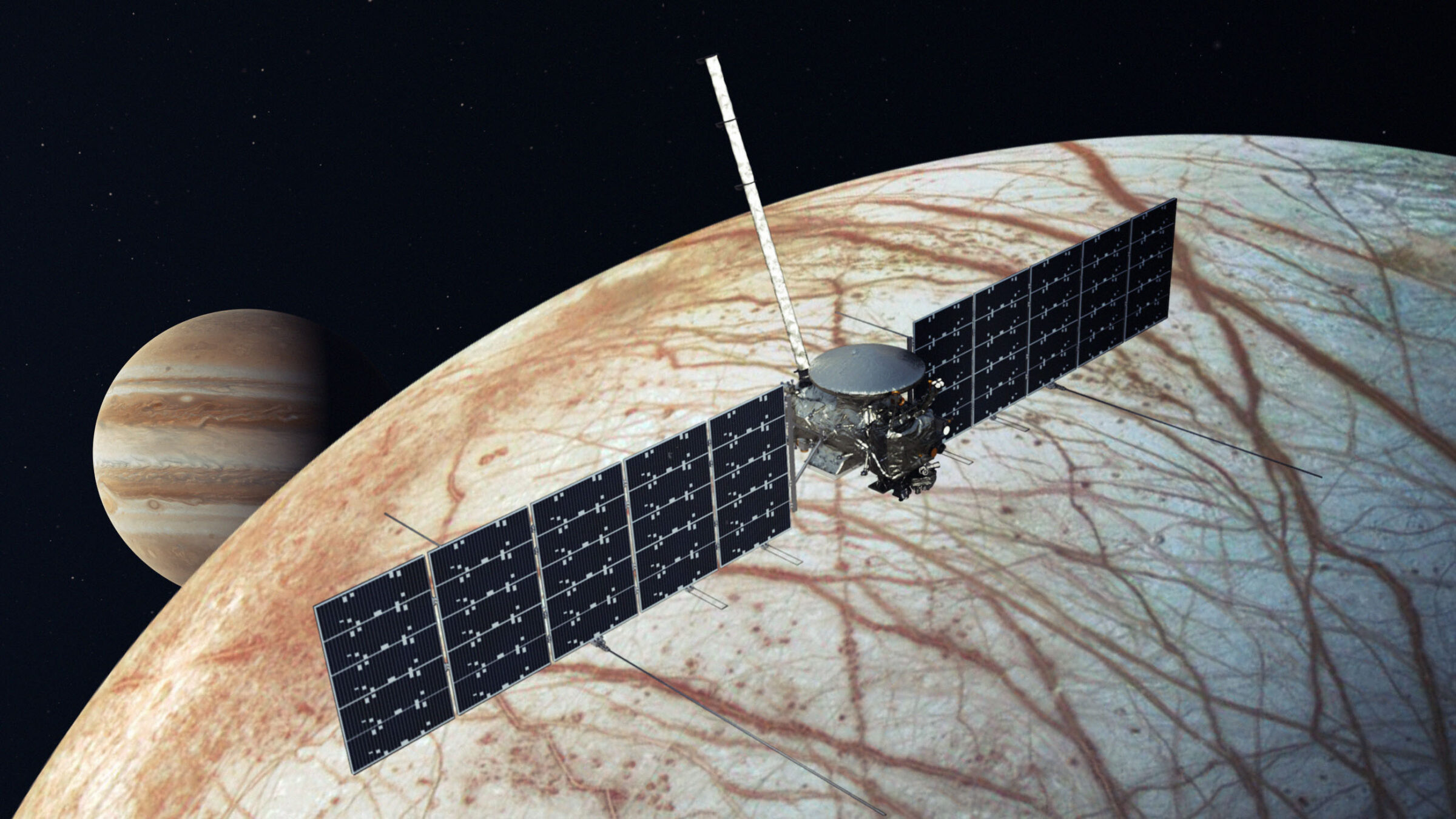
According to NASA scientists, the moon is constantly bombarded by high-energy particles. When these particles hit the water ice on Europa’s surface, they trigger a chemical reaction known as radiolysis. This process splits the H2O molecules into hydrogen and oxygen. Because the moon lacks a thick atmosphere to retain the lighter hydrogen, much of it is lost to space, while the heavier oxygen atoms remain embedded in the ice crust.
The critical question for astrobiologists is how this surface-level oxygen reaches the ocean. If the ice shell is dynamic—meaning it shifts, cracks, or undergoes “convection”—oxygen could be transported downward into the liquid water. This movement would provide a source of oxidants that could support metabolic processes in an environment that receives very little sunlight.
The role of ice-penetrating radar in detecting subsurface oceans
To understand how chemicals move through the moon’s crust, NASA is utilizing advanced radar technology. A key instrument on the Europa Clipper is the REASON (Radar for Europa Assessment and Sounding: Ocean to Near-surface) instrument. This ice-penetrating radar is designed to “see” through the moon’s thick outer shell to identify the depth of the ocean and the presence of water pockets within the ice.
Radar technology allows scientists to look for specific structural anomalies that suggest liquid water. By analyzing how radar waves bounce off different layers of ice and water, researchers can estimate the thickness of the ice shell, which is estimated to be between 10 and 25 kilometers thick. Identifying whether the ice is a solid block or contains brine-filled pockets is essential for determining how oxygen and other nutrients reach the ocean.
The ability to map these internal structures will provide the first high-resolution look at the moon’s plumbing system. This data will help scientists determine if the ocean is in direct contact with the rocky seafloor, a condition that is highly favorable for life as it allows for chemical exchanges between the water and minerals.
Can life travel between Earth and Europa?
The possibility of life on Europa has led some researchers to revisit the theory of panspermia. Panspermia is the hypothesis that life exists throughout the Universe and is distributed by space debris, such as meteorites or comets. While this remains a theoretical framework, the idea that life could be transferred between planetary bodies is a subject of ongoing study in astrobiology.
Some scientists have investigated whether organic compounds or even microbial life could survive the transit between Earth and the Jovian system. However, the extreme radiation environment of Jupiter poses a significant barrier to any biological material attempting to survive in the outer solar system. Instead of direct transfer, the scientific community is more focused on “convergent evolution”—the idea that if the chemical conditions on Europa are similar enough to Earth’s early oceans, life might emerge independently using the available oxygen and minerals.
The focus of current exploration is not on finding “aliens” in the traditional sense, but on identifying “habitability.” This means searching for the presence of three essential components: liquid water, essential chemical elements (such as carbon, hydrogen, nitrogen, oxygen, phosphorus, and sulfur), and an energy source.
Comparing Europa and Earth’s aquatic environments
While Europa’s ocean may share similarities with Earth’s oceans, the fundamental drivers of their chemistry are vastly different. The following table compares the primary environmental factors of both worlds:
| Feature | Earth Oceans | Europa Oceans |
|---|---|---|
| Primary Water Source | Surface precipitation and melting ice | Subsurface melting and internal heat |
| Oxygen Production | Biological photosynthesis | Radiolysis of surface ice |
| Energy Source | Solar radiation | Tidal heating and chemical gradients |
| Atmospheric Pressure | 1 bar (Standard) | Extremely thin (near-vacuum) |
| Main Chemical Driver | Sunlight and carbon cycle | Jupiter’s radiation and tidal forces |
What to expect from the NASA Europa Clipper mission
The Europa Clipper is not a lander; it is an orbiter designed to perform high-speed, close-proximity passes. This approach allows the spacecraft to gather massive amounts of data without the high risk of landing on the unpredictable, cracked surface of the moon.
The mission will utilize a suite of instruments to conduct a multi-faceted investigation:
- MASPEX (Mass Spectrometer for Planetary Exploration): This instrument will analyze the chemical composition of the thin atmosphere and any plumes of water vapor that might be erupting from the surface.
- E-THEMIS (Europa Thermal Emission Imaging System): This thermal camera will look for “hot spots” on the surface, which could indicate areas where warmer water is close to the surface.
- Europa Imaging System (EIS): This high-resolution camera will capture detailed images of the surface to study the cracks, ridges, and geological features that suggest ice movement.
By combining data from these instruments, NASA aims to build a complete model of Europa’s habitability. Even if the mission does not find direct evidence of life, the data will confirm whether the moon possesses the necessary environment to sustain it, which will dictate the target for future landing missions.
The next major milestone for the mission will be the launch window in October 2024. Following launch, the spacecraft will undergo a multi-year journey through the solar system, utilizing gravity assists from Mars and Earth to reach the Jovian system by 2030.
What do you think about the possibility of life in Europa’s subsurface ocean? Share your thoughts in the comments below and share this article with your fellow space enthusiasts.