
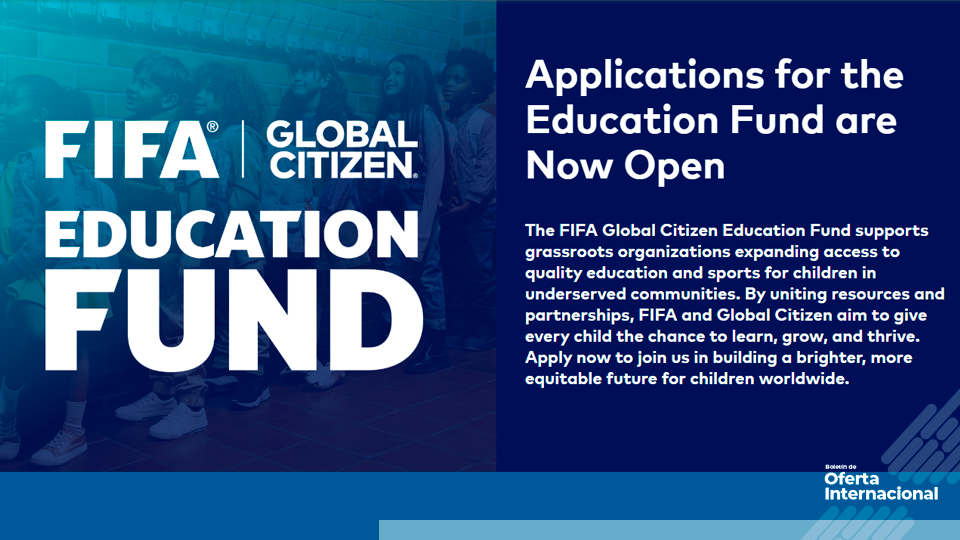
The intersection of global athletics and social development has found a new, ambitious focal point. In a strategic move to leverage the massive visibility of international football, the FIFA Global Citizen Education Fund has officially launched its first cohort of grantees, signaling a concerted effort to dismantle barriers to learning for children in the world’s most underserved communities.
Established through a partnership between FIFA and Global Citizen, the Fund is designed to mobilize funding and global attention to support community-led solutions. By integrating the universal appeal of sport with the critical necessity of quality education, the initiative seeks to create safe, supportive environments where children can thrive regardless of their socio-economic background.
From a financial perspective, the Fund operates with a clear and aggressive target. The initiative aims to raise US$100 million by the end of the FIFA World Cup 2026™. This capital is earmarked to expand access to quality education and sport, ensuring that the legacy of the tournament extends far beyond the pitch and into the classrooms of the developing world.
As an economist, I view this as more than a philanthropic gesture; it is an investment in human capital. By targeting grassroots organizations that understand local challenges, the Fund bypasses traditional bureaucratic bottlenecks, directing resources to those already delivering meaningful change on the ground.
Mobilizing Capital: The Road to $100 Million
The financial trajectory of the FIFA Global Citizen Education Fund is already showing significant momentum. According to official FIFA communications, the Fund has already raised over USD 30 million. This initial capital has been aggregated from a diverse array of contributors, including philanthropic foundations, leading global brands, corporations, and individual donors.

The funding model is particularly noteworthy for its diversified revenue streams. Beyond traditional philanthropy, the Fund is tapping into the commercial ecosystem of major sporting and cultural events. Support is being generated from proceeds tied to high-profile occurrences, including the FIFA Club World Cup 2025™ and various global concert tours, effectively turning entertainment revenue into educational equity.
This approach reflects a modern shift in corporate social responsibility (CSR), where the “eventization” of charity allows organizations to capture transient global attention and convert it into long-term structural support. For the Fund to reach its $100 million goal by 2026, it will likely continue to lean on these high-visibility partnerships to drive both awareness and liquidity.
Empowering Grassroots Solutions and Addressing Educational Gaps
The announcement of the first cohort of grantees marks the transition from fundraising to implementation. The selected organizations represent a wide spectrum of educational strategies, focusing on strengthening education systems and creating safe spaces for growth. The Fund’s strategy is explicitly grassroots-oriented, prioritizing organizations that operate within the communities they serve.
The urgency of this mission is underscored by staggering statistics in certain regions. In some of the communities where the selected grantees operate, fewer than 15% of students complete secondary school. This profound gap in educational attainment is often driven by a combination of systemic poverty, inequality, and a lack of basic resources, creating a cycle of limited opportunity that is tough to break without targeted external investment.
By providing grants to these local entities, the FIFA Global Citizen Education Fund is betting on the efficacy of community-led interventions. These organizations are often better equipped to navigate local cultural nuances and logistical hurdles than centralized international agencies, ensuring that the funding reaches the children who need it most.
The Synergy of Sport and Learning
The philosophical core of the initiative is the belief that sport can serve as a gateway to education. Football, in particular, possesses a unique ability to unite diverse populations and inspire youth, providing a hook that can be used to engage children who might otherwise be alienated from formal schooling.
FIFA President Gianni Infantino emphasized this connection, stating that football has the power to unite, inspire, and create lasting change. Through the Fund, FIFA is attempting to put this power into action, investing in the future of children globally by linking the passion for the game with the pursuit of knowledge.
From an economic development standpoint, this synergy is highly efficient. Sport provides the incentive and the social infrastructure—such as teams, coaches, and organized schedules—which can then be leveraged to deliver educational programming. When children are drawn to a community center for football, the barrier to introducing literacy or numeracy programs is significantly lowered.
Key Objectives of the FIFA Global Citizen Education Fund
| Metric | Detail |
|---|---|
| Total Funding Goal | US$100 million by the end of FIFA World Cup 2026™ |
| Current Amount Raised | Over USD 30 million |
| Primary Focus | Grassroots organizations in underserved communities |
| Key Target | Improving secondary school completion rates (some areas currently <15%) |
| Funding Sources | Philanthropic foundations, brands, corporations, and event proceeds |
Economic Analysis: The Long-Term Impact of Educational Access
As we analyze the potential impact of this fund, it is essential to consider the “multiplier effect” of education. In economic terms, increasing the percentage of students who complete secondary school is one of the most reliable ways to increase a nation’s GDP per capita. Education enhances labor productivity, fosters innovation, and reduces the long-term dependency on social safety nets.
The decision to focus on “underserved communities” is a strategic move to address the most acute market failures in education. When the state cannot provide basic schooling, the result is a loss of human potential that hampers regional economic growth. By filling these gaps through a public-private partnership, the FIFA Global Citizen Education Fund is essentially funding a baseline of human capital that will pay dividends for decades.
the integration of sport helps address the “hidden costs” of education. For many children in poverty, the lack of a safe environment or a reason to attend school is as great a barrier as the cost of books. By providing a supportive, sport-centric environment, the Fund addresses the psychological and social barriers to entry, making the educational investment more likely to succeed.
The challenge moving forward will be scalability and sustainability. While initial grants can spark change, the long-term goal must be to integrate these grassroots successes into national education frameworks to ensure that the progress continues after the World Cup 2026 spotlight fades.
The next major milestone for the initiative will be the continued rollout of grants and the scaling of funding as the world moves closer to the 2026 tournament. We expect further updates on the impact of the first cohort of grantees as their programs begin to yield measurable results in student enrollment and completion rates.
Do you believe global sporting events are the most effective vehicle for social change, or should these funds be managed through traditional governmental channels? Share your thoughts in the comments below.