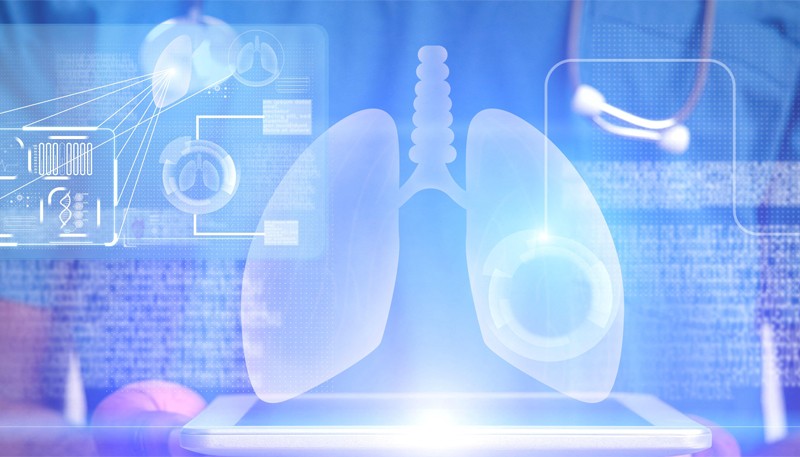
In the high-stakes environment of transplant medicine, every minute counts. For patients suffering from end-stage lung disease, the gap between the number of available donor organs and the thousands of people on transplant waiting lists remains a persistent, life-altering challenge. However, a transformative shift is occurring in how clinicians evaluate donor lungs, moving away from subjective visual assessments toward a data-driven future: the development of digital twins for respiratory medicine.
By leveraging multimodal data captured during ex vivo lung perfusion (EVLP)—a sophisticated technique that sustains donor lungs outside the body to assess their function—researchers are creating virtual models that mirror the physiological behavior of real organs. This innovation offers a new frontier in personalized medicine, providing transplant teams with a predictive tool to model lung function and potential therapeutic efficacy before an organ ever reaches the patient.
As we navigate this intersection of biotechnology and artificial intelligence, This proves essential to understand what these digital counterparts represent. They are not merely static images; they are dynamic, computational representations that integrate complex datasets—ranging from biochemical markers to airflow mechanics—to simulate how a donor lung might perform in a specific recipient. This approach is gaining traction as a way to reduce organ wastage and improve long-term graft survival rates, according to recent developments in clinical research initiatives monitored by organizations like the European Society for Organ Transplantation.
The Evolution of Donor Organ Assessment
Historically, the decision to transplant a lung has relied heavily on the expertise of surgeons and the visual inspection of the organ. While highly skilled, these methods are inherently limited by the human eye’s inability to detect subtle, microscopic cellular damage or early-stage functional decline. The introduction of ex vivo lung perfusion changed the landscape by allowing clinicians to “recondition” organs, effectively buying time to treat injuries that would otherwise render a lung unsuitable for transplant.

Now, the integration of digital twin technology takes this process a step further. By feeding data from hundreds of perfusion sessions into machine learning algorithms, scientists can now predict with greater accuracy which lungs are likely to remain stable and which are at risk of secondary graft dysfunction. This shift toward predictive analytics is supported by ongoing efforts to standardize organ evaluation protocols, as outlined in guidelines from the International Society for Heart and Lung Transplantation.
The implications for healthcare systems are profound. By accurately identifying the “best” candidates for transplant, hospitals can optimize the use of scarce resources and potentially increase the total number of successful procedures. These digital models allow for “what-if” testing—simulating how different pharmacological interventions might affect a donor lung’s recovery during the perfusion process, thereby tailoring the treatment to the specific needs of the organ.
Understanding the Digital Twin Framework
A digital twin in this context is a complex mathematical model. It aggregates data points such as oxygenation capacity, airway resistance, and inflammatory cytokine levels into a unified, interactive platform. This allows transplant teams to observe the “virtual” lung’s response to various stimuli over time, effectively compressing days of physiological observation into a rapid simulation.
The methodology relies on robust data collection. As reported by the National Center for Biotechnology Information, the accuracy of such models depends entirely on the quality and diversity of the underlying dataset. By utilizing historical data from successful and unsuccessful transplants, these models learn to identify the subtle patterns that precede organ failure. This is not about replacing the surgeon’s judgment; it is about providing an evidence-based “second opinion” that operates on a level of precision beyond human capability.
However, the transition from research to bedside remains a phased process. Regulatory bodies, including the European Medicines Agency, are currently evaluating how to classify and validate such software-as-a-medical-device (SaMD) tools. The challenge lies in ensuring that these models remain transparent and interpretable for the clinicians who rely on them to make critical, life-saving decisions.
The Future of Personalized Transplant Medicine
Looking ahead, the goal is to integrate these digital twins into the standard workflow of transplant centers globally. The vision is to have a “real-time” assessment tool that updates as the lung undergoes perfusion, providing a dashboard of health metrics that informs the surgical team’s decision-making in real-time. This could significantly reduce the incidence of primary graft dysfunction, which remains a leading cause of morbidity following lung transplantation.
the technology holds promise beyond the transplant theater. The data gathered to build these models can also improve our fundamental understanding of lung physiology, potentially leading to new treatments for chronic lung diseases such as COPD and pulmonary fibrosis. As we continue to refine these models, the focus will remain on patient safety and the rigorous validation of every algorithmic prediction against clinical outcomes.
For patients and their families, these advancements represent a flicker of hope in a field where wait times can be agonizingly long. While we are still in the early stages of widespread adoption, the trajectory toward a more data-informed, precise, and successful transplant process is clear. The move from donor lungs to digital twins is more than a technical upgrade; it is a fundamental shift in how we value and utilize the precious gift of organ donation.
Key Takeaways for Patients and Providers
- Data-Driven Decisions: Digital twins utilize multimodal data from ex vivo perfusion to predict organ health with higher precision.
- Reduced Wastage: Enhanced assessment capabilities may allow for the successful transplant of organs that were previously considered “borderline” or unsuitable.
- Clinical Validation: Ongoing research is focused on integrating these tools into clinical practice while ensuring they meet stringent regulatory safety standards.
- Future Potential: Beyond transplants, the data models developed could unlock new insights into treating chronic respiratory conditions.
As this field progresses, the medical community awaits the next round of peer-reviewed clinical trials, expected to be presented at major international respiratory congresses in late 2026. These trials will provide the necessary evidence to move digital twin technology from the laboratory into mainstream clinical use. We will continue to monitor these developments closely as part of our ongoing commitment to reporting on the future of healthcare innovation. Have you or a loved one been affected by the complexities of transplant waiting lists? We invite you to share your thoughts and experiences in the comments section below.
Related reading