
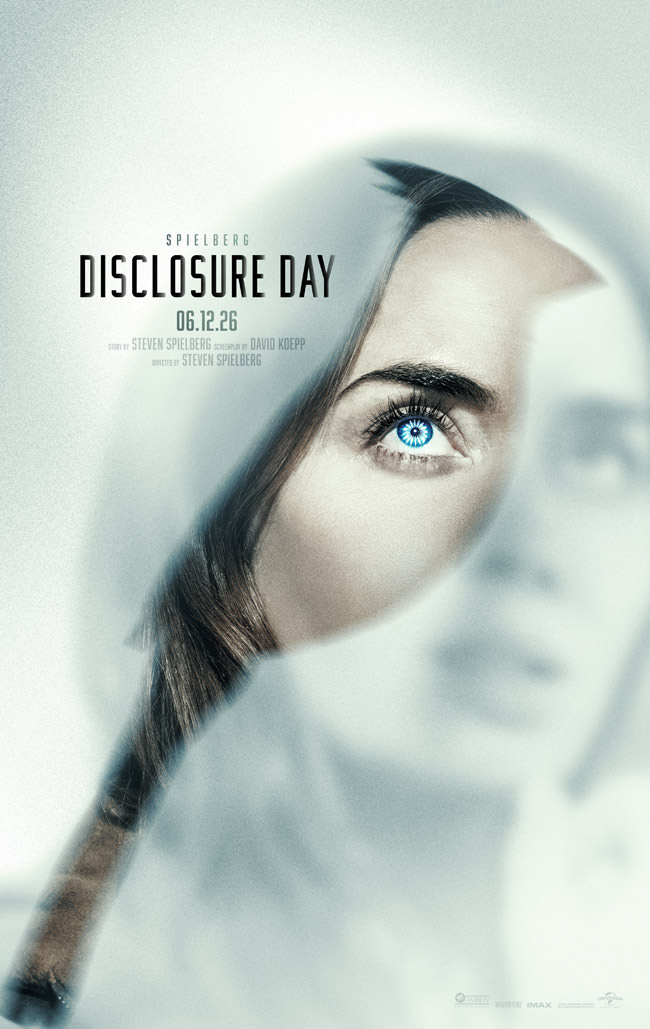
Steven Spielberg’s latest directorial effort, Disclosure Day, examines the intersection of human vulnerability and the search for extraterrestrial intelligence. The film, written by long-time collaborator David Koepp, serves as a narrative meditation on empathy, secrecy, and the preservation of human connection in an era increasingly dominated by technological and geopolitical disruption. As of its current production status, the project is positioned as a significant exploration of themes that have defined much of the director’s career, including the potential for benevolence in the unknown and the weight of government-held secrets.
The story follows two primary threads that converge through the experiences of its protagonists. Daniel Kellner, portrayed by Josh O’Connor, is a government cybersecurity expert who uncovers evidence of a long-standing initiative by an organization identified as Wardex to suppress information regarding extraterrestrial life. Simultaneously, the plot tracks Margaret Fairchild, played by Emily Blunt, a television weather presenter in Kansas City who experiences unexplained neurological phenomena, including the sudden ability to speak foreign languages and a heightened sensory perception that appears to transcend human empathy.
Narrative Threads and Character Dynamics
The screenplay by David Koepp utilizes a dual-narrative structure to bridge the gap between institutional conspiracy and individual transformation. According to production reports, the character of Daniel Kellner acts as the film’s investigative anchor, navigating the risks of being a whistleblower against the powerful Wardex entity, which is represented on screen by Colin Firth’s character, Noah Scanlon. The tension is compounded by Kellner’s personal life, specifically his relationship with Jane, played by Eve Hewson, whose own hidden past as a former nun adds a layer of religious and personal complexity to the film’s central mystery.

The character of Margaret Fairchild provides the film’s emotional and psychological core. Her journey begins with a series of anomalous events, including a bird encounter and a sudden, involuntary shift in her speech patterns during a live broadcast. Medical examinations in the film reveal no traditional physiological cause for these episodes, suggesting a connection to the broader, extraterrestrial-themed mystery. The interaction between Kellner and Fairchild is central to the film’s resolution, framing their connection as a catalyst for the “disclosure” promised by the film’s title.
Josh O’Connor and Emily Blunt —Universal Pictures
Technological Suspense and Human Connection
Disclosure Day incorporates high-stakes action sequences, such as a pursuit involving a vehicle and a train, to maintain narrative momentum. However, the film prioritizes the psychological state of its characters over conventional science-fiction tropes. Spielberg utilizes these sequences to contrast the cold, calculated environment of organizations like Wardex with the natural, often unpredictable world. The director’s approach emphasizes a “child’s-eye view” of everyday objects and settings, using them to ground the story’s more abstract concepts of telepathy and extraterrestrial contact.
The film’s exploration of religious mysticism and mind control reflects an ongoing interest in these subjects within Spielberg’s filmography. By juxtaposing these elements with the scientific premise of alien life, the movie asks how humanity reconciles its capacity for cruelty with its impulse toward generosity. The performance by Colman Domingo, who plays the character Hugo Wakefield, is noted in early reviews for its portrayal of benevolence, serving as a moral counterweight to the antagonistic forces within the story.
Colman Domingo —Universal Pictures
Contextualizing Spielberg’s Approach
In analyzing the film’s place within the director’s body of work, pundits have noted connections to previous projects such as Close Encounters of the Third Kind and E.T. the Extra-Terrestrial. While these earlier works established Spielberg’s optimistic view of extraterrestrial contact, Disclosure Day is described as a more mature, perhaps more urgent, iteration of these themes. The film avoids the “alien abduction” narrative common in popular culture, instead aligning with the perspective that outside intelligence might offer humanity a way to address its own internal mistakes.
The inclusion of musical and cultural references, such as the Canadian band Klaatu and their song “Calling Occupants of Interplanetary Craft,” reinforces the film’s tone of “piercing earnestness.” By linking the narrative to the 1951 film The Day the Earth Stood Still, the production team frames Disclosure Day as part of a long lineage of science-fiction cinema that uses the “other” to hold a mirror up to human society. The film suggests that the search for answers in the stars is, ultimately, a search for a better way to live on Earth.
The Path Toward Release
As the film moves through its post-production phase, the focus remains on how these disparate elements—cybersecurity, meteorology, religious history, and alien contact—will resolve for the audience. The production, which relies on the collaborative history between Spielberg and Koepp, is designed to challenge viewers to reconsider their relationship with technology and the natural world. The film is currently anticipated by audiences interested in character-driven science fiction that balances suspense with a broader philosophical inquiry.
Future updates regarding the film’s wide-release schedule and official promotional materials are expected to be provided by Universal Pictures. For those following the project, the primary source for verified release dates and press materials remains the official studio portal. We encourage readers to share their thoughts on the director’s evolution and the themes presented in the provided context in the comments section below.
Keep reading