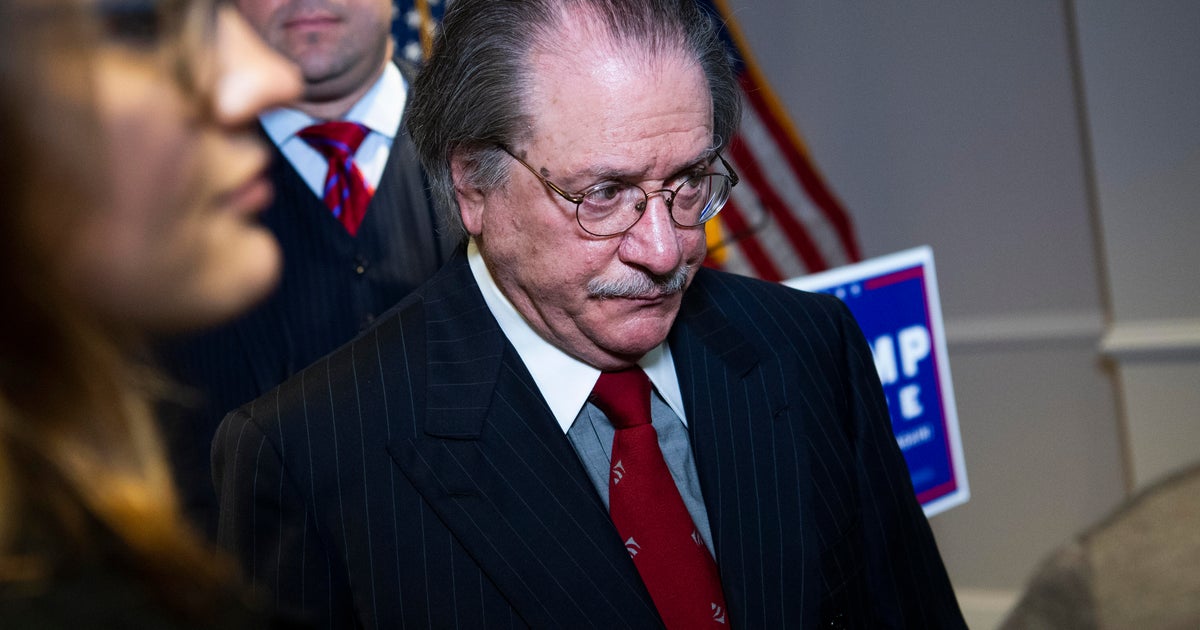
In a significant development within the U.S. Department of Justice, a lawyer who previously represented former President Donald Trump in efforts to overturn the 2020 election results has been assigned to oversee a review of the investigation into former CIA Director John Brennan, according to multiple confirmed sources. The reassignment, first reported by CBS News and corroborated by CNN, AP News, and other outlets, marks a notable shift in personnel within the DOJ’s National Security Division as it reevaluates its handling of a probe that drew criticism from Trump allies during his presidency.
The lawyer in question, identified as Aaron Zelinsky, served as a special assistant to the U.S. Attorney for the District of Columbia and was involved in the department’s handling of cases related to the 2020 election. While Zelinsky was not part of Trump’s personal legal team, he was among the career prosecutors who faced scrutiny from Trump and his allies for their roles in investigations perceived as politically motivated. His recent role involves supervising a review of the Brennan matter, which originated from allegations that the former CIA director may have improperly disclosed classified information — claims that were ultimately not pursued to indictment.
This development comes amid broader scrutiny of how the Justice Department handled investigations into Trump critics during the Biden administration, particularly those initiated in the final months of the Trump presidency and carried over into 2021. Critics have argued that some of these probes, including the one into Brennan, were influenced by political considerations, a claim the DOJ has consistently denied. The reassignment of Zelinsky to oversee the review has been interpreted by some legal observers as an effort to address concerns about impartiality, though others view it as a continuation of internal debates over the propriety of the original investigation.
The Brennan investigation stemmed from a referral by then-Director of National Intelligence John Ratcliffe in December 2020, who alleged that Brennan may have leaked classified information to the media during his tenure. The referral followed Brennan’s public criticism of Trump and his administration, particularly regarding Russia-related intelligence. The DOJ opened a preliminary review but did not pursue criminal charges, concluding in early 2021 that there was insufficient evidence to support a prosecution. Despite the lack of charges, the matter remained a point of contention among Trump’s allies, who continued to call for accountability.
Zelinsky’s background includes service as an Assistant U.S. Attorney in Washington, D.C., where he worked on a range of national security and public corruption cases. He gained public attention during the Trump administration for his involvement in the case against Roger Stone, a longtime Trump associate, where he initially recommended a sentence of seven to nine years — a recommendation that was later overruled by senior DOJ officials, prompting accusations of political interference. Zelinsky later resigned from the Special Counsel’s office in 2020, citing concerns about the department’s independence under then-Attorney General William Barr.
More recently, Zelinsky returned to the DOJ in a career role and was assigned to the National Security Division, where he has been involved in oversight functions related to ongoing investigations. His current role in overseeing the Brennan review represents a return to a high-visibility matter that has been periodically re-examined by department leadership. The review itself is not a new investigation but rather an internal assessment of how the original referral was handled, including whether proper protocols were followed and whether any errors in judgment occurred.
The move has drawn attention from both legal experts and political commentators, particularly given the polarized nature of the underlying allegations. Supporters of the review argue that We see necessary to ensure that DOJ investigations are conducted without bias, regardless of the political affiliations of those involved. Critics, still, contend that revisiting closed matters risks creating an appearance of retribution, especially when the individuals overseeing the review have prior associations with figures central to the original controversies.
To date, the DOJ has not issued a public statement detailing the scope or objectives of the review, nor has it confirmed whether any changes to findings or procedures are anticipated. The department typically conducts such internal reviews as part of its oversight responsibilities, particularly when questions arise about the handling of sensitive national security matters. These assessments are usually internal and do not result in public reports unless misconduct is identified.
Legal analysts note that while the reassignment of a prosecutor with Zelinsky’s background may raise eyebrows, it does not automatically imply a change in the outcome of the original assessment. The DOJ has emphasized that career officials are routinely rotated through various roles to ensure broad experience and prevent the concentration of authority in any one unit. Still, the timing and nature of the assignment have prompted questions about whether the department is responding to external pressures or conducting routine oversight.
The Brennan matter remains one of several investigations from the Trump era that have undergone renewed scrutiny under the Biden administration. Others include reviews of the FBI’s handling of the Hillary Clinton email investigation and the origins of the Russia probe, both of which have been subject to internal audits and inspector general reviews. Like those efforts, the Brennan review appears focused on process rather than outcome, seeking to determine whether departmental guidelines were followed correctly.
For now, the review continues without a public timeline for completion. The DOJ has not indicated whether it will release findings or if any disciplinary actions are under consideration. Officials familiar with the matter have said that the process is being handled confidentially, in line with standard procedures for internal evaluations of national security cases.
As the situation develops, observers will be watching for any signs of how the review might influence future decisions regarding sensitive investigations involving former officials. Whether it leads to procedural changes, internal recommendations, or remains a closed-loop assessment, the assignment underscores the ongoing sensitivity surrounding how the Justice Department balances independence, accountability, and political perception in high-profile cases.
For updates on this and other developments related to Department of Justice oversight, readers are encouraged to consult the department’s official website and trusted legal news sources that provide timely, verified reporting on federal investigations and internal reviews.
We welcome your thoughts on this story. Share your perspective in the comments below, and help others stay informed by passing this article along to colleagues or networks interested in federal accountability and national security oversight.
Keep reading
- DACA Recipients Married to US Citizens Lose Pathway to Citizenship in New Court Ruling
- Billboard Collapses on Car in Interlomas, Edomex: 1 Dead
- Trump Claims Total US Control of Strait of Hormuz as Iran Rejects Assertions (archyworldys.com)
- Nigel Farage returns to Parliament but faces probe over £5m donation (time.news)