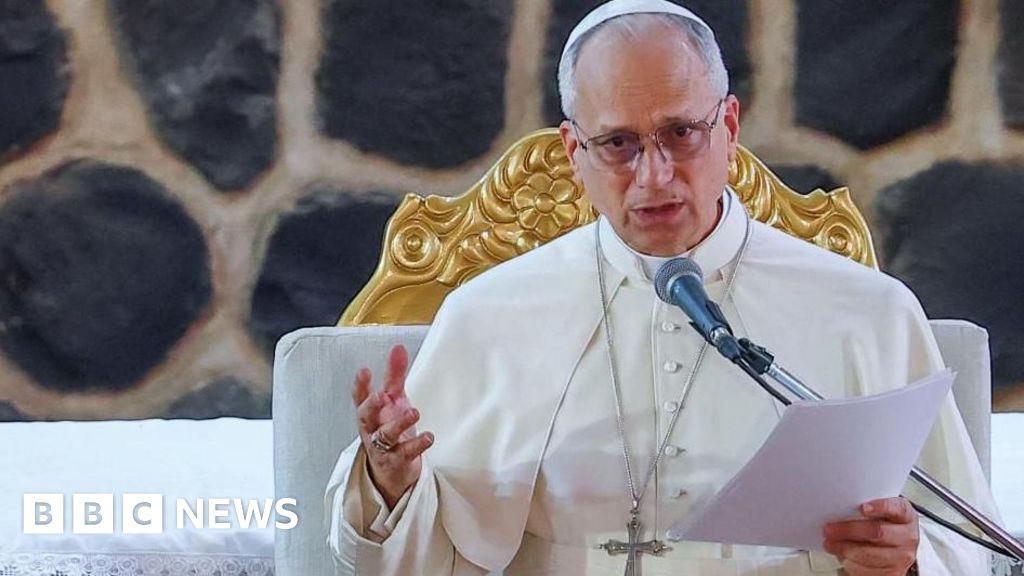
Pope Francis has publicly criticised world leaders he described as “tyrants” who allocate vast sums to warfare while neglecting the poor, in remarks that follow a recent exchange of criticism with former U.S. President Donald Trump.
The pontiff made the comments during his weekly general audience in St. Peter’s Square, where he condemned the prioritisation of military spending over humanitarian needs. “How many tyrants today spend billions on weapons while children go hungry?” the Pope asked, according to Vatican News. He added that such choices reflect a “culture of waste and indifference” that undermines global solidarity.
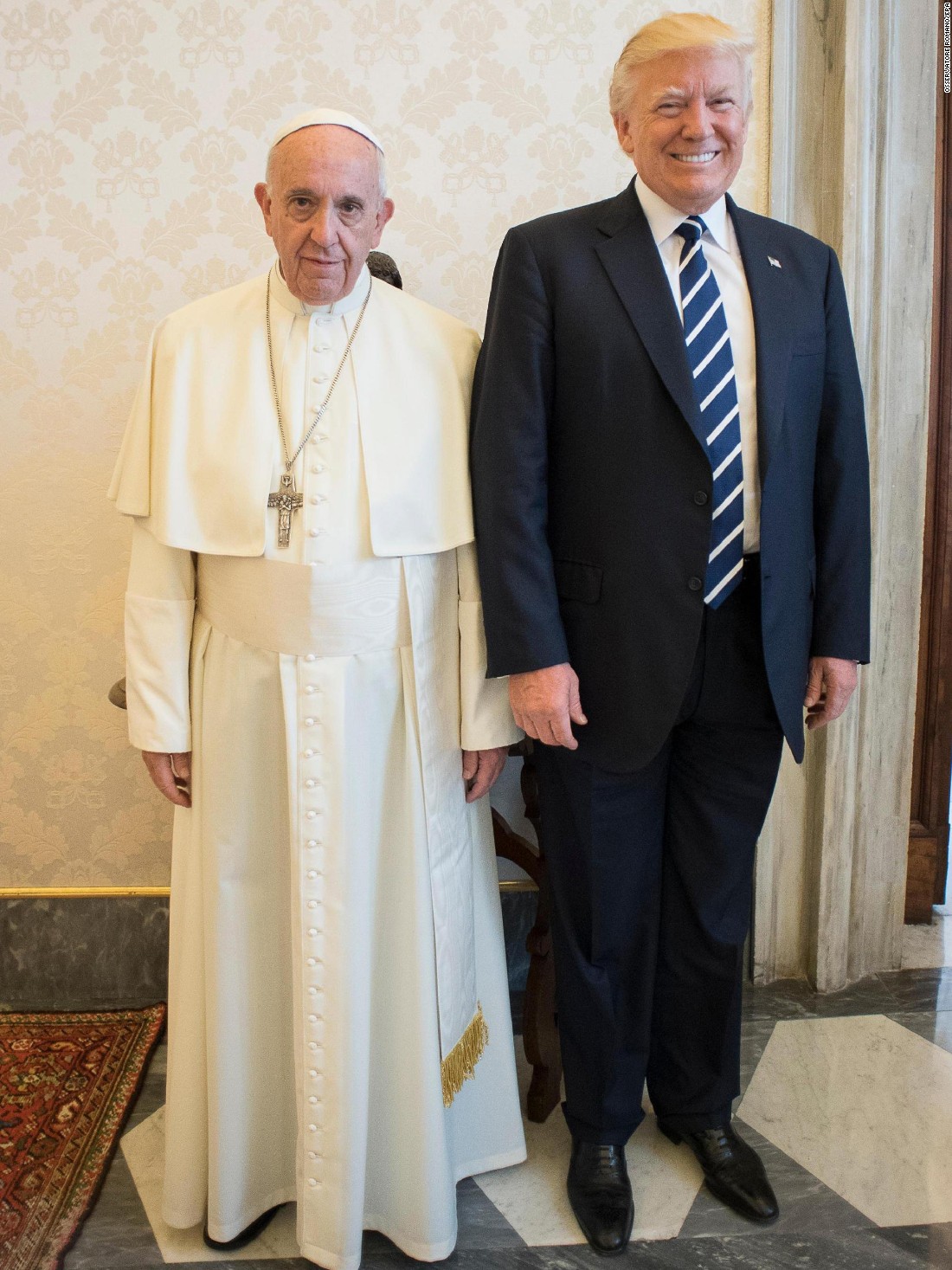
The remarks come shortly after a public disagreement with Donald Trump, who in a televised interview accused the Pope of being “weak on crime” and suggested the Vatican should focus more on law and order rather than commenting on U.S. Immigration policy. Trump’s remarks followed the Pope’s earlier criticism of mass deportation plans, which he said violated human dignity and Christian principles.
In response to Trump’s comments, the Vatican did not issue a direct rebuttal, but Pope Francis later emphasized that pastoral concern for migrants is not political interference but a moral duty rooted in Gospel teachings. “To welcome the stranger is not an option; it is a command,” he stated during a separate audience, reinforcing his long-standing position on compassion for displaced people.
The exchange highlights an ongoing tension between the Holy See and certain political figures over the role of religion in public discourse, particularly regarding immigration, peace, and social justice. While the Pope avoids naming specific leaders in his critiques, his comments are widely interpreted as addressing policies that exacerbate inequality or conflict.
Context of the Papal Critique on Military Spending
Pope Francis has consistently warned against the dangers of militarism and economic inequality throughout his papacy. In his 2020 encyclical Fratelli Tutti, he called for a rethinking of global priorities, urging nations to invest in education, healthcare, and poverty alleviation instead of armaments. The Vatican has repeatedly supported international disarmament efforts and praised treaties aimed at reducing nuclear arsenals.
According to data from the Stockholm International Peace Research Institute (SIPRI), global military expenditure reached $2.24 trillion in 2023, the highest level since records began. The United States accounted for nearly 40% of this total, with spending surpassing $916 billion. The Pope’s remarks align with longstanding Catholic social teaching that condemns excessive armaments as incompatible with authentic peace.
During the same general audience where he criticised war spending, Pope Francis also appealed for peace in Ukraine and Gaza, calling for an immediate cessation of hostilities and renewed diplomatic efforts. He urged world leaders to remember that “true strength lies not in weapons but in mercy and justice.”
History of Tension with Political Leaders
The recent exchange with Donald Trump is not the first time the Pope has found himself at odds with political figures over public statements. In 2016, during the U.S. Presidential campaign, Trump suggested the Pope was “remarkably political” after Francis questioned the morality of building border walls. The pontiff later clarified that his comments were about policy, not individuals.
More recently, Pope Francis has engaged in diplomatic dialogue with leaders across the ideological spectrum, including meetings with U.S. President Joe Biden and participation in interfaith initiatives aimed at promoting peace. The Vatican maintains formal diplomatic relations with over 180 states and often uses its moral authority to advocate for vulnerable populations.
Analysts note that while the Pope avoids partisan language, his moral teachings frequently challenge policies associated with both conservative and liberal governments when they conflict with principles of human dignity, solidarity, and care for creation.
Vatican Response and Continuing Advocacy
The Holy See has not engaged in direct tit-for-tat exchanges with political critics, preferring instead to reiterate its positions through formal documents, speeches, and diplomatic channels. When questioned about the Trump spat, a Vatican spokesperson told reporters that the Pope “continues to speak out of fidelity to the Gospel, not in reaction to any individual.”
Pope Francis has used subsequent audiences and messages to reinforce his critique of indifference toward suffering. In a recent letter to participants at a global summit on children’s rights, he warned that “the scandal of poverty and violence cannot be solved by looking away or investing in destruction.”
His advocacy extends beyond rhetoric; the Vatican supports numerous humanitarian programs through Caritas Internationalis and other Catholic organizations, providing aid in conflict zones and refugee camps worldwide. These efforts are funded through donations and represent a practical expression of the Church’s commitment to peace.
What This Means for Global Dialogue
The ongoing discourse between religious and political leaders raises crucial questions about the role of faith in public life. For Catholics and others who look to the Pope for moral guidance, his statements serve as a reminder that ethical consistency should transcend political cycles.
As conflicts persist and military budgets grow in various regions, the Pope’s call for re-evaluating national priorities remains a significant counterpoint to narratives that equate strength with force. His emphasis on dialogue, encounter, and solidarity offers an alternative framework for addressing global challenges.
Moving forward, the Vatican is expected to continue its engagement with international bodies such as the United Nations, where it holds permanent observer status, to promote peacebuilding, human rights, and sustainable development. No formal meetings or statements have been announced as immediate follow-ups to the recent exchange, but the Pope’s schedule includes regular audiences and pastoral visits where such themes are likely to recur.
For readers seeking to understand the Catholic Church’s position on peace and justice, official sources include the Vatican website, encyclicals like Fratelli Tutti and Laudato Si’, and addresses from the Dicastery for Promoting Integral Human Development.
What are your thoughts on the balance between national security and humanitarian investment? Share your perspective in the comments below, and consider sharing this article to help spread informed discussion on global priorities.
Related reading