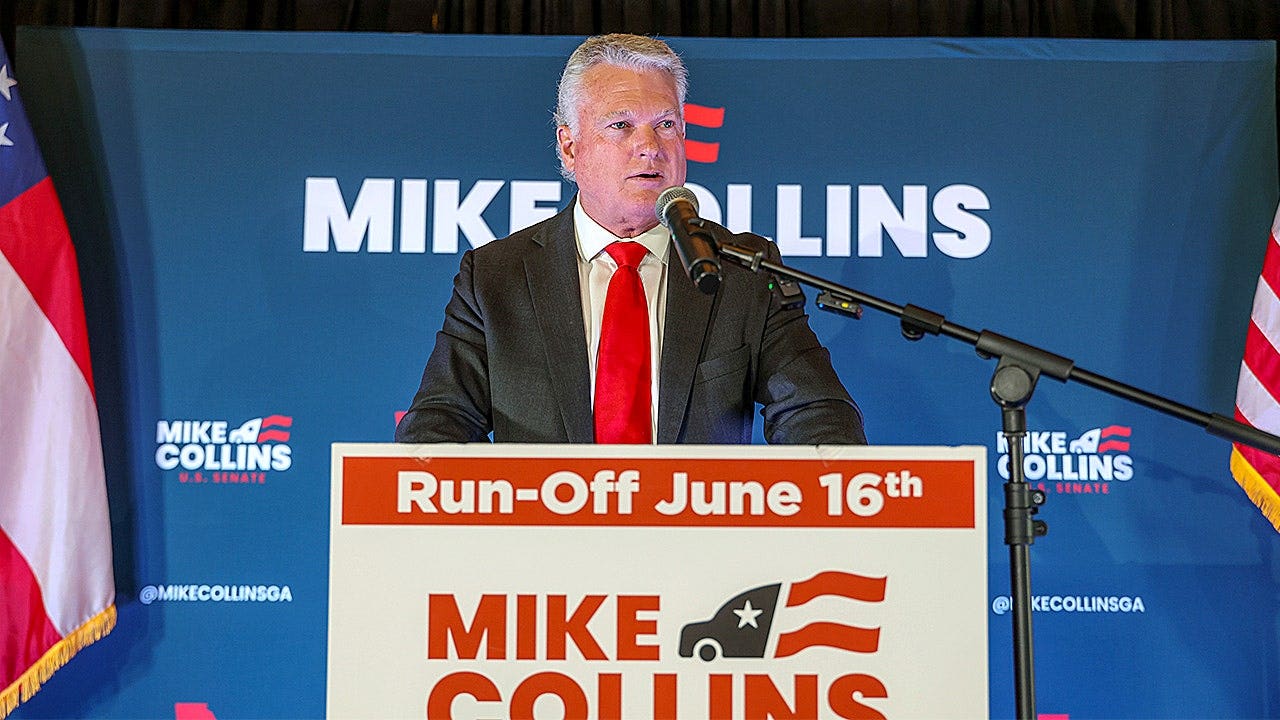
Former President Donald Trump has issued an 11th-hour endorsement for Representative Mike Collins in Georgia’s Republican Senate runoff, inserting his influence into a high-stakes contest that will determine the GOP nominee for a seat currently held by Democrat Jon Ossoff. The endorsement arrives as voters prepare for Tuesday’s runoff election, which follows a crowded primary where no candidate surpassed the 50% threshold required to secure the nomination outright.
This runoff represents a significant test of political alliances within the Georgia Republican Party. While Collins, a trucking company owner and representative for Georgia’s 10th Congressional District, has positioned himself as a staunch “MAGA” ally, his opponent, Derek Dooley, enters the final stretch with the formal backing of Georgia Governor Brian Kemp. The outcome of this race is viewed by national strategists as a bellwether for the party’s ability to reclaim the Senate majority in the upcoming midterm elections.
The Candidates and the Campaign Dynamics
The Republican nomination battle has been defined by a sharp contrast in political branding. Mike Collins, the son of the late Representative Mac Collins, has centered his campaign on his alignment with the former president’s policy platform. According to his official campaign filings, Collins has emphasized his background as a business owner and his roots within the state’s conservative base. His path to the runoff was secured after finishing as one of the top two candidates in a multi-way primary that included other notable figures like Representative Buddy Carter.
Conversely, Derek Dooley has adopted an “outsider” strategy, leveraging his background as a former college football coach and his personal connection to the late University of Georgia coaching legend Vince Dooley. His campaign has been bolstered by the direct involvement of Governor Brian Kemp and First Lady Marty Kemp. Political analysts note that the governor’s active participation, including the appointment of his top political advisor to a senior consultant role for the Dooley campaign, signals the high priority the state’s executive office has placed on this nomination.
Ethical Allegations and Political Challenges
Both candidates have faced scrutiny as the election cycle has intensified. Representative Collins has been the subject of an inquiry by the House Ethics Committee regarding allegations that a district office intern, who maintained a personal relationship with his chief of staff, was compensated despite claims that the individual did not perform official work. Collins has publicly denied any wrongdoing throughout the investigation. The campaign later fired the staffer following an unauthorized social media post that sparked public backlash, an incident for which Collins issued a formal apology.

Derek Dooley has also faced negative media attention in recent days. Reports have surfaced alleging his involvement in a “pay-to-play” controversy involving his brother, Daniel Dooley, and members of the governor’s administration. Both Dooley and Governor Kemp have denied these allegations. Despite these denials, members of the Georgia legislature have formally requested an independent investigation into the claims, adding a layer of uncertainty to the final days of the campaign. The official request for inquiry was documented by state legislative proceedings, highlighting the intensity of the political environment in the state capital.
National Implications and the Primary Landscape
The Georgia runoff occurs against the backdrop of a broader national trend in GOP primary politics. The “brute force” of presidential endorsements has been a recurring theme in recent months, with Trump-backed candidates securing victories in several states, including Louisiana, Indiana, and Texas. However, the efficacy of these endorsements has shown signs of variation. Two weeks ago, Representative Randy Feenstra, who received an 11th-hour endorsement from the former president in Iowa, was defeated by businessman Zach Lahn, who ran with support from the “Make America Healthy Again” movement and Turning Point USA.
In South Carolina, the trend proved more favorable for the former president, as his endorsed candidate, Lieutenant Governor Pamela Evette, secured a spot in the upcoming runoff. Meanwhile, Senator Lindsey Graham successfully bypassed a runoff by securing a majority of the primary vote, despite facing criticism from some conservative factions regarding his policy positions on international conflict. These disparate outcomes underscore the complexity of voter sentiment within the Republican primary electorate.
What Happens Next
As the runoff approaches on Tuesday, the focus shifts to voter turnout and the fundraising advantage held by the incumbent, Senator Jon Ossoff. While the Republican candidates have been occupied with internal party battles, Ossoff has utilized the time to build a significant financial war chest, which national observers expect will be deployed heavily in the general election. The winner of Tuesday’s Republican contest will be required to pivot quickly to a general election strategy, targeting a seat that national Republicans have identified as one of the most vulnerable for the Democratic Party.
Voters in Georgia can find official polling location information and ballot details through the Georgia Secretary of State’s My Voter Page. The final result of the primary will be certified by state election officials in the days following the vote, officially setting the stage for the November midterm contest. Readers are encouraged to monitor updates from the state election board as ballots are processed and final tallies are reported.
Related reading
- Twins Overcome 4-Run Deficit to Beat Brewers 8-6 Driven by Culpepper’s Homer
- Crackdown on Financial Incentives for College Admissions in China
- Tariff vs. Price Floor: What Trump's New Solar Rule Does (daybreakwire.com)
- Blanche Confirmation Complicated by Trump IRS Lawsuit Settlement Scrutiny (newsdirectory3.com)