
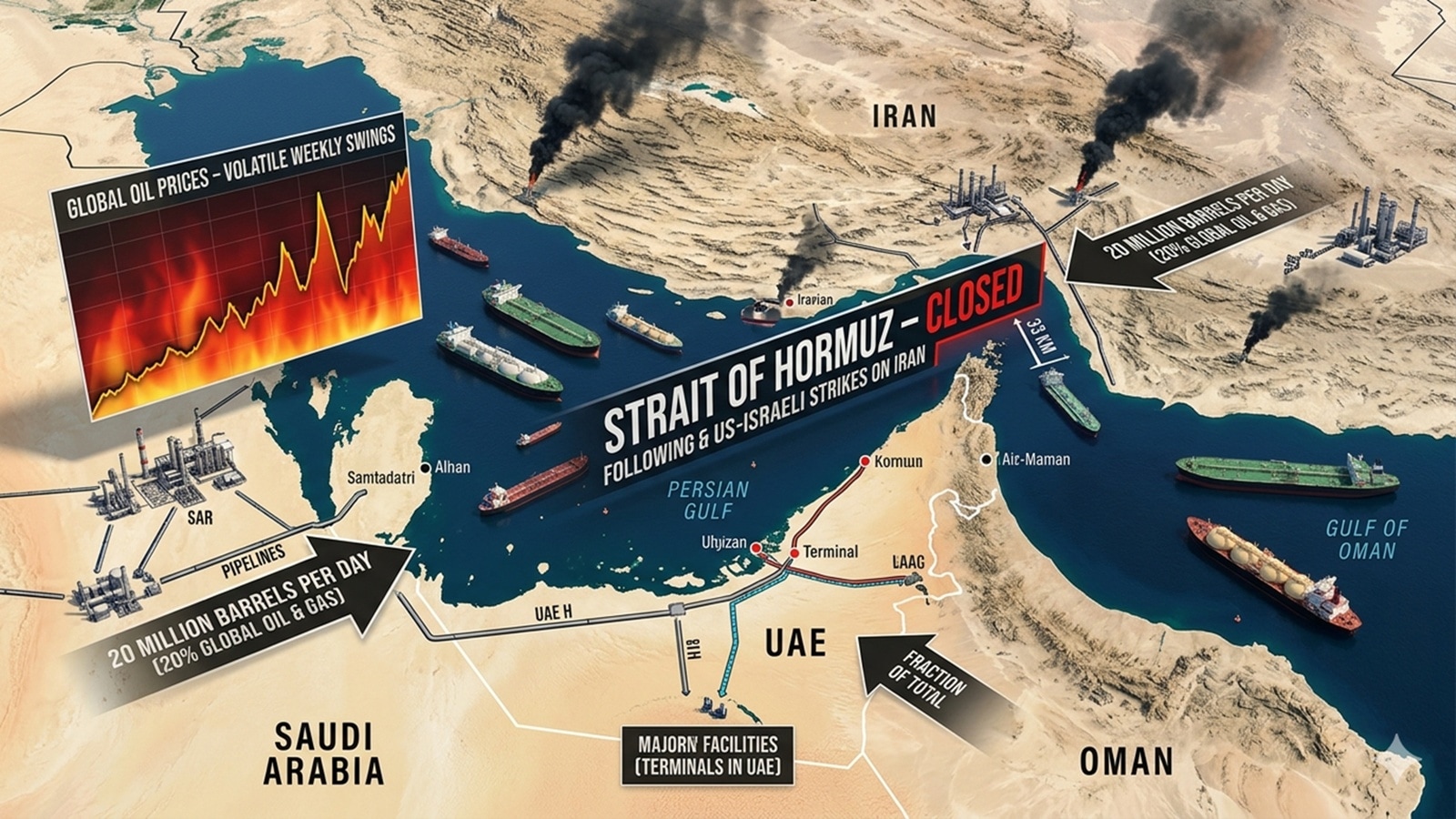
Global oil prices have remained under $90 per barrel despite the ongoing closure of the Strait of Hormuz, a critical maritime chokepoint that typically handles approximately one-fifth of the world’s petroleum consumption, according to data from the U.S. Energy Information Administration (EIA). While initial market projections following the disruption suggested prices could climb toward $200 per barrel, a significant and sustained reduction in Chinese crude oil imports has acted as a primary downward force on global energy costs. This shift in consumption patterns, which has seen China’s daily intake fall from peak levels, currently serves as a vital, if unconventional, buffer for the global economy.
The current stability in energy markets is a result of complex logistical and strategic shifts rather than a simple decrease in global demand. While the International Energy Agency (IEA) has characterized the current supply disruption as among the most severe in modern history, the absence of anticipated price spikes can be attributed to a combination of increased production from non-Hormuz-dependent nations—most notably the United States—and a paradoxical cooling of import activity from Beijing. This development challenges traditional market models that rely on China as an insatiable, perpetual buyer of crude.
Why Chinese Import Levels Have Shifted
Market analysts have observed a marked decline in Chinese crude oil imports, with figures dropping to levels not seen since 2017. According to reports tracked by Bloomberg, this reduction creates a surplus of millions of barrels per day that are now available to other global buyers, effectively muting the price impact of the Strait of Hormuz closure. Unlike periods of economic contraction, such as the pandemic-era “Zero-Covid” policies, current indicators of Chinese industrial output and automobile traffic remain robust, suggesting that the reduction in imports is a deliberate policy choice rather than a sign of domestic economic collapse.
This strategy appears to be rooted in a massive stockpiling effort that began in 2023. During that period, Chinese state-owned refineries increased production and import levels even as domestic economic growth slowed, creating a buffer of fuel reserves that the government is now utilizing. While U.S. Energy Secretary Chris Wright has publicly referenced the release of Chinese strategic petroleum reserves, independent satellite analysis often shows these visible surface storage facilities remaining at high capacity. This discrepancy suggests the existence of significant, non-public underground storage infrastructure, a common feature of state-managed energy security programs in major economies.
The Rise of the Swing Consumer
The role of China in the current energy crisis marks a transition from the historical reliance on “swing producers”—nations like Saudi Arabia that adjust output to stabilize prices—to the emergence of a “swing consumer.” As noted by analysts at the Eurasia Group, the ability of a single nation to influence global pricing through import volume represents a shift in the balance of economic power. By intentionally tempering its demand, Beijing is exerting influence over global energy markets that was previously dominated by the Organization of the Petroleum Exporting Countries (OPEC) and the United States.

This policy has created a stabilizing effect on the U.S. economy during an election year, effectively keeping gas prices lower than they would be in a high-demand scenario. However, this dynamic also grants Beijing significant geopolitical leverage. Should China opt to resume aggressive purchasing, it could rapidly reverse the current price trend, creating a “pull-the-rug” scenario that would immediately spike global costs. The strategic decision to maintain these reserves may be linked to long-term contingency planning, including potential responses to broader trade disruptions or regional security escalations.
What Happens to Global Energy Markets Next
The duration of this price stability remains tethered to the volume of China’s internal reserves. Estimates regarding the size of these stockpiles vary widely, ranging from 500 million to 1.5 billion barrels, according to independent energy research firms. As long as these reserves remain sufficient to meet domestic requirements without the need for high-volume imports, global prices are likely to remain shielded from the full brunt of the Strait of Hormuz closure. Observers will be looking to the next round of official trade data released by the General Administration of Customs of China to determine if the import trend continues into the next quarter.

The situation remains fluid, and market participants are closely monitoring diplomatic efforts to reopen the maritime corridor. For now, the global economy is functioning under a new, albeit fragile, equilibrium. The interplay between U.S. domestic production increases and Chinese import restraint continues to define the energy landscape. Readers are encouraged to follow official updates from the International Energy Agency and the U.S. Energy Information Administration for the most accurate, real-time data on global oil supply and demand.
This report will be updated as new data on global crude oil imports and geopolitical developments regarding the Strait of Hormuz becomes available. We invite our readers to share their analysis and insights in the comments section below.
Worth a look
- Port Terminal Investments Accelerate Across Latin America
- The $20 Viral Burrito Debate: How Food Prices Are Dividing Conservatives
- UNICEF: 300 Days of Gaza War, Ukraine Casualties, and Hormuz Strait Ships Face Biofouling (archynewsy.com)
- How Oman Became the Broker Behind the Latest Hormuz Deal (daybreakwire.com)