
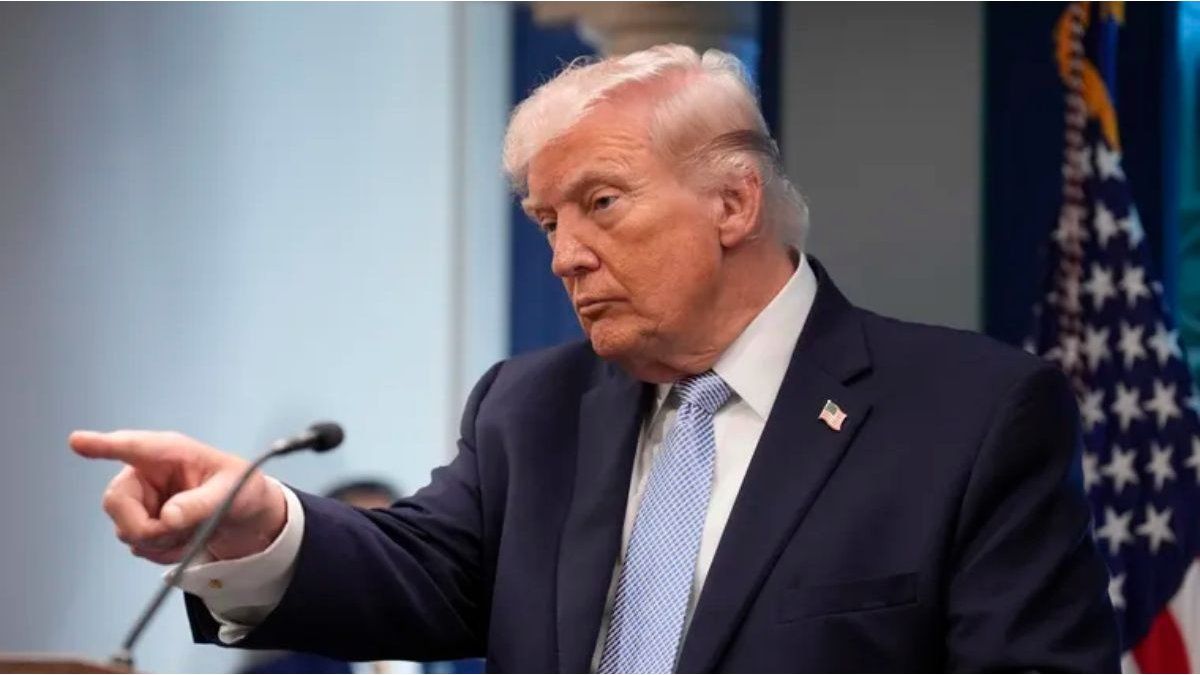
In a move that has sent shockwaves through the diplomatic community and ignited a firestorm of controversy across Latin America, President Donald Trump has suggested that the United States is seriously considering the annexation of Venezuela, potentially incorporating the oil-rich nation as the 51st state of the Union.
The provocative suggestion came during an interview on Monday, May 11, 2026, with Fox News correspondent John Roberts. Trump indicated that his administration is weighing the possibility of absorbing the South American country following a series of aggressive military and political maneuvers that have fundamentally altered the region’s power dynamics. The proposal marks a dramatic escalation in U.S. Foreign policy, shifting from a strategy of regime change and economic pressure to one of territorial absorption.
This development follows the high-profile capture of former Venezuelan President Nicolás Maduro and his wife, Cilia Flores, during a U.S.-led military operation. While the White House has previously framed its intervention as a means to restore stability and facilitate a democratic transition, the “51st state” rhetoric suggests a more permanent and transformative ambition for the United States’ role in the Western Hemisphere.
The announcement has met with immediate and fierce resistance from the current Venezuelan leadership. Acting President Delcy Rodríguez, speaking from the International Court of Justice in The Hague, Netherlands, categorically rejected the notion of annexation, asserting that Venezuela is a sovereign, free nation and not a colony of the United States.
The ’51st State’ Proposal: A New Geopolitical Ambition
During the May 11 interview with Fox News, President Trump explicitly told John Roberts that he was “seriously considering a move to make Venezuela the 51st state.” This statement is not an isolated remark but appears to be the culmination of a strategy that began with the military removal of the Maduro administration.
For the Trump administration, the appeal of such a move is rooted in both strategic security and economic dominance. Venezuela possesses some of the largest proven oil reserves in the world, making it a critical player in the global energy market. By incorporating Venezuela, the U.S. Would not only secure a direct and permanent grip on these resources but would also eliminate a long-standing geopolitical adversary in its own hemisphere.
Analysts suggest that the proposal serves multiple purposes: it signals an uncompromising stance to remaining opposition forces within Venezuela, creates a leverage point for future negotiations, and appeals to a domestic base that favors a “maximum pressure” approach to foreign policy. However, the legal hurdles to such an annexation are unprecedented in modern American history, requiring complex constitutional processes and potentially violating numerous international treaties.
Venezuela’s Defiance at The Hague
The response from Caracas was swift and resolute. Acting President Delcy Rodríguez, who has been tasked with maintaining stability in the wake of Maduro’s arrest, addressed reporters on Monday while attending proceedings at the International Court of Justice (ICJ) in The Hague.
Rodríguez emphasized that Venezuela would continue to defend its “integrity, sovereignty, independence, and history.” In a direct rebuttal to the U.S. President’s comments, she stated that Venezuela is “not a colony, but a free country,” framing the annexation suggestion as an affront to the dignity of the Venezuelan people and a violation of international law.
Beyond the immediate threat of annexation, Rodríguez has also used her platform at the ICJ to reaffirm Venezuela’s claims over the Esequibo region, a territory disputed with Guyana. This dual focus on sovereignty—both against U.S. Absorption and in territorial disputes with neighbors—underscores the acting president’s strategy to maintain a nationalist front to prevent internal collapse during the current U.S. Administration of the country.
The Aftermath of the Military Operation
The current state of affairs is the direct result of a U.S. Military operation that led to the arrest of Nicolás Maduro and Cilia Flores. This operation shifted the U.S. Role from an external influencer to an internal administrator. In January, President Trump stated that the U.S. Would “run the country until such time as People can do a safe, proper and judicious transition,” claiming the goal was to bring “peace, liberty and justice” to the Venezuelan people.
Since the operation, the U.S. Has effectively managed Venezuela’s critical infrastructure, with a particular focus on the oil sector. The administration has relied on Delcy Rodríguez, the 56-year-old former vice president under Maduro, to guarantee a level of domestic stability. This uneasy alliance allows the U.S. To maintain order while prioritizing the access of American companies to the nation’s vast energy reserves.
The transition period, which Trump initially described as temporary, now appears to be evolving into a more permanent arrangement. The shift from “transition” to “annexation” suggests that the U.S. Administration may find the prospect of total integration more attractive than the uncertainty of establishing a new, independent Venezuelan government that might eventually pivot back toward anti-American sentiment.
Oil, OPEC, and Global Energy Security
At the heart of the “51st state” discussion is the Organization of the Petroleum Exporting Countries (OPEC), a group of 12 oil-producing nations. Venezuela’s role within OPEC has historically been a source of volatility and strategic maneuvering. By absorbing Venezuela, the U.S. Would effectively integrate one of OPEC’s most significant members into its own domestic economy.
This would grant the United States unprecedented control over global oil pricing and supply chains. For American energy companies, the prospect of direct ownership or preferential access to Venezuelan crude—which is highly valued for its heavy quality—represents a generational economic opportunity. The Trump administration’s focus on “prioritizing U.S. Companies’ access” to these reserves is a central pillar of the current occupation strategy.
However, this move could alienate other OPEC members and destabilize global energy markets. The transition of a sovereign OPEC member into a U.S. State would be an unprecedented event in the history of the energy industry, potentially triggering a realignment of alliances between the U.S., Russia, and Saudi Arabia.
Legal and Constitutional Implications
The proposal to make Venezuela the 51st state faces staggering legal obstacles. Under the U.S. Constitution, the admission of a new state requires an Act of Congress and the consent of the state’s own population. The process of annexation—especially of a foreign nation captured via military force—would likely be challenged in the U.S. Supreme Court and condemned by the United Nations General Assembly.

the International Court of Justice, where Delcy Rodríguez is currently appearing, represents the primary legal venue for resolving disputes between states. Any attempt at formal annexation would likely be viewed as an act of aggression under the UN Charter, potentially leading to international sanctions or a total diplomatic rupture with South American neighbors like Brazil and Colombia.
Despite these hurdles, the Trump administration’s rhetoric indicates a willingness to challenge traditional legal norms in favor of “realpolitik.” By floating the idea of statehood, the administration may be testing the waters of international tolerance or attempting to create a “fait accompli” where the U.S. Presence becomes so entrenched that formal status becomes a mere formality.
What This Means for the Venezuelan People
For the citizens of Venezuela, the prospect of becoming part of the United States presents a confusing and potentially volatile future. While some may welcome the stability and economic opportunities associated with U.S. Statehood, others view it as the ultimate erasure of their national identity.
The current administration under Delcy Rodríguez, operating under the shadow of U.S. Military oversight, finds itself in a precarious position. Rodríguez must balance the need for U.S. Cooperation to keep the country functioning with the need to appear as a defender of Venezuelan sovereignty to avoid a popular uprising.
The humanitarian situation remains a critical concern. While the U.S. Claims its intervention is aimed at bringing “liberty and justice,” the transition from a socialist autocracy to a potential U.S. Territory involves massive shifts in land ownership, legal systems, and social services. The “judicious transition” promised by Trump in January is now being viewed through the lens of potential absorption, raising questions about whether the goal is truly liberation or simply a change in ownership.
Key Takeaways of the Current Crisis
- The Proposal: President Donald Trump suggested on May 11, 2026, that Venezuela could become the 51st U.S. State.
- The Response: Acting President Delcy Rodríguez rejected the idea at the International Court of Justice, asserting Venezuela’s independence.
- The Context: This follows the U.S. Military capture of former President Nicolás Maduro and his wife, Cilia Flores.
- The Motivation: Strategic control over Venezuela’s massive oil reserves and a desire to stabilize the region under U.S. Administration.
- The Legal Status: The U.S. Currently manages Venezuelan infrastructure while claiming to seek a “judicious transition.”
The international community now awaits further clarification from the White House on whether this proposal is a formal policy goal or a rhetorical tool. As the U.S. Continues to administer the country’s oil infrastructure and maintain a military presence, the tension between the goal of “transition” and the desire for “annexation” will likely define the next phase of the crisis.
The next major checkpoint will be the continued proceedings at the International Court of Justice in The Hague, where the legal battle over Venezuelan sovereignty and the disputed Esequibo territory will likely intensify. Official updates from the White House regarding the “transition” timeline are expected in the coming weeks.
Do you believe the annexation of a foreign nation is a viable strategy for regional stability, or does it undermine international law? Share your thoughts in the comments below.