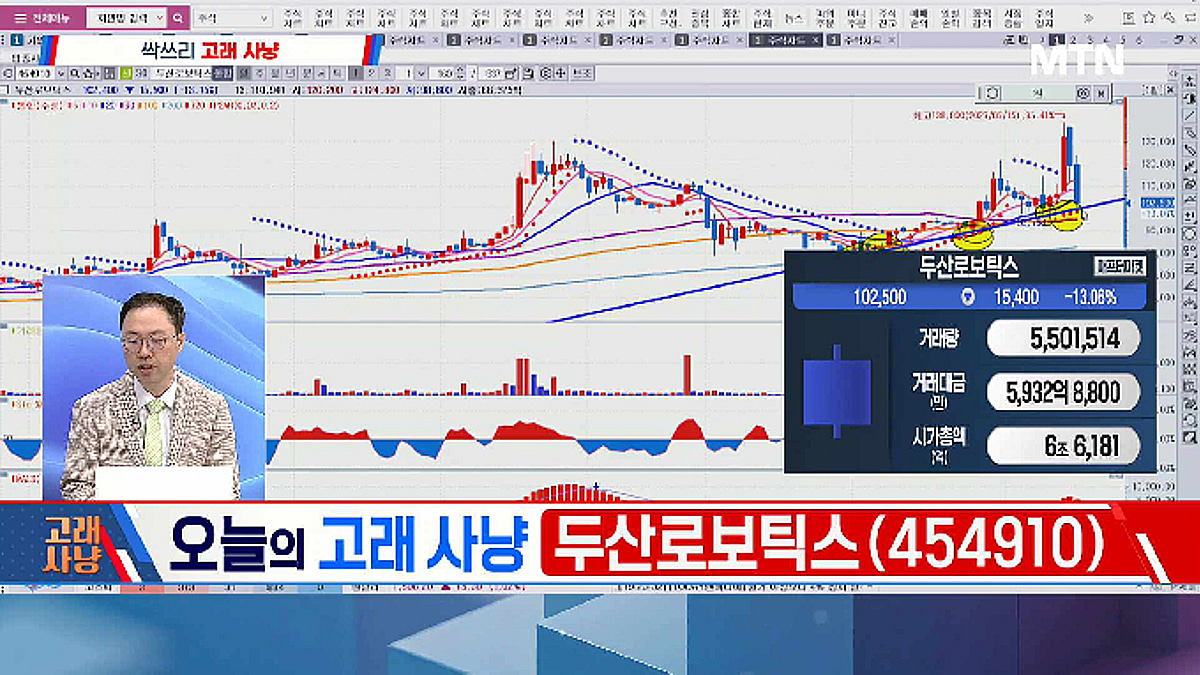
As global industries race to integrate artificial intelligence into core operations, South Korea’s tech sector is emerging as a hotbed of innovation—particularly in robotics and AI-driven infrastructure. Among the most closely watched developments are collaborations between domestic leaders like Doosan Robotics and international giants such as NVIDIA, alongside breakthroughs in AI-powered data center cooling. These partnerships are reshaping industries from manufacturing to cloud computing, with implications for everything from workplace automation to energy efficiency.
The latest wave of advancements centers on two pivotal areas: Doosan Robotics’ development of an AI-powered robot operating system (OS) in partnership with NVIDIA, and OTEC’s launch of an AI-driven data center cooling solution that has earned conditional certification from the same tech titan. Meanwhile, LG Energy Solution and SKC are also positioning themselves as key players in tomorrow’s tech-driven markets. But what does this mean for investors, engineers, and consumers? And how might these developments influence global supply chains and sustainability goals?
For now, the focus remains on South Korea’s “whale stocks”—companies whose innovations could redefine entire industries. Doosan Robotics, in particular, is betting big on its Agentic Robot O/S, a software platform designed to enable AI-driven decision-making in industrial robots. The company’s collaboration with NVIDIA, announced in late April 2026, aims to merge Doosan’s robotics expertise with NVIDIA’s AI and simulation tools to create a more adaptive and autonomous robotic workforce. OTEC, has turned its attention to the burgeoning AI data center market, where cooling systems are becoming a critical bottleneck as demand for high-performance computing surges.
Yet with so many moving parts, the question on everyone’s mind is: Which of these companies will emerge as the next industry leaders? And what does their success—or failure—mean for the broader tech ecosystem?
Doosan Robotics and NVIDIA: Building the Future of AI-Powered Robotics
Doosan Robotics’ partnership with NVIDIA marks a significant leap forward in the development of industrial-grade AI robotics. The two companies are collaborating to refine Doosan’s Agentic Robot O/S, a proprietary software designed to enable robots to perceive, analyze, and respond to their environments in real time. Unlike traditional robotic systems, which rely on pre-programmed tasks, Agentic Robot O/S leverages AI to optimize pathways, enhance safety protocols, and improve precision—critical capabilities for industries like automotive manufacturing, logistics, and healthcare.
According to verified reports, the collaboration was formalized in late April 2026, with NVIDIA’s Madison Huang, Senior Vice President of Omniverse and Robotics Products, visiting Doosan Robotics’ Innovation Center in Bundang, South Korea, to discuss technical integration. The goal? To develop a simulation-to-reality workflow that allows robots to be trained in virtual environments before deployment, reducing costs and accelerating adoption. Doosan Robotics plans to commercialize the first wave of Agentic Robot O/S-powered solutions by 2027, with a full rollout of industrial humanoid robots expected by 2028.
The timing couldn’t be better. As global labor shortages persist and automation becomes a necessity rather than a luxury, companies are scrambling to adopt AI-driven robotic systems. Doosan Robotics’ collaboration with NVIDIA positions it as a frontrunner in this race, particularly in markets where precision and adaptability are non-negotiable. But will the Agentic Robot O/S live up to the hype? And how will it compare to competitors like Boston Dynamics or ABB?
OTEC’s AI Data Center Cooling Breakthrough: A Cooling Revolution?
While Doosan Robotics focuses on the factory floor, OTEC is making waves in another high-stakes sector: AI data center infrastructure. The company recently unveiled its latest cooling solution, designed specifically to address the thermal challenges posed by next-generation AI servers. As data centers become the backbone of cloud computing and AI training, their energy consumption—and corresponding heat output—have reached unprecedented levels. Traditional cooling methods are struggling to keep up, leading to inefficiencies and higher operational costs.
OTEC’s innovation lies in its ability to dynamically adjust cooling based on real-time AI workload demands. By integrating machine learning algorithms with advanced fluid dynamics, the system promises to reduce energy waste by up to 30%—a claim that, if verified, would represent a game-changer for hyperscale data centers. What’s more, the solution has earned conditional certification from NVIDIA, signaling compatibility with the tech giant’s latest AI hardware. This endorsement is particularly valuable, as NVIDIA’s GPUs are the de facto standard for AI training.
Yet OTEC’s path to full market adoption isn’t without hurdles. Data center operators are notoriously cautious about adopting unproven technologies, especially when downtime or inefficiency could result in costly disruptions. Will OTEC’s solution gain traction in the competitive cooling market, or will it face stiff resistance from incumbent players like ASCOTech or Siemens?
LG Energy Solution and SKC: The Underdogs with Big Ambitions
No discussion of South Korea’s tech-driven future would be complete without acknowledging the roles of LG Energy Solution and SKC. While these companies may not yet command the same attention as Doosan Robotics or OTEC, their strategic investments in AI and automation could position them as key players in the years ahead.
LG Energy Solution, best known for its dominance in battery technology, is quietly expanding into AI-driven energy management systems. The company’s recent acquisitions of startups specializing in predictive maintenance for renewable energy infrastructure suggest a long-term play to integrate AI into grid stability and smart energy distribution. Meanwhile, SKC—traditionally a chemicals and materials giant—is leveraging its expertise in advanced materials to develop self-healing and adaptive composites for robotics and industrial applications. These innovations could give SKC a foothold in the burgeoning robotics market, particularly in sectors requiring lightweight yet durable materials.
The question for investors and analysts is simple: Are LG Energy Solution and SKC playing the long game, or will they be left behind as the AI revolution accelerates? Their ability to pivot from legacy industries into cutting-edge tech will determine their relevance in the next decade.
What’s Next for South Korea’s Tech Whales?
The road ahead for these companies is fraught with both opportunity, and uncertainty. For Doosan Robotics, the next critical milestone will be the 2027 launch of its Agentic Robot O/S solutions, followed by the 2028 debut of industrial humanoid robots. Success in these areas could cement its position as a global leader in AI robotics, but delays or technical challenges could derail its ambitions. Similarly, OTEC’s AI cooling solution will need to prove its worth in real-world data centers before it can achieve widespread adoption.
For LG Energy Solution and SKC, the focus remains on strategic acquisitions and R&D investments. Their ability to transition from traditional strengths into AI-driven innovation will be the defining factor in their future growth. Meanwhile, all four companies must navigate a rapidly evolving regulatory landscape, particularly in areas like automation ethics, data privacy, and energy efficiency standards.
Key Takeaways: What Investors and Tech Enthusiasts Need to Know
- Doosan Robotics’ Agentic Robot O/S could redefine industrial automation by 2027, with NVIDIA’s backing ensuring compatibility with global AI ecosystems.
- OTEC’s AI cooling solution offers a potential 30% energy savings for data centers, but real-world testing will determine its market impact.
- LG Energy Solution and SKC are diversifying into AI-driven sectors, but their success hinges on executing high-risk, high-reward R&D strategies.
- The 2026–2028 timeline is critical for these companies, with major product launches and certifications shaping their long-term trajectories.
- Regulatory and ethical considerations will play an increasingly important role as AI robotics and data center technologies mature.
What Happens Next?
The next major checkpoint for these companies will be the 2027 CES (Consumer Electronics Show), where Doosan Robotics and NVIDIA are expected to unveil early prototypes of their collaborative AI robotics solutions. This event will provide the first real-world glimpse of the Agentic Robot O/S in action and could attract significant investor interest.

For OTEC, the focus will shift to pilot deployments in major data centers later this year, with results likely to be announced in Q4 2026. Meanwhile, LG Energy Solution and SKC will continue refining their AI and automation strategies, with potential updates expected at industry conferences like Energy Storage World Forum and Automate.
As the tech landscape evolves, one thing is clear: South Korea’s “whale stocks” are not just riding the AI wave—they’re shaping it. For investors, engineers, and consumers alike, the next few years will be critical in determining which companies will lead the charge into the next era of innovation.
What do you think? Will Doosan Robotics and OTEC deliver on their promises, or are they overpromising in a crowded market? Share your thoughts in the comments below—and don’t forget to follow World Today Journal for the latest updates on this rapidly evolving story.
Keep reading