
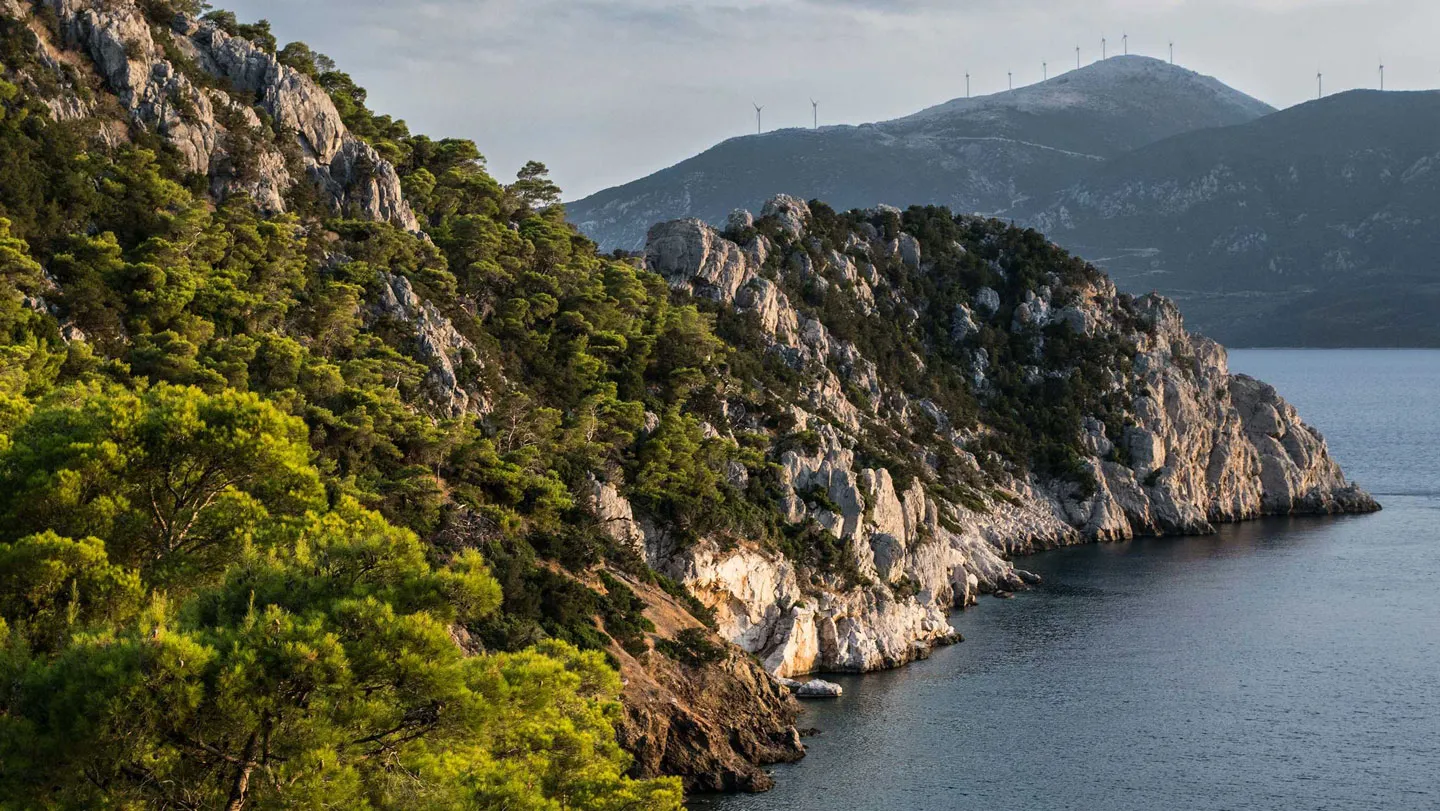
Can ‘Extinct’ Volcanoes Still Erupt? A Greek Volcano Holds Surprising Clues
For decades, scientists have classified volcanoes as active, dormant, or extinct based on their eruption history. But what if some volcanoes deemed “extinct” are merely biding their time? A groundbreaking study of Methana, a volcano near Athens, Greece, is challenging long-held assumptions about volcanic activity—and forcing researchers to rethink how they assess eruption risks worldwide.
An international team led by volcanologist Razvan-Gabriel Popa of ETH Zurich has uncovered evidence that Methana remained magmatically active for more than 100,000 years despite showing no surface eruptions. Their findings, published in Science Advances, suggest that some volcanoes may quietly accumulate magma underground even during periods of apparent dormancy. This discovery could have significant implications for volcanic hazard assessments, particularly in regions where “extinct” volcanoes are considered safe.
“I think we definitely have to start reevaluating how we classify extinct volcanoes,” Popa told the Athens-Macedonian News Agency in an interview published on April 25, 2026. “A long dormancy does not necessarily mean a system has stopped.”
The Methana Mystery: A Volcano That Never Really Slept
Methana is part of the South Aegean volcanic arc, a chain of volcanoes stretching across the Aegean Sea. Until recently, it was considered dormant, having last erupted around 1700 CE—a mere blink in geological time. But Popa and his colleagues dug deeper, reconstructing Methana’s eruptive history over the past 700,000 years using a surprising tool: zircon crystals.
Zircon, a mineral found in volcanic rocks, acts like a microscopic time capsule. As magma cools underground, zircon crystals form, recording the chemical and thermal conditions of their environment. When a volcano erupts, these crystals are carried to the surface, preserving a record of magmatic activity over time. By analyzing more than 1,250 zircon crystals from Methana, the team pieced together a timeline of the volcano’s behavior.
The results were unexpected. Methana experienced two major eruptive periods: one ending around 280,000 years ago and another beginning around 168,000 years ago. Between these phases, the volcano appeared inactive for roughly 110,000 years—a duration long enough to classify it as extinct under current definitions. Yet, the zircon crystals told a different story. During this “dormant” period, magma production didn’t just continue—it increased. The highest concentration of zircon crystals was found in rocks from this interval, indicating that Methana’s magma chamber was actually growing beneath the surface.
Redefining Volcanic Risk: What This Means for Hazard Assessments
The study’s findings have profound implications for how scientists evaluate volcanic hazards. Traditionally, volcanoes are classified as extinct if they haven’t erupted in the last 10,000 years (for smaller systems) or much longer (for larger ones). Yet, Methana’s behavior suggests that even a 100,000-year lull may not be enough to declare a volcano truly dead.

“Our study challenges the idea that a long period of quiescence means a volcano has shut down,” Popa said. “Instead, it may be undergoing a period of magma reservoir growth, which could eventually lead to a future eruption.”
This doesn’t mean that every “extinct” volcano is secretly active. But it does highlight a critical gap in current monitoring practices. Many volcanoes classified as extinct are not regularly monitored for seismic activity or ground deformation—key indicators of magma movement. If Methana’s behavior is representative of other volcanoes, some regions may be underestimating their volcanic risks.
For example, the Smithsonian Institution’s Global Volcanism Program lists hundreds of volcanoes as “extinct” based on their eruption history. While most of these are likely truly inactive, Methana’s case raises the possibility that a small but significant number could still pose a threat.
Why Zircon Crystals Are Changing the Game
Zircon crystals are revolutionizing how scientists study volcanoes. Unlike other minerals, zircon is highly resistant to weathering and can survive for millions of years, making it an ideal recorder of magmatic history. By analyzing the uranium and lead isotopes in zircon, researchers can determine the age of the crystals with remarkable precision. The concentration of trace elements like titanium and hafnium provides clues about the temperature and chemical conditions of the magma when the crystals formed.
In Methana’s case, the zircon crystals revealed that the volcano’s magma chamber didn’t just remain active during its 110,000-year dormancy—it expanded. This suggests that the system was not only alive but potentially preparing for future eruptions. Similar techniques have been used to study other volcanoes, including Yellowstone in the U.S. And Campi Flegrei in Italy, but Methana’s case is particularly striking because of the length of its apparent dormancy.
What This Means for Communities Near Volcanoes
The implications of this research extend beyond academia. Millions of people worldwide live near volcanoes classified as dormant or extinct. If some of these volcanoes are still magmatically active, communities may need to reconsider their preparedness plans.

In Greece, for example, Methana is a popular tourist destination known for its hot springs and scenic landscapes. While the risk of an imminent eruption remains low, the study underscores the importance of continuous monitoring. Popa’s team has called for increased seismic and geodetic surveillance of Methana and other “extinct” volcanoes in the region to detect any signs of renewed activity.
Globally, the findings could prompt a reevaluation of volcanic hazard maps. The U.S. Geological Survey (USGS) and other agencies may need to revisit their classifications of certain volcanoes, particularly those with long periods of apparent inactivity. This could lead to expanded monitoring networks and updated emergency response plans in vulnerable areas.
Key Takeaways: What You Need to Know
- Extinct ≠ Safe: Some volcanoes classified as extinct may still be magmatically active underground, even if they haven’t erupted in tens of thousands of years.
- Zircon Crystals as Time Machines: These tiny minerals provide a record of magmatic activity, revealing that Methana’s magma chamber grew during its 110,000-year “dormant” phase.
- Reevaluating Hazard Assessments: The study suggests that scientists may need to rethink how they classify and monitor “extinct” volcanoes to better assess eruption risks.
- Global Implications: Millions of people live near volcanoes considered dormant or extinct. This research could lead to updated hazard maps and preparedness plans.
- Monitoring Matters: Continuous seismic and geodetic surveillance is crucial for detecting signs of renewed activity in volcanoes that appear inactive.
The Future of Volcanic Research
Popa’s study is just the beginning. The team plans to apply their zircon analysis techniques to other volcanoes in the South Aegean volcanic arc, including Santorini and Nisyros, to see if similar patterns emerge. If other “extinct” volcanoes indicate signs of hidden activity, it could trigger a broader reassessment of volcanic hazards worldwide.
For now, the message is clear: just because a volcano hasn’t erupted in human memory doesn’t mean it’s permanently asleep. As Popa put it, “Greek volcanoes have much more to reveal.” The same could be said for volcanoes everywhere.
The next steps for researchers include expanding monitoring efforts and conducting further studies to identify which “extinct” volcanoes might still pose a threat. For communities near these geological giants, staying informed and prepared remains the best defense.
What are your thoughts on this discovery? Could other “extinct” volcanoes still be active? Share your comments below and join the conversation.