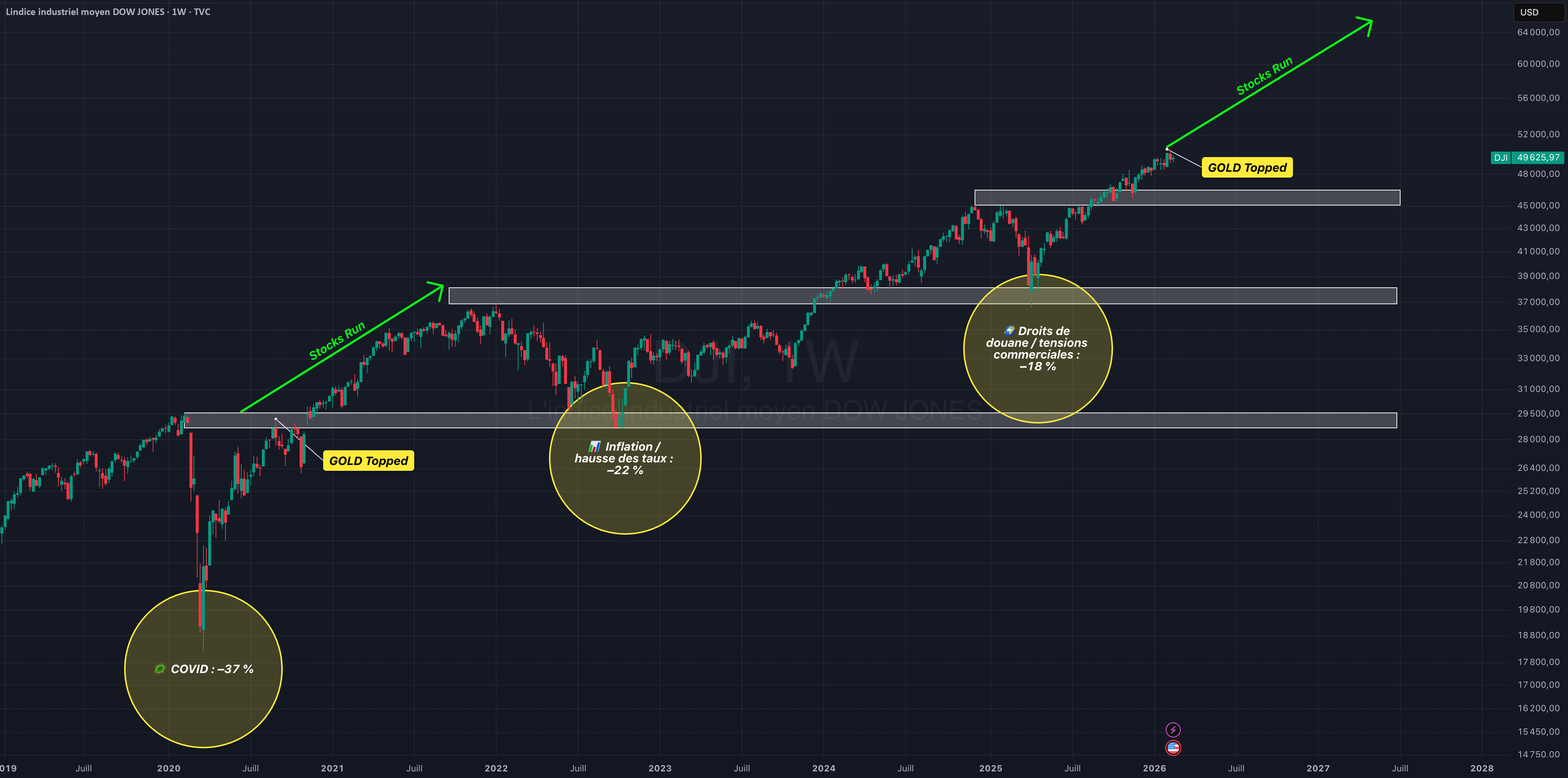
Berlin – Global markets are exhibiting a familiar pattern, one that historically suggests a potential shift in investor sentiment. While gold prices have recently shown signs of leveling off, the Dow Jones Industrial Average continues to climb, sparking discussion about a possible “stocks run” – a period of sustained growth in equity markets. This dynamic mirrors past market behavior, particularly following the economic disruption of 2020, and analysts are closely watching to notice if the trend will hold. Understanding these cyclical movements is crucial for investors navigating an increasingly complex economic landscape.
The interplay between safe-haven assets like gold and riskier investments like stocks is a cornerstone of market analysis. Gold often surges during times of economic uncertainty, acting as a store of value when other assets decline. However, when confidence returns and economic growth accelerates, investors tend to shift funds from gold into equities, anticipating higher returns. This rotation of capital can fuel a rally in the stock market. The current situation, with gold potentially reaching a peak and the Dow Jones maintaining its upward trajectory, aligns with this historical pattern. This potential shift is prompting a re-evaluation of portfolio strategies as investors consider reallocating assets.
Historical Precedents: Gold Peaks and Stock Market Rallies
The relationship between gold and the Dow Jones isn’t new. A notable example occurred in the wake of the COVID-19 pandemic. As the pandemic unfolded in early 2020, global economies faced unprecedented disruption, leading to a significant downturn in stock markets. Simultaneously, gold prices soared as investors sought refuge in the perceived safety of the precious metal. However, once the initial shock subsided and economic recovery began, gold prices stabilized, and the Dow Jones embarked on a substantial and prolonged rally. This sequence – gold peak followed by stock market ascent – is a key element in the current analysis. Bloomberg reported on the broader market dynamics at play, highlighting the fatigue in the S&P 500 alongside the gold tumble.
Looking further back, similar patterns have emerged during other periods of economic stress. Corrections in the market, such as those triggered by the 2008 financial crisis, inflationary pressures, and geopolitical tensions, have often been followed by recoveries fueled by a renewed interest in equities. These events demonstrate that market downturns are not necessarily indicative of a long-term structural decline but can represent temporary periods of macroeconomic stress. The Dow Jones has historically demonstrated resilience, rebounding from these challenges and continuing its long-term upward trend.
Recent Market Corrections and Macroeconomic Factors
Analyzing recent market fluctuations provides further context. The COVID-19 pandemic caused a rapid 37% drop in market value, but the correction was short-lived. Subsequently, concerns about inflation and rising interest rates led to a more prolonged bear market, with a decline of approximately 22% over nearly two years. Trade disputes and geopolitical tensions also triggered corrections, though these were generally less severe, around 18%, and occurred within a broader upward trend. These instances underscore the point that market corrections are often linked to specific, identifiable shocks rather than fundamental shifts in the economic cycle.
The current macroeconomic environment is characterized by a complex interplay of factors. Inflation, while moderating, remains a concern for central banks worldwide. Interest rate policies are being closely monitored for their impact on economic growth. Geopolitical risks, including ongoing conflicts and trade tensions, continue to add uncertainty to the global outlook. These factors contribute to the volatility observed in financial markets and influence investor behavior. Understanding these macroeconomic forces is essential for interpreting market trends and making informed investment decisions.
Current Market Structure and the Rotation of Capital
As of February 22, 2026, the Dow Jones is reaching new highs, while gold is showing indications of reaching a plateau. This configuration is often interpreted as a sign of capital rotation – a shift of funds from defensive assets like gold into riskier assets like stocks. This “risk-on” environment suggests that investors are becoming more optimistic about economic prospects and are willing to take on greater risk in pursuit of higher returns. The Dow Jones’s continued ascent, coupled with the stabilization of gold prices, reinforces this narrative.
Technical analysis further supports this view. Previous resistance levels, which once acted as barriers to upward movement, are now serving as support levels, indicating sustained buying pressure. This suggests that the market is maintaining its structural integrity and is likely to continue its upward trajectory as long as these support levels hold. The strength of these support levels is a key indicator for investors monitoring the market’s potential for further gains. TradingView provides analysis of the Dow Jones versus Gold ratio, suggesting a repeating historical pattern.
Implications for Investors and the Global Economy
The potential for a sustained “stocks run” has significant implications for investors and the global economy. A rising stock market can boost consumer confidence, encourage business investment, and contribute to overall economic growth. However, it’s crucial to remember that market rallies are not without risk. Unexpected economic shocks or geopolitical events could trigger a reversal of the trend. A diversified investment portfolio and a long-term perspective are essential for navigating market volatility.
The recent slump in gold and silver prices has already impacted Africa’s top stock market, leading to its biggest fall since 2020. Businessday NG reported on this impact, highlighting the interconnectedness of global markets. This demonstrates how shifts in commodity prices can ripple through regional economies, underscoring the importance of monitoring global economic trends.
Key Takeaways
- The Dow Jones is currently exhibiting strength while gold prices appear to be stabilizing, mirroring historical patterns.
- Historically, peaks in gold prices have often been followed by rallies in the stock market as investors rotate capital.
- Recent market corrections have been linked to specific macroeconomic shocks rather than long-term structural issues.
- Investors should maintain a diversified portfolio and a long-term perspective to navigate market volatility.
Looking ahead, the preservation of key support levels will be crucial in determining the market’s trajectory. As long as these levels hold, the scenario of continued expansion remains the most likely outcome. Investors will be closely monitoring economic data, central bank policies, and geopolitical developments for clues about the future direction of the market. The next key economic indicator release is the January inflation report, scheduled for March 1st, 2026, which will likely influence market sentiment and investment strategies.
The dynamic between gold and stocks is a complex one, influenced by a multitude of factors. Staying informed and adopting a disciplined investment approach are essential for navigating the ever-changing landscape of global financial markets. We encourage our readers to share their perspectives and engage in constructive discussion in the comments section below.
Related reading
- Why Being “Too Nice” Can Harm Your Physical Health: The Danger of People-Pleasing
- Gut Bacteria Linked to Biological Aging Rate: New Study Findings
- Michael Zheng vs Martin Landaluce Total Games Tennis Prediction Market (world-today-news.com)
- Kalshi Wins Preliminary Injunction Against Minnesota Prediction Market Ban (time.news)