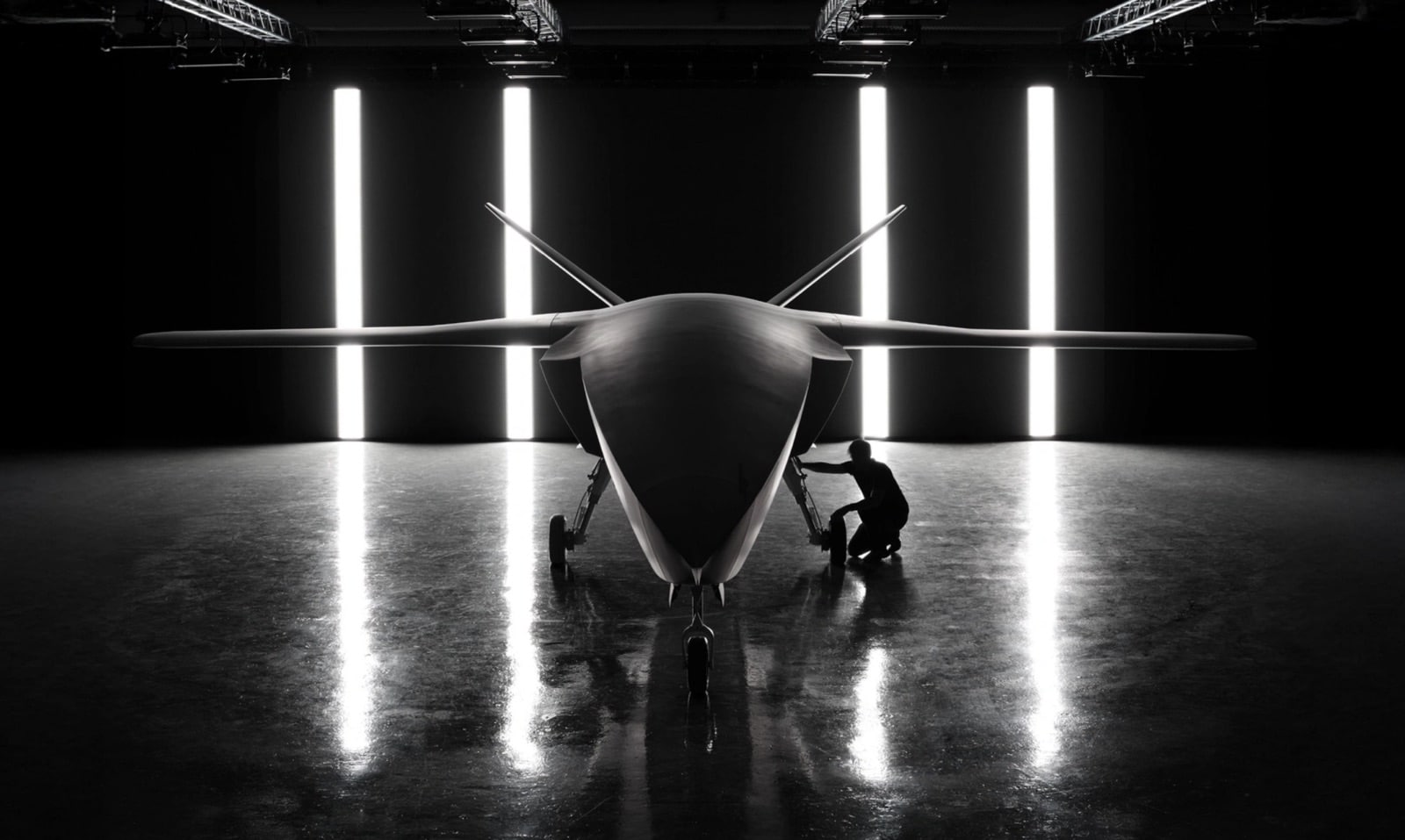
The intersection of high-growth venture capital and national security is witnessing a seismic shift, as the traditional dominance of legacy defense contractors gives way to a new era of “software-defined” warfare. At the center of this transformation is Helsing, a German AI defense startup that is reportedly seeking new funding at a valuation of approximately $18 billion according to the Financial Times.
This staggering valuation represents more than just a successful funding round; it is a bellwether for how global powers are reimagining sovereign defense. Backed by Spotify founder and tech billionaire Daniel Ek, Helsing is positioning itself as Europe’s answer to the rapid digitization of the battlefield, focusing on artificial intelligence that can process vast amounts of data in real-time to provide tactical advantages.
As a financial journalist who has spent nearly two decades analyzing global markets and economic policy, I find the trajectory of Helsing particularly telling. We are seeing a fundamental pivot in the defense industry: the value is shifting from the “iron”—the tanks, jets, and ships—to the “intelligence” that coordinates them. The appetite for this technology is reflected in the company’s latest efforts to raise roughly $1.2 billion in new capital per recent reports.
The Rise of the Defense Tech Unicorn
For decades, the defense sector was characterized by a handful of “primes”—massive conglomerates with deep government ties and unhurried innovation cycles. However, the emergence of “defense tech” startups like Helsing and the U.S.-based Anduril is disrupting this oligopoly. These companies operate more like Silicon Valley software firms than traditional armaments manufacturers, prioritizing agility, iterative development, and AI integration.

The scale of this trend is evident when comparing Helsing to its American peers. Anduril, a California-based startup, recently raised $2.5 billion at a valuation of $30.5 billion as reported by the Financial Times. This parallel growth suggests that investors now view AI-driven defense as a scalable, high-margin business model rather than a niche government contracting play.
Helsing’s approach focuses on creating an AI “layer” that can be integrated into existing military hardware. By utilizing machine learning to analyze sensor data and automate target recognition, the company aims to reduce the cognitive load on soldiers and accelerate the decision-making loop. In the context of modern electronic warfare, where seconds can determine the outcome of an engagement, this software-centric approach is becoming a strategic necessity.
European Strategic Autonomy and the ‘Zeitenwende’
The timing of Helsing’s ascent is not coincidental. Europe is currently grappling with a critical need for “strategic autonomy”—the ability to defend its interests without total reliance on U.S. Technology. In Germany, this has manifested as the Zeitenwende, or “turning point,” a massive shift in defense policy and spending triggered by the geopolitical instability in Eastern Europe.
For years, European defense spending was characterized by austerity and a reliance on legacy systems. Now, there is a concerted effort to foster a home-grown defense ecosystem. Helsing is a primary beneficiary of this shift, as European governments seek AI capabilities that are developed within the continent’s regulatory and ethical frameworks.
The investment landscape in Europe is reflecting this urgency. Beyond Helsing, other drone and defense firms are seeing significant valuation jumps; for instance, European drone makers Quantum Systems and Tekever were both valued at more than €1 billion recently according to financial data. This indicates a broader trend of capital flowing into the European “mil-tech” sector.
The Venture Capital Pivot: From ESG to Defense
Perhaps the most intriguing aspect of Helsing’s valuation is the profile of its backers. For a significant portion of the last decade, many venture capital firms and high-net-worth individuals avoided defense technology due to ESG (Environmental, Social, and Governance) constraints. Investing in “weapons” was often seen as a reputational risk.
However, the geopolitical climate has forced a re-evaluation of these ethical boundaries. Defense is increasingly viewed not as a “sin stock,” but as a critical infrastructure requirement for the preservation of democratic stability. Daniel Ek’s decision to lead a €600 million investment in Helsing as noted by the Financial Times signals a broader acceptance—and even an embrace—of defense tech among the tech elite.
This shift in investor sentiment is creating a virtuous cycle. As more “prestige” capital enters the space, it attracts top-tier engineering talent from companies like Google, Meta, and OpenAI, who are now more willing to apply their skills to national security projects. This talent migration is essential for Helsing to maintain its technological edge over both legacy contractors and state-sponsored competitors.
Key Market Drivers for AI Defense
| Driver | Impact on Valuation | Strategic Rationale |
|---|---|---|
| Software-Defined Warfare | High | Shift from hardware-heavy costs to scalable software margins. |
| Strategic Autonomy | Medium-High | EU demand for non-U.S. Sovereign AI capabilities. |
| ESG Re-calibration | Medium | Increased VC appetite for national security investments. |
| Real-time Data Processing | High | Need for AI to manage “sensor saturation” on the battlefield. |
What So for the Global Economy
From an economic perspective, the rise of Helsing and its peers suggests the birth of a new industrial sector. We are moving toward a hybrid model where the agility of a startup is married to the scale of government procurement. This creates a unique financial profile: these companies have the growth potential of a SaaS (Software as a Service) business but the stability of long-term government contracts.

However, this growth is not without risks. The valuation of $18 billion is based on the expectation of future dominance in a market that is still being defined. The primary challenge for Helsing will be the “valley of death”—the gap between a successful prototype and a full-scale program of record with a national military. Scaling AI across diverse military platforms requires not just technical brilliance, but an ability to navigate the notoriously slow bureaucracy of defense procurement.
the ethical implications of AI in warfare remain a point of contention. While Helsing emphasizes “human-in-the-loop” systems, the acceleration of autonomous capabilities will likely lead to increased regulatory scrutiny and potential international treaties that could impact how these companies operate across borders.
The Road Ahead
As Helsing moves toward finalizing its latest funding round, the industry will be watching closely to see if the $18 billion valuation holds. If it does, it will solidify the company’s status as a cornerstone of the European defense architecture and likely trigger a wave of consolidation as legacy firms attempt to acquire smaller AI startups to keep pace.
The broader implication is clear: the “intelligence” of a nation’s defense is now as valuable as its arsenal. For investors and policymakers alike, the focus has shifted from how many platforms a military possesses to how intelligently those platforms can communicate and act.
The next major milestone for the company will be the announcement of its latest funding round and any accompanying strategic partnerships with NATO member states. We expect further disclosures regarding its integration into specific European defense programs in the coming months.
Do you believe AI-driven defense startups will eventually replace traditional defense contractors, or will they simply become part of the existing establishment? Share your thoughts in the comments below.
Keep reading
- Statutory Changes Legal Notice: Ille-et-Vilaine (August 5, 2026)
- Epsom Spree: 49-Year-Old Charged Over Six Incidents Including Public Assault
- Russian Missile and Drone Strikes Kill at Least 14 in Kyiv Region (archyworldys.com)
- Russia Accused of War Crimes After Drone Hunts Ukrainian Civilian in ‘Safari’ Attack (world-today-news.com)