Thailand’s Durian Diplomacy: How a Government Minister’s Livestream Strategy Is Reshaping Global Fruit Exports
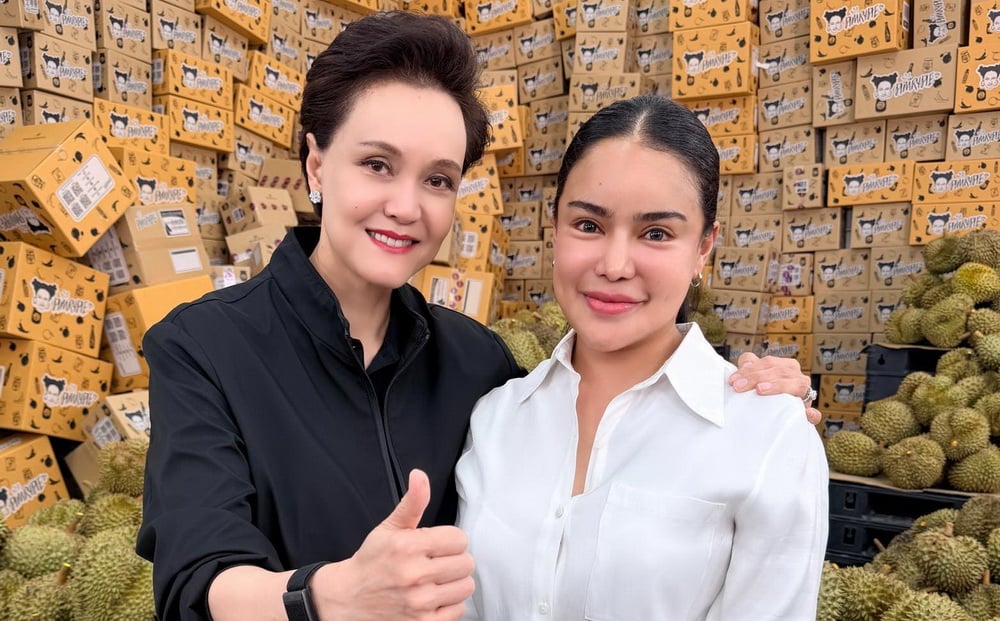
On a humid morning in Chanthaburi province, Thailand’s Commerce Minister Supachai Jaisamut stood in front of a towering stack of golden durians, his smartphone held high as thousands of viewers tuned in from across China. The live broadcast—part of a bold government initiative to bypass traditional supply chains—saw the minister selling durians for as little as 100 baht (approximately $2.75) per fruit, a price that sent shockwaves through Thailand’s agricultural sector. The move, initially dismissed as a publicity stunt, is now being hailed as a strategic masterstroke by industry analysts, even as it exposes deep tensions between farmers, exporters, and policymakers.
Supachai’s livestream, conducted on April 25, 2026, was not merely a marketing gimmick but a calculated intervention in Thailand’s $4.5 billion durian export industry, which accounts for nearly 60% of the global market. With China consuming over 90% of Thailand’s durian exports, the minister’s direct-to-consumer approach leverages the explosive growth of livestream e-commerce, a sector projected to reach $1.2 trillion in China by 2027. The strategy aims to stabilize prices for farmers while ensuring Thailand’s dominance in a market increasingly threatened by competitors like Vietnam and Malaysia.
Yet the initiative has sparked fierce debate. Farmers in Chanthaburi and Rayong provinces, the heart of Thailand’s durian production, argue that selling fruit at such low prices undermines their livelihoods, particularly when farm-gate prices hover around 120 baht per kilogram. Opposition politicians, including Worisa Ngamprasertkit of the People’s Party, have accused the government of prioritizing short-term market access over long-term sustainability. Meanwhile, exporters warn that the strategy could disrupt established supply chains, which rely on rigorous quality control and long-term contracts with Chinese importers.
The Livestream That Shook an Industry
Supachai’s livestream, broadcast on TikTok and Douyin (China’s version of TikTok), was a carefully choreographed event. The minister, flanked by local farmers and officials from the Department of International Trade Promotion, showcased durians from Chanthaburi, a province renowned for its premium Monthong variety. The broadcast highlighted Thailand’s stringent export standards, including a 35% starch content requirement and rigorous pesticide residue testing, which have become critical selling points in China’s increasingly quality-conscious market.
During the livestream, Supachai emphasized that the 100-baht price was not a permanent fixture but a promotional tactic to introduce Thai durians to new consumers. “This is not just content; it’s a real market strategy,” he stated, according to a transcript published by the Ministry of Commerce. “We are using technology to connect farmers directly with consumers, reducing middlemen and ensuring fairer prices for both sides.” The broadcast reportedly generated over 50,000 orders within hours, though the ministry has not released official sales figures.
The strategy builds on Thailand’s existing efforts to modernize its durian export infrastructure. Earlier this year, Supachai announced plans to establish a “Fruit Metropolis” in Chanthaburi, a $150 million project aimed at integrating production, processing, and logistics under one roof. The initiative, which includes facilities for durian processing and cold storage, is designed to streamline exports to China’s western provinces, where demand is growing rapidly. “We are not just selling raw fruit; we are building a complete ecosystem,” Supachai told lawmakers during a parliamentary session on April 22, as reported by Bangkok Post.
Farmers’ Dilemma: Profit vs. Stability
While Supachai’s livestream has been praised for its innovation, it has too exposed the vulnerabilities of Thailand’s durian farmers. According to the Thai Durian Farmers Association, the average production cost for durians in 2026 is approximately 70 baht per kilogram, with farm-gate prices fluctuating between 80 and 150 baht depending on quality and season. The 100-baht price point promoted during the livestream—equivalent to roughly 30-40 baht per kilogram when factoring in the weight of a single fruit—has left many farmers questioning the government’s priorities.

“We understand the necessitate to expand the market, but this feels like a race to the bottom,” said Somchai Prasert, a durian farmer from Rayong province, in an interview with Naewna. “If the government keeps pushing prices down, how will we cover our costs?” The sentiment is echoed by industry groups, who warn that low prices could discourage investment in quality control and sustainable farming practices, ultimately harming Thailand’s reputation in the long run.
Supachai has defended the strategy, arguing that the livestream was a one-time promotional event designed to attract new buyers rather than replace existing supply chains. “The goal is to create demand, not to undercut farmers,” he said during a press conference on April 26. “We are working with exporters to ensure that farmers receive fair prices while also expanding our market share in China.” The ministry has also pointed to a 33% increase in durian production in 2026, which it claims will aid stabilize prices by increasing supply.
China’s Appetite for Thai Durian: A Market in Flux
Thailand’s durian exports to China have grown exponentially over the past decade, driven by rising incomes and changing consumer preferences in the world’s most populous country. In 2025, Thailand exported over 1.2 million tons of durians to China, valued at $4.2 billion, according to data from the Thai Ministry of Commerce. The surge in demand has transformed durian farming into a lucrative industry, with some farmers reporting annual incomes exceeding 1 million baht ($27,500).
Though, the market is not without its challenges. China’s economic slowdown and shifting consumer behavior have led to increased price sensitivity, particularly among younger shoppers. Livestream e-commerce has emerged as a key battleground, with platforms like Douyin and Kuaishou enabling direct sales from farmers and exporters to Chinese consumers. Thailand’s government has been quick to capitalize on this trend, partnering with Chinese influencers and e-commerce platforms to promote Thai durians. In April 2026 alone, Thai durians accounted for over 6,300 tons of exports to China during the Labor Day holiday, a critical sales period, according to Thansettakij.
The government’s embrace of livestreaming is part of a broader effort to diversify Thailand’s export strategy. With traditional markets in Europe and North America showing signs of saturation, China has become the linchpin of Thailand’s agricultural export growth. Supachai’s team has also explored partnerships with Chinese logistics firms to reduce shipping times and costs, particularly for exports to China’s western provinces, where durian consumption is rising rapidly.
Criticism and Controversy: Is the Strategy Sustainable?
Despite the government’s optimism, the livestream strategy has faced criticism from multiple fronts. Opposition politicians, including Worisa Ngamprasertkit, have accused Supachai of using the initiative to burnish his political image ahead of potential elections. “This is not about helping farmers; it’s about scoring political points,” Worisa told reporters on April 24. “Selling durians at 100 baht per fruit when farmers are struggling to break even is irresponsible.”
Exporters, too, have raised concerns about the potential disruption to established supply chains. Thailand’s durian export industry relies on a complex network of middlemen, processors, and logistics providers, all of whom play a role in ensuring quality and compliance with Chinese import regulations. “The government’s approach risks bypassing the very systems that have made Thai durians successful in China,” said Pornchai Wongtrakoon, president of the Thai Durian Exporters Association, in an interview with Prachachat.

Environmental groups have also weighed in, warning that the push to increase production could lead to deforestation and overuse of pesticides. Thailand’s durian industry has already faced scrutiny over its environmental impact, with some farmers accused of clearing protected forests to plant durian trees. Supachai has acknowledged these concerns, stating that the government is working with agricultural experts to promote sustainable farming practices. “We are committed to balancing growth with environmental responsibility,” he said during a visit to Chanthaburi on April 27.
What’s Next for Thailand’s Durian Industry?
As Thailand’s durian industry navigates this period of rapid change, the government’s livestream strategy is likely to remain a flashpoint. Supachai has indicated that similar promotional events will be held in the coming months, with a focus on expanding market access in China’s western provinces. The Ministry of Commerce is also exploring partnerships with Chinese e-commerce giants like Alibaba and JD.com to further integrate Thai durians into China’s digital retail ecosystem.
For farmers, the immediate priority is ensuring that the government’s market expansion efforts do not approach at the expense of their livelihoods. Industry groups are calling for greater transparency in pricing and a more collaborative approach to export strategy. “We need to work together—farmers, exporters, and the government—to ensure that Thailand remains the world’s leading durian producer,” said Somchai Prasert, the Rayong farmer. “But that can’t happen if farmers are left out of the conversation.”
The next major test for Thailand’s durian industry will come in June, when the peak harvest season begins. With production expected to reach record levels, the government’s ability to balance supply, demand, and farmer welfare will be closely watched. In the meantime, Supachai’s livestream has already achieved one undeniable outcome: it has put Thailand’s durian industry at the center of a global conversation about the future of agricultural trade.
For readers interested in following this story, official updates can be found on the Thai Ministry of Commerce website and the Thai Trade Center. Have thoughts on Thailand’s durian export strategy? Share your comments below and join the conversation on social media.