
Several Dutch municipalities are initiating legal proceedings to block the national government’s asylum distribution law, known as the Spreidingswet, following election promises to accept no asylum seekers. This conflict pits local political mandates against national legal requirements to distribute refugees across the country to prevent regional overcrowding and ensure equitable administrative burdens.
The tension between local governance and central authority has intensified as municipalities face a choice between complying with the distribution mandate or honors campaign pledges made to their constituents. While some local governments have indicated they will cooperate with the law, many are doing so with significant reservations or through active legal resistance.
Why are Dutch municipalities fighting the Spreidingswet?
The primary driver of municipal resistance is the discrepancy between local election platforms and national legislative requirements. During recent local election cycles, several municipal leaders campaigned on platforms of “zero asylum seekers,” a promise intended to appeal to voters concerned about housing shortages, social cohesion, and the capacity of local services.
Municipalities argue that the forced distribution of asylum seekers ignores the specific socio-economic realities of individual towns and cities. According to reports from various Dutch news outlets, local officials cite several key concerns:
- Housing Shortages: Many regions are already facing critical deficits in affordable housing for their existing populations.
- Infrastructure Capacity: Concerns regarding the ability of local schools, healthcare providers, and social services to absorb new residents.
- Local Autonomy: A fundamental disagreement over whether the central government has the right to dictate the demographic and social makeup of local communities.
While some municipalities are attempting to comply with the law, they have expressed that such cooperation is not “heartfelt,” suggesting a level of administrative friction that may impact the efficiency of the distribution process.
What is the tension between local promises and national mandates?
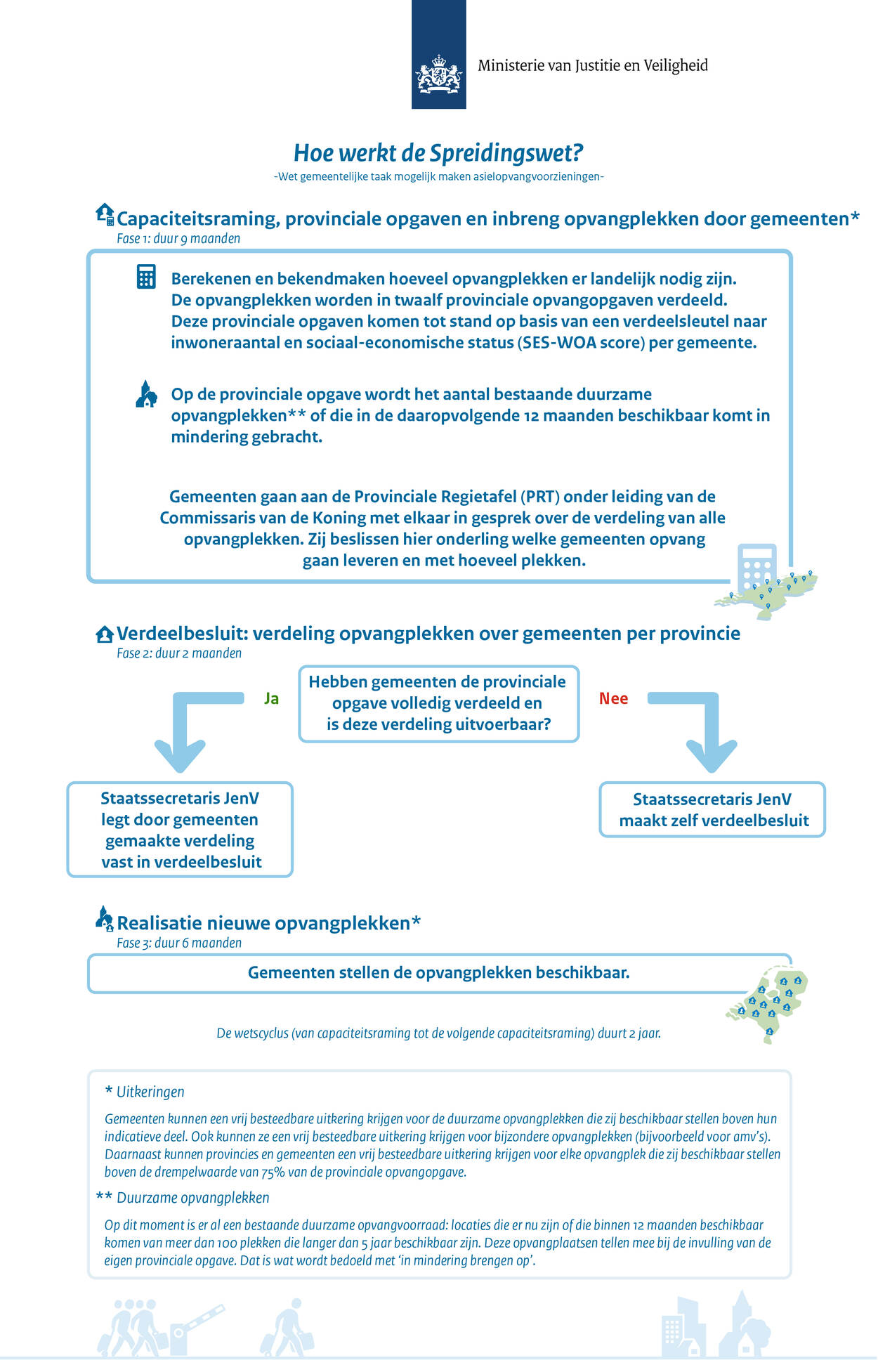
The conflict highlights a growing rift in Dutch governance between the Rijksoverheid (national government) and local administrative bodies. The Spreidingswet was designed to legally mandate a fair distribution of asylum seekers across all municipalities to avoid the concentration of refugees in a few heavily burdened urban centers.
However, the implementation of this law directly contradicts the political promises made by local officials during election campaigns. For many local leaders, adhering to the Spreidingswet is viewed as a betrayal of the voters who elected them on the specific platform of maintaining “asylum-free” status. This has created a situation where local governments are using legal mechanisms to attempt to uphold their campaign promises, even when those promises conflict with national law.
The legal strategies being employed range from formal lawsuits to administrative delays. Some municipalities are seeking to prove that they lack the physical or financial capacity to meet the government’s requirements, thereby attempting to exempt themselves from the distribution quotas.
How will these legal battles impact asylum seeker placement?
The ongoing litigation introduces significant uncertainty into the Dutch asylum system. If municipalities successfully challenge the legality of the Spreidingswet or secure exemptions through the courts, the national government may find itself unable to implement a cohesive distribution strategy.
The impact of these legal challenges can be categorized into three primary areas:
- Placement Delays: Legal injunctions and court hearings can stall the movement of asylum seekers, potentially leading to increased overcrowding in temporary reception centers, such as the Ter Apel facility.
- Administrative Fragmentation: A fragmented approach, where some municipalities comply and others fight, could lead to an uneven distribution that fails to solve the core problem of regional pressure.
- Political Precedent: The outcome of these cases will likely set a precedent for how much authority the central government holds over local municipalities regarding social and demographic policy.
Observers note that the “long road” toward resolving these disputes involves multiple layers of the Dutch judicial system. Even if the law is upheld, the resistance from local governments may manifest as “passive non-compliance,” where the letter of the law is followed but the spirit of cooperation is absent.
Comparison of Municipal Responses
The response among Dutch local governments is not monolithic. Based on current reporting, the approaches can be divided into three distinct categories:
| Response Category | Primary Motivation | Action Taken |
|---|---|---|
| Active Legal Resistance | Upholding “zero asylum” election promises. | Filing lawsuits and seeking court injunctions to block the law. |
| Reluctant Compliance | Avoiding legal penalties while maintaining local dissatisfaction. | Following mandates but publicly criticizing the central government. |
| Cooperative Alignment | Prioritizing national legal obligations and humanitarian needs. | Working with the Rijksoverheid to facilitate placement. |
This division reflects the broader political polarization within the Netherlands, where the issue of asylum has become a central point of contention between populist-leaning local administrations and the national governing bodies.
The next significant checkpoint in this conflict will be the upcoming rulings from the various regional courts handling the municipal challenges to the Spreidingswet. These decisions will determine whether the national government can proceed with its planned distribution schedule or if the law will be significantly weakened by judicial intervention.
For more updates on Dutch policy and economic developments, please follow our business section and share this report with your network.
Keep reading