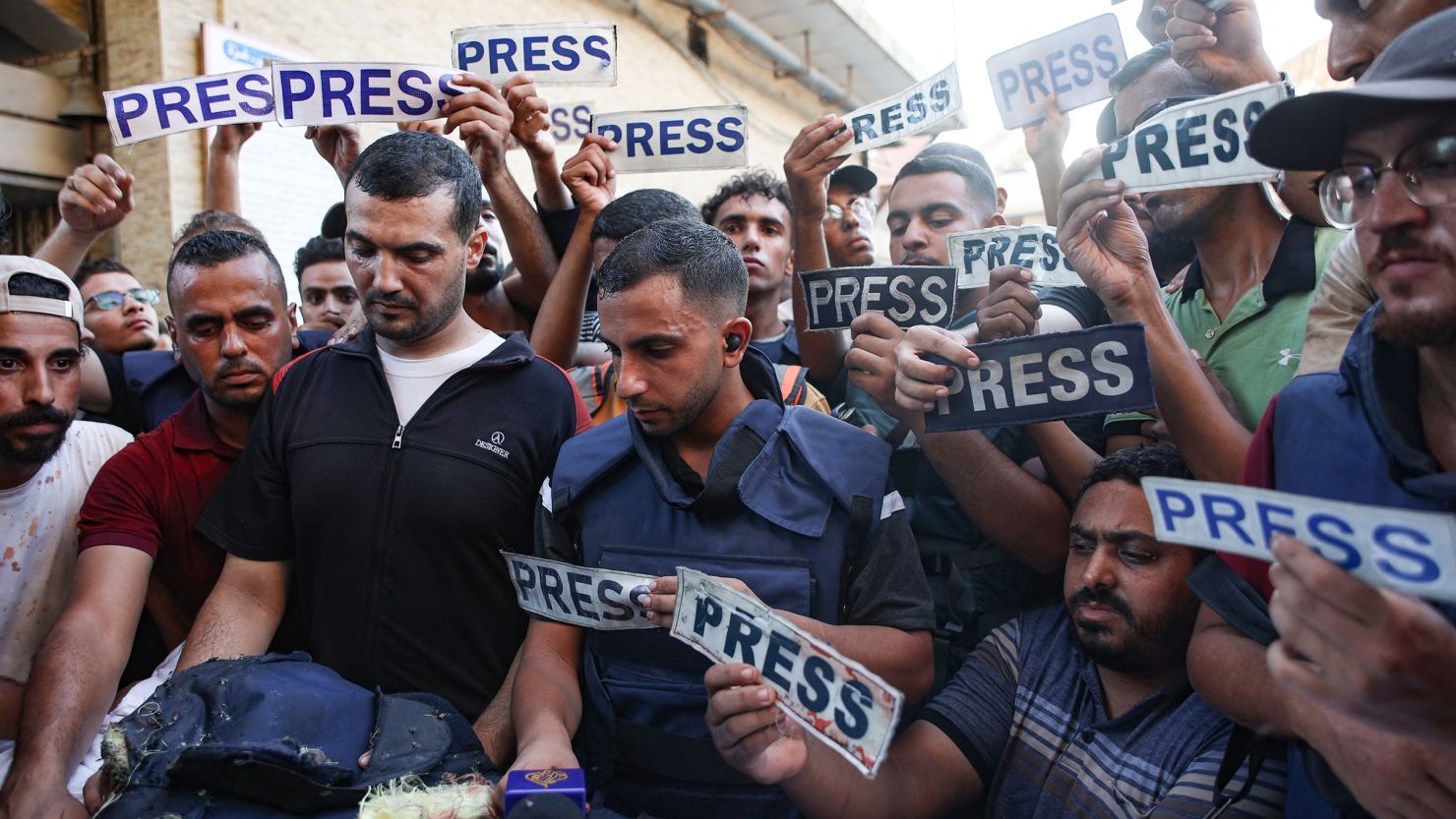
Al Jazeera Cameraman Ahmed Washah Killed in Israeli Strike in Gaza
Al Jazeera cameraman Ahmed Washah was killed during an Israeli military strike in the Gaza Strip, according to reports from the news network. The Israeli military has characterized the cameraman as a member of Hamas, an allegation that Al Jazeera and various press freedom organizations have disputed.
The death of Ahmed Washah marks a second tragedy for the Washah family within a single month. His brother, Mohammed Washah, an Al Jazeera correspondent, was also killed earlier this year in April during an Israeli drone strike. The recurring loss of media personnel from the same household has drawn significant attention to the safety of journalists operating in active combat zones.
The incident occurs amid a broader conflict in Gaza that has seen unprecedented casualties among media workers. While the Israeli Defense Forces (IDF) maintain that their operations target militant infrastructure and personnel, international monitors have expressed increasing concern over the frequency of strikes hitting media professionals.
The circumstances of the strike on Ahmed Washah
According to Al Jazeera, the strike that killed Ahmed Washah was part of ongoing military operations in the Gaza Strip. While the exact location and precise timing of the strike were not immediately confirmed by independent international observers, the network stated that the cameraman was performing his professional duties at the time of the incident.

The Israeli military has issued statements claiming that its intelligence identified Ahmed Washah as a “Hamas terrorist.” The IDF has frequently asserted that militant groups utilize media infrastructure or personnel for operational purposes, though they have not provided specific evidence in this particular case that has been made available to the public. These claims are central to the ongoing legal and political debate regarding the distinction between combatants and non-combatants under international law.
The death of Mohammed Washah in April
The killing of Ahmed Washah follows the death of his brother, Mohammed Washah, in April. Mohammed was an Al Jazeera correspondent who was reportedly killed by an Israeli drone strike while covering the conflict. The loss of two brothers from the same media organization has been cited by Al Jazeera as evidence of the extreme risks faced by local journalists in the region.
The circumstances surrounding Mohammed Washah’s death have been part of a larger pattern of reported casualties among Gaza-based reporters. Media advocacy groups have pointed to the deaths of the Washah brothers as a focal point for discussions regarding the protection of journalists under the Geneva Conventions, which mandate that media workers be treated as civilians during armed conflict.
Contrasting perspectives on journalist casualties
The deaths of the Washah brothers highlight a fundamental disagreement between the Israeli military and international media monitors regarding the nature of these strikes. This tension is characterized by two distinct narratives:
- The Israeli Military Position: The IDF maintains that its strikes are precision-targeted at militants and that any civilian or media casualty is an unintended consequence of operating in high-density combat zones where Hamas is embedded. The military has increasingly moved to label specific media members as active participants in militant activities to justify these strikes.
- The Media and Human Rights Position: Al Jazeera, the Committee to Protect Journalists (CPJ), and Reporters Without Borders (RSF) argue that the labeling of journalists as “terrorists” is often used without sufficient evidence to justify strikes that violate international humanitarian law. They contend that these incidents represent a systematic failure to protect the press.
This discrepancy in reporting is not unique to the Washah family. In many instances, the IDF provides intelligence-based justifications for strikes, while news organizations provide documentation of the individuals’ professional identities and journalistic history.
The rising toll on media workers in Gaza
The death of Ahmed Washah contributes to what many international organizations describe as the deadliest period for journalists in modern history. According to data tracked by the Committee to Protect Journalists (CPJ), the number of media workers killed in the Gaza conflict has reached record levels, far exceeding the totals from previous major escalations in the region.
The impact of these casualties extends beyond the loss of life. The depletion of local media staff has created significant challenges for the dissemination of information from within the Gaza Strip. As experienced cameramen and correspondents are killed, the technical and observational capacity of news networks to provide real-time coverage is diminished.
Journalists in Gaza face a multi-layered threat environment, including:
- Airstrikes and artillery fire in densely populated urban areas.
- The use of unmanned aerial vehicles (drones) for surveillance and targeted strikes.
- Difficulty in navigating checkpoints and active combat zones to reach breaking news sites.
- The psychological toll of operating in a high-casualty, high-stress environment.
Legal frameworks and the protection of journalists
Under International Humanitarian Law (IHL), specifically the 1977 Additional Protocol I to the Geneva Conventions, journalists engaged in professional missions in areas of armed conflict are entitled to the same protections as civilians. This means they cannot be the intentional target of an attack unless they are directly participating in hostilities.
The legal debate currently centers on the definition of “direct participation in hostilities.” The Israeli military’s assertion that Ahmed Washah was a Hamas terrorist hinges on this definition. If a journalist is found to be actively involved in military operations, they lose their protected status. However, international legal experts emphasize that the burden of proof for such a designation is high and must be met to avoid war crimes allegations.
Human rights organizations are calling for independent investigations into the deaths of journalists to determine whether these strikes constitute intentional targeting or collateral damage. Such investigations are essential for maintaining accountability under international law and ensuring that the distinction between combatants and journalists remains clear.
Summary of the Washah family incidents
| Individual | Role | Date of Death | Reported Cause | Allegation/Context |
|---|---|---|---|---|
| Mohammed Washah | Al Jazeera Correspondent | April 2024 | Israeli drone strike | Journalist killed in combat zone |
| Ahmed Washah | Al Jazeera Cameraman | Recent | Israeli airstrike | IDF alleged Hamas affiliation |
As of the latest reports, Al Jazeera has not released a formal legal response to the IDF’s specific allegations regarding Ahmed Washah, though the network has continued to condemn the targeting of its staff. Watchful eyes from the United Nations and various international press freedom groups remain on the situation as more details regarding the strike emerge.
Further updates are expected following any official statements from the United Nations Office for the Coordination of Humanitarian Affairs (OCHA) or formal reports from the CPJ regarding the incident.
To stay updated on the developments of this story and other global affairs, please share this article and join the conversation in the comments below.
Related reading