Unearthing Aguada Fénix: A Monument to Early Mesoamerican Collaboration
For decades, the dense forests of Tabasco, Mexico, concealed a remarkable secret. Recent discoveries at aguada Fénix are rewriting our understanding of early Mesoamerican societies,challenging long-held beliefs about the origins of complex construction and ritual practices. This isn’t a story of kings and forced labour, but one of collective effort and shared cosmological vision.Let’s delve into what makes this site so groundbreaking.
A Lost City Revealed: The Power of LiDAR
Aguada Fénix remained largely hidden from view until the request of LiDAR (Light Detection and Ranging) technology. This remote sensing method penetrates the forest canopy, creating detailed 3D maps of the terrain below. What researchers, led by Dr. Takeshi inomata of the University of Arizona,uncovered was astonishing: a massive ceremonial complex dating back to 900-800 BCE – substantially earlier than manny previously known Maya centers.
The scale is immense. Aguada Fénix isn’t a single pyramid, but a sprawling network of platforms, causeways, and reservoirs covering over 44 acres. It’s a testament to the ingenuity and organizational skills of a society previously thought to be less developed.
Decoding the Ritual Landscape
Excavations have revealed a wealth of details about the purpose and construction of Aguada Fénix. Here’s a breakdown of key findings:
* the Cruciform Platform: The heart of the complex is a large, cruciform-shaped platform. Dating back to 900-845 BCE, it served as a focal point for ritual activity. crucially, fragments of ceramic material found nearby helped pinpoint this early date.
* Ceremonial Offerings: Researchers unearthed jade axes, recognized from previous excavations as ceremonial objects. These finds promptly signaled the site’s importance as a ritual center. Further excavation revealed jade ornaments depicting a crocodile, a bird, and a figure believed to be a woman in childbirth.
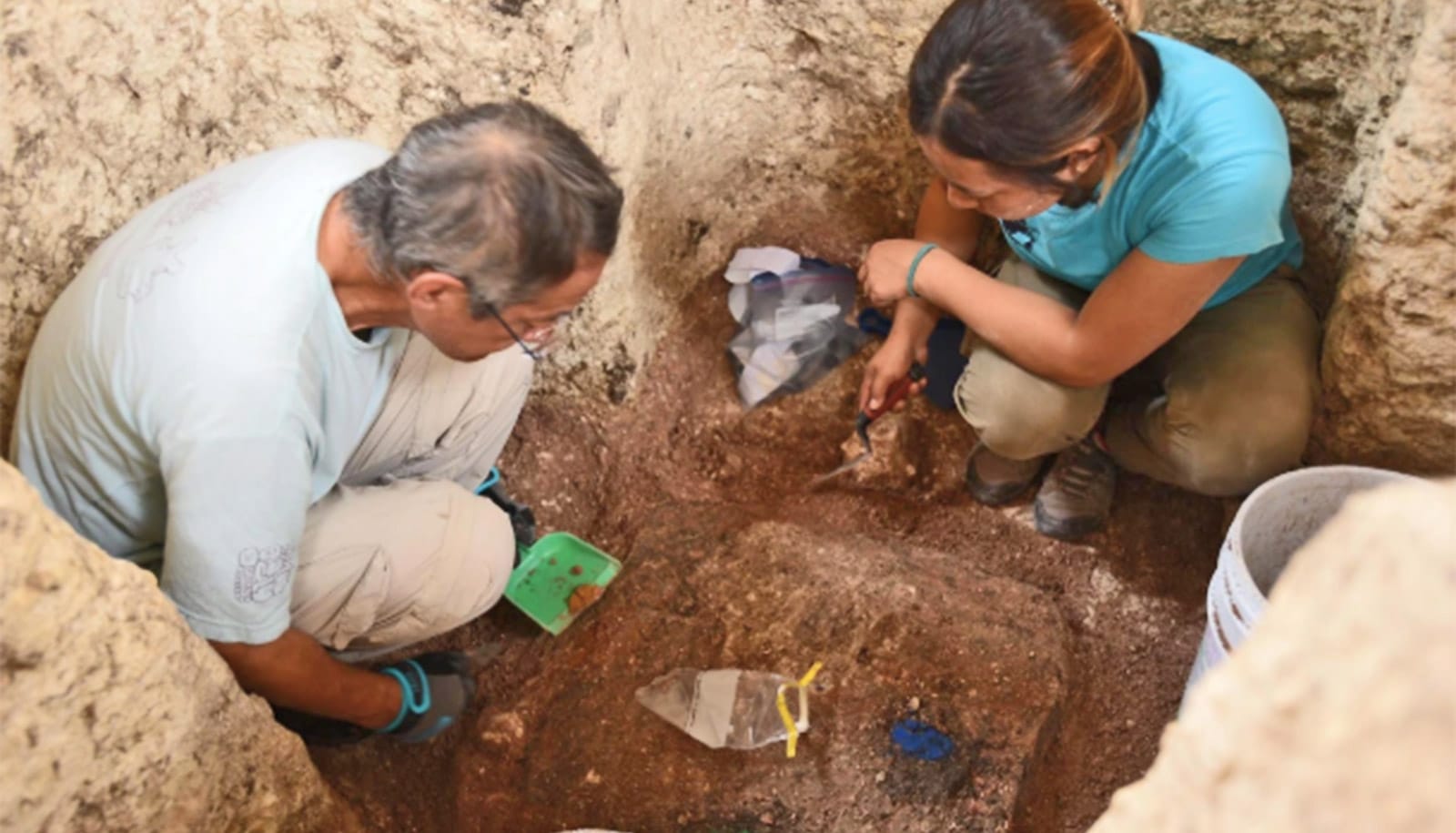
* Cosmological Alignment: Perhaps the most compelling discovery was the arrangement of mineral pigments – blue, green, and yellow – at the base of a smaller cruciform. These pigments were meticulously placed to correspond with the cardinal directions.This is the first documented instance of such a purposeful cosmological arrangement, demonstrating a sophisticated understanding of the universe.
* Infrastructure for Community: The builders didn’t just focus on ceremonial structures. A network of raised causeways, sunken corridors, canals, and a dam reveal a sophisticated understanding of water management and transportation. These features extended up to six miles from the central plateau, connecting the site to the surrounding landscape.
A Shift in Understanding Early Maya Society
Aguada Fénix challenges the conventional narrative of early Maya development. For years, sites like Tikal in Guatemala were seen as the product of powerful, centralized rulers. Though, evidence from Aguada Fénix suggests a different model.
dr. Inomata proposes that Aguada Fénix was built not under the command of a single king, but by a collective of “intellectual leaders.” These individuals likely possessed astronomical knowledge and guided the design and planning of the site.
“These leaders didn’t have power to force other people,” Inomata explains. “Most came probably willingly,becuase this idea of building a cosmogram was really crucial to them,and so they worked together.”
This suggests a society where consensus and shared belief motivated large-scale construction,rather than coercion.
Implications for Today
The discoveries at Aguada Fénix offer a powerful message for modern society.We often assume that significant achievements require strong, centralized authority and social hierarchy.
However, Aguada Fénix demonstrates that complex projects can be accomplished through collaboration, shared vision, and a commitment to common goals.As inomata points out, “We don’t need really big social inequality to achieve important things.”
this ancient site serves as a reminder that collective action, driven by shared values, can be a potent force for innovation and progress.
The Future of Research
Archaeologist Xanti S. Ceballos Pesina, a coauthor of the study, emphasizes the role of new technologies in uncovering these hidden histories. ”I think it’s vrey cool that new technologies are helping to discover these new types of architectural arrangements,” she says.
Ongoing research at Aguada Fénix promises to reveal even more about the lives, beliefs, and organizational structures
Related reading