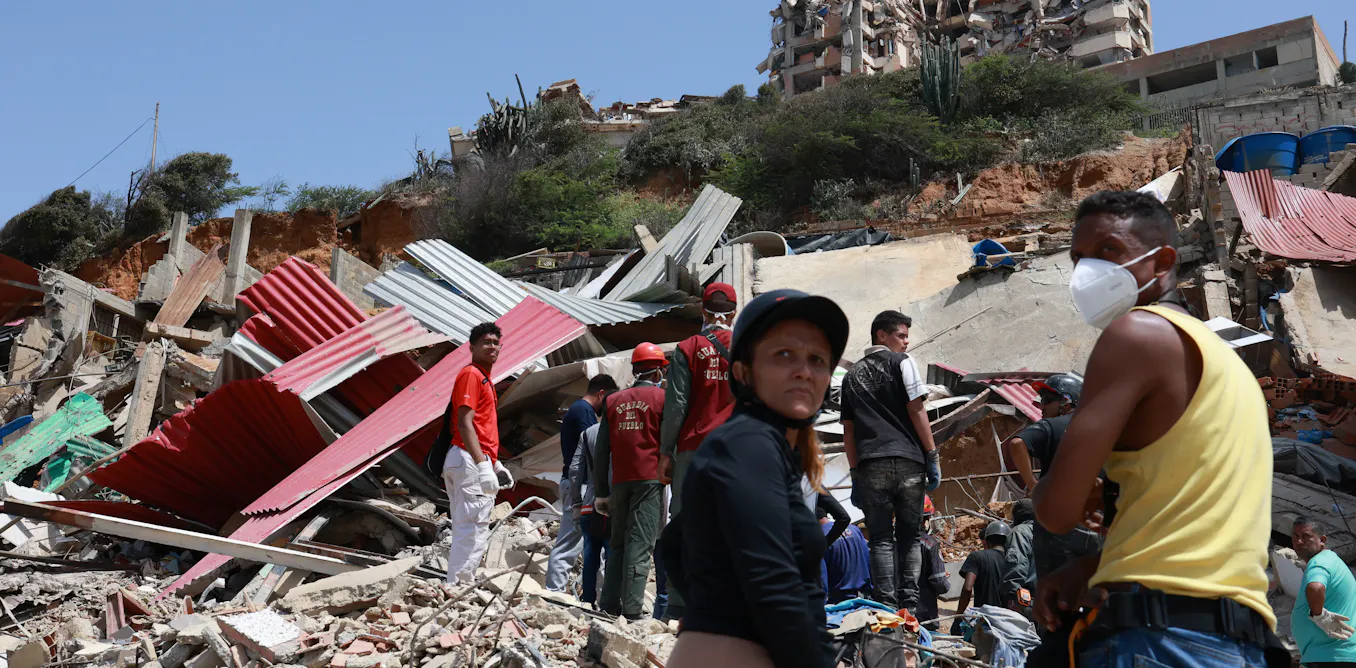
Two powerful earthquakes struck Venezuela on June 24, 2026, causing widespread destruction in Caracas and the coastal city of La Guaira. While the exact toll remains unverified, the disasters have laid bare the vulnerabilities of a healthcare system already strained by years of economic and political crisis. Physicians Dr. Hermes Florez and Dr. Zeina Hannoush, both originally from Venezuela and now based in the United States, provided firsthand accounts of the devastation and the systemic failures exacerbating the humanitarian fallout.
Dr. Hannoush, who was in Caracas during the quakes, described the moment the ground began to shake. “I was standing at the exit of my aunt’s building when it hit. Just two seconds before, I would have been in the elevator,” she said. The intensity of the tremors left her and others scrambling for safety. “I walked to an open area and started yelling at people in buildings to come down. The sound of crashing plates and people shouting was everywhere.”
While La Guaira suffered more severe damage, Caracas residents faced their own challenges. “There were aftershocks throughout the week. We’d be sleeping, and the bed would shake. We’d wake up and rush to the street,” Dr. Hannoush recalled. Her focus quickly shifted to ensuring her children’s safety, highlighting the personal stakes of the disaster.
The State of Venezuela’s Healthcare System
Dr. Florez, who trained in Venezuela before relocating to the U.S., described the country’s healthcare infrastructure as “a very, very challenging situation, now exacerbated by the earthquake.” He cited a 2023 study published in *The Lancet* (as referenced by the source) which found that fewer than 10% of Venezuelans could afford private healthcare, with 70% of the population living in poverty. Public hospitals, he explained, are often under-resourced, forcing patients to bring their own medical supplies.
“If you need a hip surgery or a fracture treated, you get a list of supplies you must bring—blankets, gauze, gloves, even a mattress,” Dr. Hannoush said. “It’s a system that relies on individual fundraising, which is unsustainable.” Despite the hardships, she praised the dedication of healthcare workers. “God bless the physicians practicing there.”
Lack of Preparedness and Systemic Neglect
Emergency preparedness in Venezuela has long been inadequate. Dr. Florez attributed this to decades of policy neglect. “My father worked for the national oil company for 30 years, and there were robust redundancy systems for power and services. Those were abandoned after 2002, when the government clashed with industry experts,” he said. “In healthcare, the situation is even worse.”
Neither the World Health Organization nor the Pan American Health Organization has implemented comprehensive emergency training programs in Venezuela over the past 20 years, according to Dr. Florez.
Aid Challenges and Mistrust
Global aid efforts have faced hurdles in reaching those in need. Dr. Hannoush noted a “huge mistrust between the government and nonprofit organizations.” Historical instances, such as the mismanagement of donations during the COVID-19 pandemic and a 1999 disaster, have fueled skepticism. “Donations often don’t reach the ground,” she said. “I’ve been working to ensure aid bypasses bureaucratic delays and reaches hospitals directly.”
Despite these obstacles, Dr. Florez remains cautiously optimistic. “After COVID-19, virtual care platforms have improved. We can use these tools to train healthcare workers in Venezuela,” he said. He emphasized the need for international collaboration, particularly with the Venezuelan diaspora, to address the crisis.
The Path Forward
The earthquake has underscored the urgency of overhauling Venezuela’s healthcare system. “A total revamp is overdue,” Dr. Florez said. While immediate relief efforts are critical, he stressed that long-term reforms—such as investment in infrastructure, emergency planning, and medical training—must also be prioritized.
As the nation grapples with the aftermath, the voices of those who have left Venezuela offer a stark reminder of the challenges facing their homeland. “We’re taking care of the urgent need with earthquake relief, but we must also address the important need of reforming the healthcare system,” Dr. Florez added.
For now, the focus remains on saving lives and rebuilding. Yet, without systemic change, the vulnerabilities exposed by the quakes will persist, leaving Venezuela’s population vulnerable to future crises.