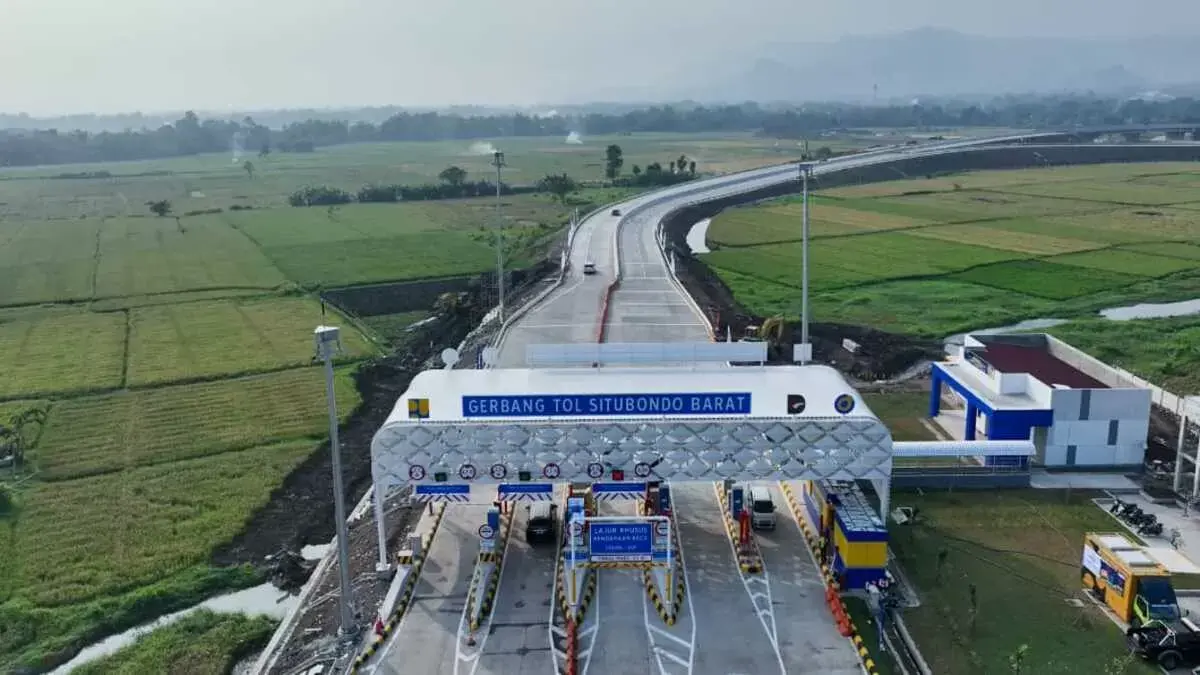
Infrastructure development in East Java is reaching a critical milestone as the Probowoninggo-Situbondo-Banyuwangi (Prosiwangi) toll road continues its expansion. The Gending-Besuki section of the project is now slated to be operational by July 2026, marking a significant step in enhancing regional connectivity across the eastern corridor of the province.
This development is designed to streamline logistics and passenger travel, reducing the reliance on congested arterial roads. The upcoming opening of the Gending-Besuki stretch is expected to further integrate the economic hubs of East Java, facilitating faster movement of goods and services between key districts.
The impact of such infrastructure is already becoming evident in neighboring regions. For instance, vehicle volume in Bondowoso has reportedly increased by 23 percent via RRI.co.id, a trend linked to the opening of the Besuki toll gate. This surge underscores the immediate effect that improved accessibility has on local traffic patterns and economic activity.
Accelerating Regional Connectivity in East Java
The Prosiwangi toll road project is a strategic effort to link the Probolinggo, Situbondo, and Banyuwangi regions. By bridging the gap between Gending and Besuki, the project aims to create a more efficient transit system that bypasses traditional bottlenecks on the northern coast road. The July 2026 target for the Gending-Besuki section represents a commitment to completing a network that will eventually connect the easternmost tip of Java to the rest of the island’s burgeoning toll network.
For residents and businesses in East Java, the completion of this section means reduced travel times and lower operational costs for logistics. The integration of these regions is not merely about speed but about creating a reliable supply chain that can support agricultural and industrial growth in the region.
Economic Implications and Traffic Shifts
The correlation between new toll access and increased mobility is already quantifiable. The 23 percent rise in vehicle volume in Bondowoso serves as a primary indicator of how the Besuki toll gate acts as a catalyst for movement via RRI.co.id. As the Gending-Besuki section prepares for its 2026 launch, similar patterns of increased traffic and economic stimulation are expected across the affected districts.
Local governments are now tasked with managing this influx. The challenge lies in balancing the efficiency of high-speed toll roads with the need to maintain the viability of local roads and the businesses that rely on them. The shift in traffic flow often leads to a redistribution of economic activity, where areas near toll exits see a surge in commercial development.
Balancing Infrastructure with Environmental Preservation
As the pace of construction accelerates, the tension between modernization and conservation has come to the forefront. In Situbondo, officials are actively developing strategies to protect natural tourism sites from the potential disruptions caused by rapid infrastructure growth. The goal is to ensure that while the region becomes more accessible via the Prosiwangi toll road, its unique natural landscapes remain intact for future generations.
This dual-track approach—promoting connectivity while safeguarding the environment—is essential for sustainable development. The risk of unplanned urban sprawl around new toll exits is a known concern, prompting local authorities to implement stricter zoning and conservation guidelines to prevent the degradation of Situbondo’s natural assets.
Key Project Milestones
The trajectory of the Prosiwangi project is defined by several critical phases. The current focus remains on the Gending-Besuki section, with the operational deadline set for July 2026. This timeline is part of a broader national strategy to enhance the Trans-Java network, ensuring that the eastern regions are not left behind in the drive toward modernized transportation.

The successful operation of the Besuki toll gate has already provided a proof-of-concept for the region, demonstrating that infrastructure investment leads to immediate increases in regional mobility. The upcoming July 2026 milestone is the next logical step in this expansion.
| Feature/Event | Detail/Status | Expected Impact |
|---|---|---|
| Gending-Besuki Section | Operational July 2026 | Enhanced East Java Connectivity |
| Besuki Toll Gate | Open | 23% increase in Bondowoso vehicle volume |
| Situbondo Region | Ongoing Strategy | Preservation of natural tourism |
What So for the Future of East Java
The completion of the Gending-Besuki stretch will likely trigger a secondary wave of economic growth. By lowering the barrier to entry for transport and logistics, the region becomes more attractive for industrial investment. The ease of travel is expected to boost domestic tourism, as the journey to the eastern coast becomes significantly shorter and more predictable.
But, the success of the Prosiwangi toll road will be measured not just by the number of vehicles it carries, but by how well it integrates with existing local infrastructure. The ability of the Gending-Besuki section to alleviate pressure on the northern coast road will be a key metric of its success upon opening in 2026.
As the project moves toward its July 2026 operational date, the next phase of development will involve final testing, safety certifications, and the coordination of traffic management systems to ensure a seamless transition for motorists.
We will continue to monitor the progress of the Prosiwangi toll road and the resulting economic shifts in East Java. Share your thoughts on how these infrastructure changes are affecting your travel and business in the comments below.