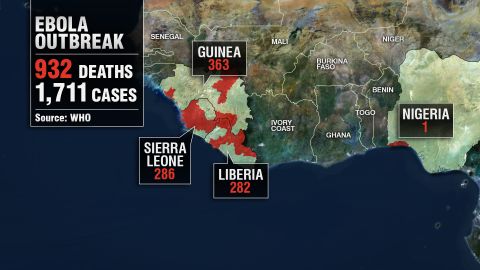
The persistent challenge of managing viral hemorrhagic fevers remains a critical public health priority across sub-Saharan Africa. As international health organizations and local authorities work to monitor disease outbreaks, understanding the nature of orthoebolaviruses—the group of viruses responsible for Ebola disease—is essential for both containment and public safety. With outbreaks historically centered in regions of the Democratic Republic of the Congo and neighboring nations, health agencies emphasize that vigilance, rapid identification, and supportive care are the cornerstones of limiting the impact of these severe illnesses.
Ebola disease is characterized by its severity and, in many cases, its high mortality rate. According to the World Health Organization (WHO), the case fatality rate for the disease has historically fluctuated between 25% and 90%, with an average of approximately 50%. These viruses, which belong to the Filoviridae family, are zoonotic, meaning they can be transmitted from animals to humans, and subsequently spread through direct contact with the blood or body fluids of an infected individual or contaminated surfaces.
Understanding Orthoebolaviruses and Transmission
The term “Ebola” refers to a group of viruses now classified as orthoebolaviruses. While there are six known species within this genus, three are primarily associated with large-scale human outbreaks: the Ebola virus, the Sudan virus, and the Bundibugyo virus. As noted by the Centers for Disease Control and Prevention (CDC), the initial symptoms of infection typically manifest between two and 21 days following exposure, with an average incubation period of eight to 10 days.
Early symptoms often mimic other common illnesses, including fever, fatigue, muscle pain, and headaches. As the disease progresses, individuals may experience more severe complications, such as gastrointestinal distress, rash, and impaired organ function. In advanced stages, some patients may develop internal or external bleeding. Because these symptoms overlap with conditions like malaria, typhoid, or cholera, precise laboratory testing—such as the identification of viral RNA or specific antibodies—is required for a definitive diagnosis.
The Critical Role of Supportive Care
Currently, medical intervention for Ebola disease focuses heavily on intensive supportive care. The World Health Organization highlights that early treatment, particularly rehydration and the management of specific symptoms, can significantly improve survival rates. While there are FDA-approved vaccines and therapeutics specifically for the Ebola virus (species Orthoebolavirus zairense), development for treatments targeting other species like the Sudan virus or Bundibugyo virus remains ongoing.
Effective outbreak control relies on a comprehensive strategy that extends beyond clinical care. This includes:
- Rigorous disease surveillance and contact tracing to identify new cases quickly.
- Infection prevention and control measures within healthcare settings, including the proper use of personal protective equipment (PPE).
- Safe and dignified burial practices to prevent transmission from deceased patients.
- Social mobilization to ensure communities are informed and engaged in prevention efforts.
Historical Context and Future Preparedness
The discovery of these viruses dates back to 1976, when simultaneous outbreaks occurred in Yambuku, in what is now the Democratic Republic of the Congo, and in Nzara, in present-day South Sudan. Since that time, the scientific understanding of the virus has evolved, yet the threat of resurgence remains. The geographic distribution of orthoebolaviruses is primarily concentrated in sub-Saharan Africa, necessitating ongoing cooperation between national ministries of health and international partners.

For those seeking the most current information, health authorities maintain regular updates regarding active outbreaks and safety guidelines. The CDC provides ongoing guidance for healthcare providers on screening, testing, and emergency services for viral hemorrhagic fevers. For the general public, adhering to official health advisories and practicing caution in regions where the virus is known to circulate remains the most effective way to mitigate risk.
As international monitoring continues, health officials encourage the public to rely on verified data from established public health institutions. If you have questions about regional health risks or recent developments, please consult your local health department or the official portals of the World Health Organization. We invite our readers to join the conversation and share their thoughts on the importance of global health infrastructure in the comments section below.
Keep reading