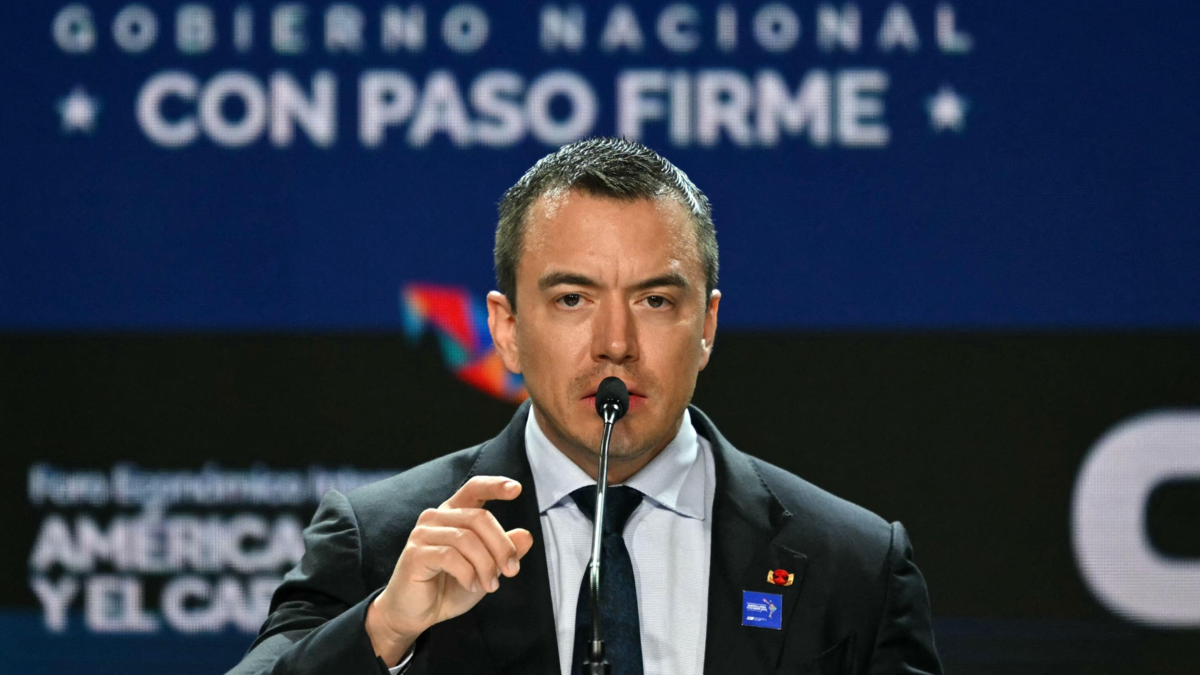
Ecuadorian President Daniel Noboa has announced a significant shift in trade policy, declaring his intention to remove tariffs on Colombian imports starting June 1. The decision, which marks a notable pivot in the ongoing trade tensions between the two neighboring nations, follows a series of high-level discussions aimed at fostering regional cooperation and economic stability.
The announcement, delivered on Friday, arrives just two days before Colombia is scheduled to head to the polls for a pivotal presidential election. The move is framed by the Ecuadorian administration as a diplomatic gesture intended to reset the commercial relationship between Quito and Bogotá, which has been strained by various protectionist measures in recent months. According to official reports from the Associated Press, the decision to lift these barriers was confirmed by President Noboa following a dialogue with one of the opposition candidates currently active in the Colombian political landscape, Abelardo de la Espriella, who represents the Defensores de la Patria movement.
Navigating Regional Trade and Security
The removal of the “security tax” on imports, which had been a primary driver of the recent commercial friction, is set to take effect on June 1, 2026. President Noboa emphasized that the decision is rooted in a shared commitment to addressing transnational threats. In his communication regarding the policy change, the Ecuadorian leader underscored a mutual “will to promote a real and joint fight against narcoterrorism,” signaling that the economic recalibration is intended to serve as a foundation for broader security collaboration between the two countries. Further details regarding the implementation of this policy can be monitored through the official portals of the Organization of American States, where regional trade and security protocols are frequently updated.

The timing of the announcement has drawn significant attention due to the proximity of the Colombian elections, where voters are set to choose a successor to President Gustavo Petro on May 31. The political climate remains sensitive, as the relationship between the current Ecuadorian administration and the Petro government has faced documented periods of friction. President Noboa did not clarify how this trade policy might evolve following the election results, particularly if the official candidate, Iván Cepeda, were to secure victory.
Context of the Bilateral Relationship
Trade relations between Ecuador and Colombia have historically been a cornerstone of Andean regional policy. The imposition of tariffs and the subsequent “trade war” dynamics have impacted numerous sectors, from manufacturing to agricultural exports. By choosing to eliminate these specific levies, the Ecuadorian government appears to be prioritizing a strategic alignment that transcends current political cycles. Analysts note that this move reflects a broader trend in South American geopolitics, where leaders are increasingly looking to leverage economic tools to address shared security challenges, such as organized crime and illegal border activities, which have long affected the border regions shared by the two nations.
For businesses and stakeholders involved in cross-border trade, the June 1 deadline serves as a critical checkpoint. The transition is expected to alleviate some of the financial pressures that have hampered import-export volumes over the last several months. While the move has been welcomed by some sectors as a necessary step toward economic normalization, it also highlights the complexities of managing international trade in an environment where domestic political transitions can influence foreign policy decisions.
What Comes Next
As the May 31 election date approaches in Colombia, the international community remains focused on the potential for policy shifts that could follow the transition of power. Whether the removal of tariffs will lead to a sustained period of cooperation or remain subject to the volatility of regional politics depends largely on the outcome of the upcoming vote. Official updates regarding the status of these trade regulations will be provided by the relevant ministries in both Quito and Bogotá as the transition date approaches.
We will continue to monitor these developments closely as more information becomes available. If you have insights or observations regarding the impact of these trade changes on your industry, we encourage you to share your thoughts in the comments section below.
Related reading