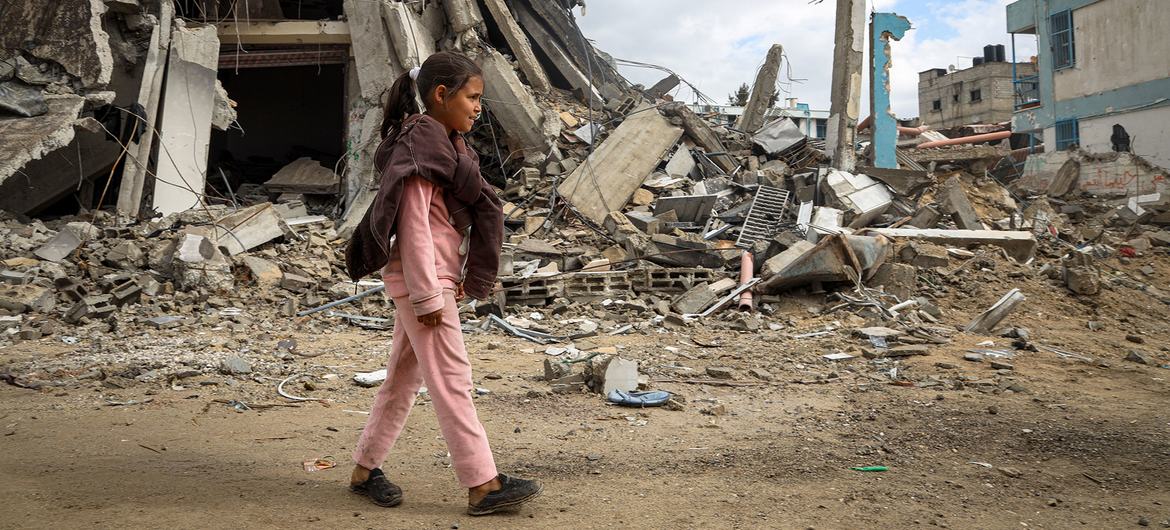
The role of educators in conflict zones is often defined by an impossible tension: the duty to provide structure for children while the world around them experiences systemic collapse. A recent installment of the PalCast podcast explores this reality through the testimony of Arwa Alzraiy, an academic and teacher who has been navigating the challenges of schooling in Gaza during the ongoing war. Her account provides a granular look at how the pedagogical landscape has been transformed by prolonged hostilities, shifting the focus of the classroom from formal academic progression to the basic preservation of student well-being.
For many international observers, the human impact of the war in Gaza remains a subject of intense focus, particularly concerning the continuity of essential services like education. According to the United Nations Relief and Works Agency for Palestine Refugees (UNRWA), the conflict has led to the widespread closure of schools, with many facilities repurposed as shelters for displaced families. The disruption has left hundreds of thousands of children without access to formal schooling, a situation exacerbated by the destruction of critical infrastructure across the territory.
The Transformation of the Classroom
During her conversation on the podcast, Arwa Alzraiy described how the physical environment for learning has fundamentally changed. When classrooms exist, they are often repurposed spaces, frequently lacking fundamental resources. The infrastructure of education, ranging from basic textbooks to stable shelter, has been severely compromised. This environment forces educators to adapt their methods to the immediate, daily realities of their students, whose primary concerns often shift to survival, including the logistics of food and water access.

The curriculum itself has not been immune to the pressures of the conflict. Alzraiy noted that the scope of what can be taught has faced severe restrictions. The removal of specific subjects—such as social studies and religious education—from the learning environment highlights the narrowing of the academic horizon for students caught in the conflict. These changes, coupled with the rigid control of educational materials, create a setting where teachers must balance the delivery of knowledge with the need to navigate a landscape of severe oversight and limited resources.
The psychological toll of these conditions remains a central theme in the discourse surrounding the current situation in Gaza. The exposure to constant violence, displacement, and the loss of familiar surroundings has, according to reports from humanitarian organizations like Save the Children, contributed to a profound mental health crisis among the youth. The trauma, as described by educators on the ground, manifest in a range of ways, including a potential erosion of empathy and a growing desensitization to the violence that has become a daily occurrence.
Shifting Priorities in Times of Crisis
For teachers, the shift in priorities has been stark. The traditional metrics of academic achievement—standardized testing, curriculum milestones, and grade-level progression—have largely been sidelined in favor of creating supportive environments. The goal, as expressed by Alzraiy, is to foster a sense of security and continuity, even when the broader environment is characterized by volatility. This pedagogical shift acknowledges that learning cannot effectively occur without addressing the emotional and psychological state of the students.
The struggle to preserve Palestinian history and identity through education serves as a critical lens through which to view these challenges. In a landscape where the physical manifestations of history are often under threat, the role of the teacher becomes one of a custodian of memory. Despite the immense pressure to conform to new, restricted curricula, the effort to maintain a connection to heritage remains a significant part of the classroom experience.
The testimony provided in this recent broadcast offers an intimate perspective on what it means to continue working as an educator in such extraordinary circumstances. The focus remains on the resilience of both the teacher and the student, illustrating the ways in which human connection serves as a pillar of support when institutional systems fail. The podcast episode serves as a window into these realities, providing a narrative that complements the broader reporting on the humanitarian situation in the region.
Understanding the Broader Context
The situation described by Alzraiy is reflective of the broader challenges highlighted by international monitoring bodies. The World Health Organization (WHO) and other humanitarian agencies have consistently documented the degradation of health, water, and sanitation services in Gaza, all of which directly impact the ability of children to attend even informal learning sessions. The intersection of these crises—health, education, and nutrition—creates a compounded hardship for the population.
For those seeking to follow the ongoing developments in the region, organizations such as the UN Office for the Coordination of Humanitarian Affairs (OCHA) provide regular updates on the situation on the ground. These reports often detail the specific impact on education, including the number of schools damaged or destroyed and the challenges faced by teachers attempting to reach their students under current security conditions. These documents remain essential for understanding the scale of the humanitarian needs.
The conversation regarding the future of education in Gaza remains ongoing among policymakers and international aid organizations. As the situation evolves, the focus is expected to remain on how to facilitate the return to structured learning while the immediate threats to life and safety persist. The resilience of educators and their students, as illustrated in this recent podcast, underscores the human element that remains at the center of this geopolitical crisis.
For listeners interested in the full discussion, the episode is available across major podcasting platforms, including Apple Podcasts and Spotify. Engaging with these firsthand accounts is one way to gain insight into the daily lives of those living through the conflict. We encourage our readers to share their thoughts and experiences regarding the role of education in conflict zones in the comments section below.
Related reading