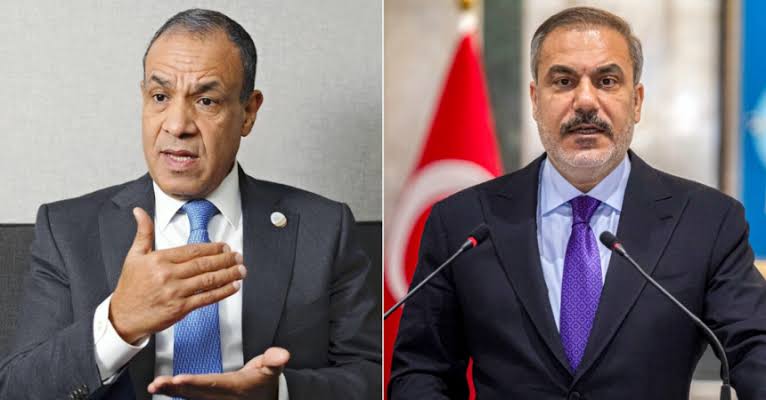
Egypt and Türkiye are intensifying diplomatic efforts to revive the negotiation track between the United States and Iran, aiming to de-escalate rising regional tensions. In a phone conversation held on Saturday, Egyptian Foreign Minister Badr Abdelatty and Turkish Foreign Minister Hakan Fidan discussed the urgent need for a diplomatic framework to prevent further military escalation across the Middle East. The two nations are coordinating within a four-way regional mechanism that also includes Saudi Arabia and Pakistan to address pressing security concerns through dialogue and a commitment to state sovereignty.
Diplomatic Coordination on Regional Stability
The dialogue between Cairo and Ankara reflects a broader strategy to contain regional instability. According to official statements, the ministers emphasized that security challenges—ranging from the conflict in Gaza to instability in Sudan and Libya—must be managed through respect for territorial integrity and non-interference in internal affairs. This coordination is facilitated by a four-way regional mechanism, a framework designed to foster communication between Egypt, Türkiye, Saudi Arabia, and Pakistan.
The ministers underscored that the current climate of regional friction requires a return to structured diplomacy. By pushing for a restored negotiation track between Washington and Tehran, both Egypt and Türkiye aim to mitigate the risk of wider military conflict. This approach aligns with their shared stance on the necessity of maintaining the unity and sovereignty of state institutions in volatile areas, including Syria and Lebanon.
Addressing the Palestinian Conflict and Humanitarian Access
During their discussion, Abdelatty and Fidan addressed the ongoing crisis in the Palestinian territories. Both foreign ministers formally rejected any attempts to displace the Palestinian population. They issued a joint demand for an immediate cessation of hostilities in the Gaza Strip and the West Bank.

The ministers also highlighted the critical need for full, unhindered access for humanitarian aid to reach affected populations. This position remains a cornerstone of the diplomatic alignment between Egypt and Türkiye, as both nations continue to advocate for a resolution that respects the rights and safety of civilians in the region.
Strengthening Bilateral Ties and Strategic Cooperation
Beyond regional security, the ministers reviewed the rapid expansion of bilateral relations between Egypt and Türkiye. This diplomatic momentum follows the inaugural meeting of the High-Level Strategic Cooperation Council, which took place in Cairo in February 2026. That meeting, co-chaired by Egyptian President Abdel Fattah al-Sisi and Turkish President Recep Tayyip Erdogan, marked a significant milestone in normalizing and deepening ties between the two regional powers.
The ministers reaffirmed their commitment to the outcomes of that council meeting, noting that they intend to continue enhancing strategic dialogue. Economic and trade cooperation remain key pillars of this partnership, with both officials expressing a desire to build on the progress achieved over the past year. The focus remains on translating these high-level political commitments into tangible economic benefits and sustained regional influence.
Monitoring Regional Developments
The recent call between Foreign Ministers Abdelatty and Fidan serves as a barometer for the evolving geopolitical landscape in the Middle East. As both nations continue to exchange assessments on the situations in Syria, Lebanon, Sudan, and Libya, they remain committed to supporting stability efforts that prioritize the sovereignty of state institutions.
Future updates regarding the four-way regional mechanism or potential shifts in the U.S.-Iran negotiation status are expected through official channels from the Egyptian Ministry of Foreign Affairs and the Turkish Ministry of Foreign Affairs. Readers are encouraged to monitor these official government portals for the latest developments on these ongoing diplomatic initiatives.