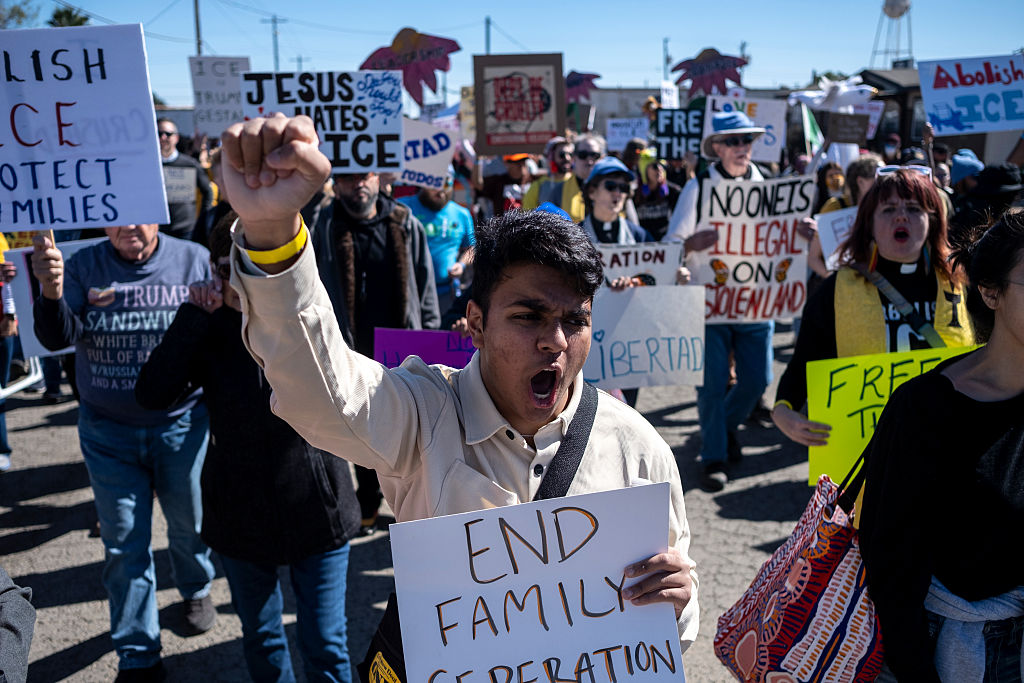
An Egyptian family of six has been taken back into Immigration and Customs Enforcement custody days after being released from a Texas detention facility, according to their attorney Eric Lee. The family, consisting of Hayam El Gamal and her five children, had spent approximately 10 months at the South Texas Family Residential Center in Dilley, which federal judges had ordered them released from earlier in the week. Their re-arrest occurred although they were aboard a private jet in Denver bound for Egypt, prompting an emergency legal motion to block the deportation.
The family’s detention and subsequent release had drawn national attention due to concerns over conditions at the Dilley facility, including allegations of medical neglect, poor food quality, inadequate water access and disrespect for their Muslim faith. Last week, Hayam El Gamal was reportedly rushed to an emergency room after months of suffering from an unidentified health issue she feared might be cancerous, exacerbated by limited medical care at the center. Her lawyers said the family felt “vindicated” by the federal courts’ decision to order their release, viewing it as a validation of their claims about mistreatment during detention.
According to court filings and statements from the family’s legal team, a federal judge in San Antonio had issued a ruling earlier in the week in response to a prior decision by a magistrate judge, leading to the family’s release on Thursday. However, Saturday morning, Lee reported that ICE agents had re-apprehended the family despite these judicial orders. The exact nature of the alleged court order violation that triggered the re-arrest remains unclear, as a Department of Homeland Security spokesperson could not be reached for comment at the time.
The case has become emblematic of broader tensions between the executive and judicial branches over immigration enforcement under the Trump administration. Lee characterized the re-arrest as “a highly live situation – an absolutely brazen violation of separation of powers,” echoing concerns raised in other high-profile cases where individuals were deported despite judicial orders blocking their removal. One frequently cited comparison is that of Kilmar Abrego Garcia, an El Salvadoran national who was mistakenly sent to a mega-prison in his home country despite a U.S. Court order barring his deportation; Garcia has since returned to the United States, though litigation in his case continues.
Background details reveal that Hayam El Gamal was initially arrested in June 2025 in connection with her then-husband, Mohamed Sabry Soliman. Federal authorities allege that Soliman threw Molotov cocktails into a crowd at an event drawing attention to hostages in Gaza, an act that injured more than a dozen people, including an 82-year-old woman who later died from her wounds. Soliman faces attempted murder charges in addition to federal hate crime counts. The El Gamal family has maintained that they are estranged from Soliman, a point noted by Department of Homeland Security representatives in prior statements about the case.
The South Texas Family Residential Center in Dilley remains the only federally operated immigrant facility in the United States authorized to detain parents alongside their children. It has faced ongoing scrutiny from human rights groups and legal advocates over its conditions, particularly during periods of heightened immigration enforcement. The El Gamal family’s prolonged detention — believed to be among the longest for any family unit at the facility during the current administration — intensified calls for oversight and reform.
Following the emergency motion filed by their attorneys, U.S. District Judge Fred Biery of the Western District of Texas, who had originally ordered the family’s release, granted the request to block the deportation. The development underscores the ongoing legal battles surrounding immigration policy, due process rights, and the limits of executive authority in enforcement actions. As of Saturday evening, the family remained in legal limbo, with no immediate clarity on their next steps or when further hearings might occur.
For updates on this evolving situation, readers are encouraged to monitor official court filings from the Western District of Texas and statements from the Department of Homeland Security’s Executive Office for Immigration Review. Continued coverage will depend on verified information from authoritative sources, including judicial records and official government communications.
Related reading