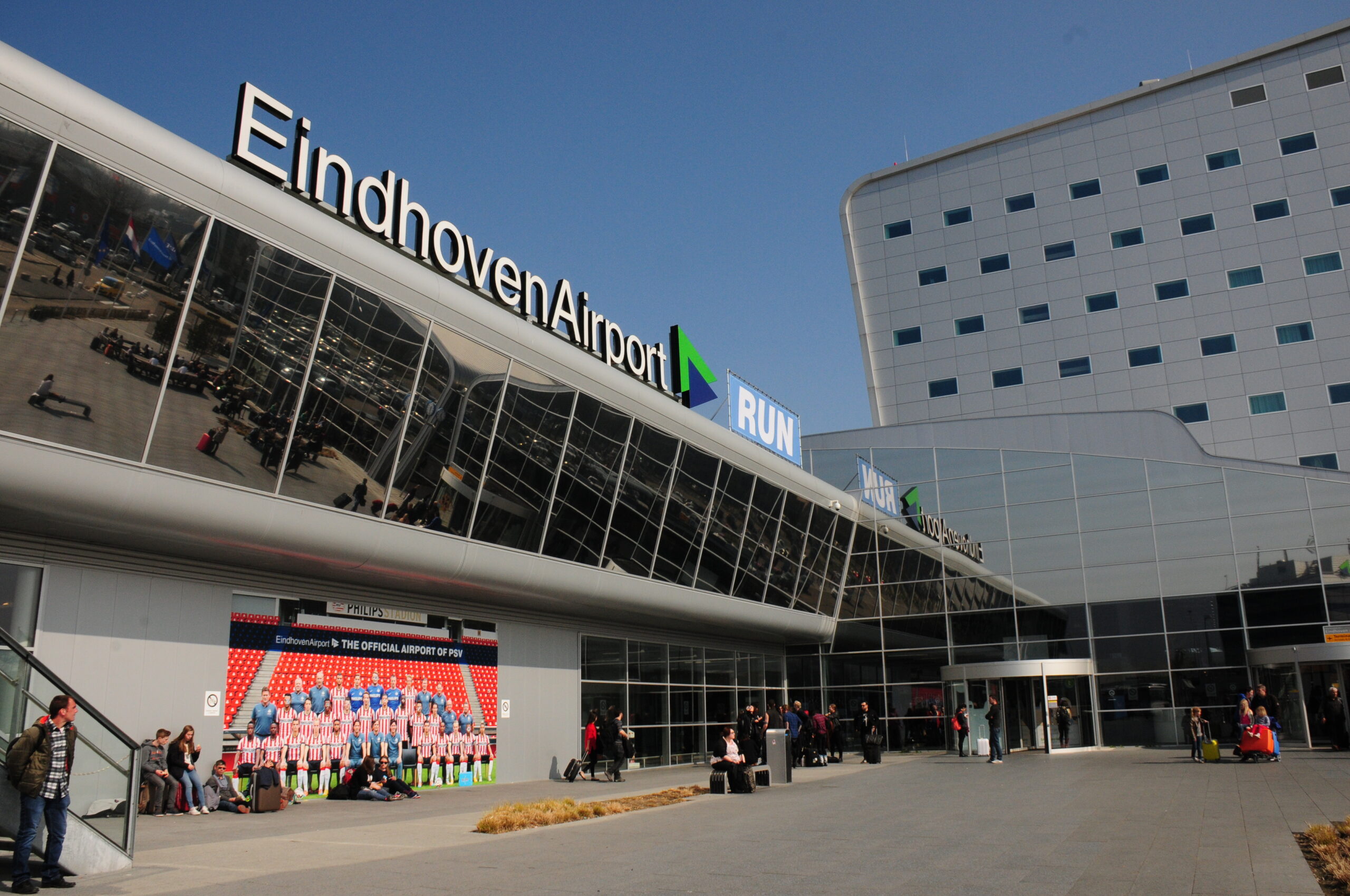
Eindhoven Airport experienced a significant disruption to its flight operations today due to a technical failure within the military-managed air traffic control network. Thousands of passengers faced cancellations and delays as the airport, which shares its runway and communication infrastructure with the Royal Netherlands Air Force, was forced to suspend all incoming and outgoing air traffic for several hours.
The operational freeze began during the morning hours, creating a cascade of logistical challenges for both commercial airlines and travelers. According to official updates from the airport authority, the failure originated in a network system managed by the Dutch Ministry of Defence, which oversees the air traffic control tower at the facility. While the disruption was resolved by early afternoon, the residual impact on flight schedules persisted throughout the day, leaving many passengers stranded at the terminal without immediate alternatives.
The Scope of the Disruption
The network failure effectively grounded all aviation activity at Eindhoven Airport, causing widespread frustration among travelers. By mid-morning, the airport confirmed that no aircraft could take off or land, a situation that lasted for several hours before technicians could restore the necessary data links. Information provided by the Dutch national broadcaster NOS confirmed that the outage was localized to the military-operated systems that coordinate regional airspace.
For passengers, the impact was immediate. Many travelers were left at the terminal with limited information regarding their rebooking status. Because Eindhoven serves as a primary hub for various low-cost carriers, the concentration of flights meant that a few hours of downtime resulted in a significant backlog. Some flights were diverted to other regional airports, including Maastricht Aachen Airport, to mitigate the grounding, as reported by L1 Nieuws. This diversion strategy was necessary to prevent total gridlock, though it added considerable travel time for those whose final destinations remained unchanged.
A Shared Infrastructure Challenge
The reliance of Eindhoven Airport on military infrastructure is a unique aspect of its operations. Unlike major international hubs such as Amsterdam Airport Schiphol, which operate independently, Eindhoven is a dual-use airport. The air traffic control tower and the underlying network architecture are the responsibility of the Ministry of Defence. This structural arrangement means that when a technical fault occurs within the defense network, civilian flights are directly affected.
The Ministry of Defence acknowledged the technical failure, noting that the outage prevented communication between the tower and incoming aircraft. According to reporting from Omroep Brabant, the failure was not a cyberattack but a technical malfunction within the internal network. This distinction is critical for understanding the nature of the delay; once the hardware or software issue was identified and patched by military IT teams, the resumption of flights could begin. By early afternoon, the airport announced that the systems were back online and the first aircraft had successfully departed.
Traveler Rights and Next Steps
For those affected by the disruption, the process of seeking compensation or rebooking remains governed by European Union regulations regarding air passenger rights. Under EU Regulation 261/2004, airlines are generally required to provide assistance to passengers when flights are cancelled or significantly delayed, regardless of whether the cause is an airport technical failure or an airline-specific issue. Passengers are encouraged to verify their specific rights through the European Commission’s official passenger rights portal.

To stay informed, passengers should monitor the official Eindhoven Airport website for real-time flight status updates. Travelers are advised to contact their respective airlines directly, as carriers are responsible for managing rebooking logistics, hotel accommodations in the event of overnight delays, and meal vouchers. As the airport returns to normal operations, the focus for the facility will shift to clearing the remaining backlog of flights, which may cause minor delays in the coming 24 to 48 hours.
The airport authority has not yet scheduled a public inquiry into the specific root cause of the network failure, but typically, such incidents at military-operated facilities undergo an internal technical review by the Ministry of Defence to prevent future occurrences. Readers are encouraged to share their experiences in the comments section below as the situation evolves.
Keep reading