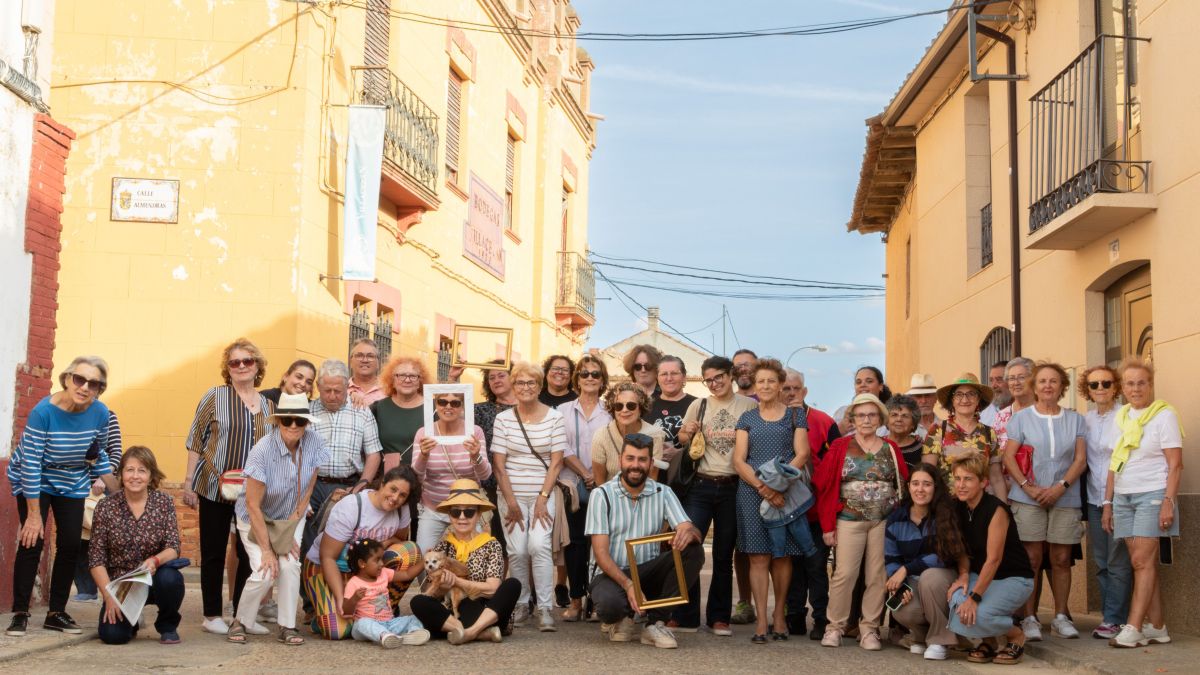
In the quiet town of Gordoncillo, located in the province of León, Spain, a series of six murals has transformed local walls into a living archive of community memory. These large-scale artistic interventions, spearheaded by muralists Aría del Roxo and Daniel Livas, serve as a visual narrative documenting the oral histories, daily anecdotes, and collective identity of the village’s residents. By integrating the personal testimonies of locals into the public landscape, the project aims to preserve the cultural heritage of a region facing the challenges of demographic decline and rural isolation.
The murals are not merely decorative; they function as a dialogue between the artists and the townspeople. According to project documentation, residents were involved in every stage of the process, sharing stories that range from agricultural traditions to the intimate lives of families who have called the area home for generations. The initiative reflects a growing trend in Spanish rural revitalization, where public art is utilized to strengthen social cohesion and provide a tangible sense of place in communities where traditional oral histories are increasingly at risk of being lost.
The Collaborative Process: Bringing Local Voices to the Surface
At the heart of the Gordoncillo mural project is a commitment to participatory art. Rather than imposing an external aesthetic, artists Aría del Roxo and Daniel Livas spent significant time gathering narratives from the local population. This process allowed the muralists to distill complex personal histories into visual metaphors that resonate with those who live in the village. The collaborative nature of the work ensured that the final images—which depict local tools, historical figures, and scenes of communal labor—are recognized by residents as authentic representations of their own experiences.
The involvement of the community was both practical and symbolic. Residents provided not only their stories but also access to private spaces, allowing the murals to be distributed throughout the town rather than confined to a single gallery or square. This spatial strategy turns the entire village into an open-air museum, requiring visitors to traverse the streets to view the complete narrative. Similar community-led art projects in León have been recognized by regional authorities as effective tools for fostering regional identity, as noted by the León Provincial Council’s tourism development initiatives.
Cultural Preservation in Rural Spain
Gordoncillo, like many municipalities in the “Empty Spain” (España Vaciada) phenomenon, has navigated the complexities of aging populations and migration to urban centers. The use of muralism as a tool for rural development has gained traction across the Iberian Peninsula as a way to attract cultural tourism while simultaneously honoring the local past. By transforming weathered or neglected facades into vibrant historical records, the project provides a visual anchor for the town’s identity.
Artistic interventions in rural zones are often supported by a combination of municipal funding and private cultural grants. In the context of Castilla y León, the preservation of intangible heritage is a stated priority for cultural departments, which frequently promote initiatives that bridge the gap between traditional history and contemporary creative practice. Information regarding specific regional grants for local heritage projects can be tracked through the Junta de Castilla y León’s official cultural portal, which documents the administrative support for projects that revitalize rural municipalities.
What the Murals Represent for the Future of Gordoncillo
The six murals serve as a checkpoint for the village’s evolving identity. Each piece acts as a narrative node, connecting the observer to a specific moment or value held by the community. As the town looks toward the future, these works provide a permanent reference point that links younger generations to the experiences of their elders. The success of this project suggests that public art can serve as a sustainable model for heritage conservation in small towns with limited infrastructure.

The longevity of these murals depends on ongoing maintenance and the continued interest of the local community. As the village continues to promote its cultural offerings, the murals are increasingly cited as a primary point of interest for those visiting the southern region of León. For residents and visitors alike, the works remain accessible throughout the year, serving as a reminder that the history of a town is as much about the stories told within its walls as it is about the geography that surrounds them.
Updates on regional cultural programs and potential expansions of public art initiatives in the province of León are periodically released by local municipal offices. Residents interested in participating in future heritage projects or learning more about the historical context of the murals are encouraged to contact the Gordoncillo town hall directly. We invite our readers to share their thoughts on the role of community art in rural revitalization in the comments section below.