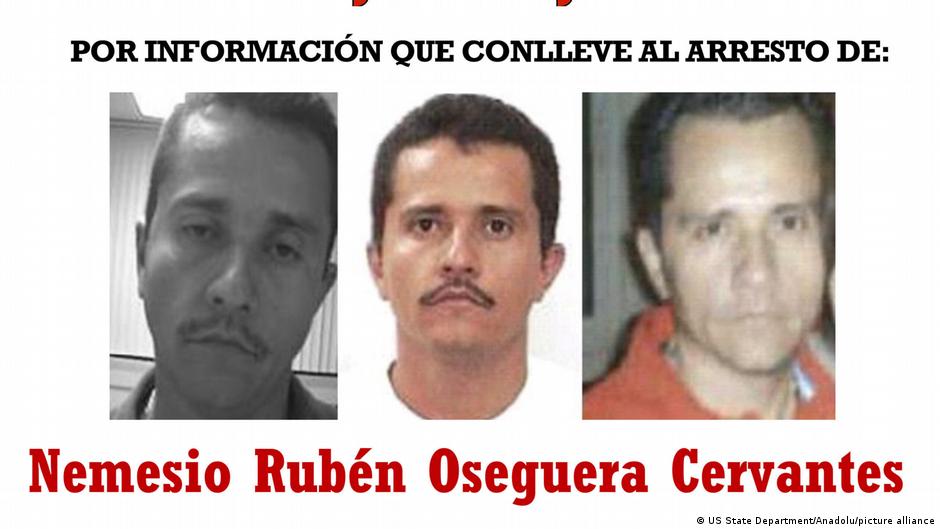
The Fall of ‘El Mencho’ and the Risk of Escalated Violence in Mexico
The reported death of Nemesio Oseguera Cervantes, known as “El Mencho,” leader of the Jalisco New Generation Cartel (CJNG), marks a significant moment in Mexico’s ongoing struggle against organized crime. While details surrounding the operation remain somewhat limited, the event has triggered immediate repercussions, including widespread violence across several states. The CJNG, under El Mencho’s leadership, had grown into one of the most powerful criminal organizations in Mexico, extending its reach both nationally and internationally, challenging the authority of the Mexican state and increasingly engaging in brazen displays of force. The question now is whether his removal will dismantle the cartel or simply usher in a period of intensified conflict as factions vie for control.
The operation, which reportedly took place on Sunday, February 24, 2026, has been hailed by the Mexican government as a major victory. However, experts caution that eliminating a leader does not automatically equate to dismantling a sophisticated criminal enterprise. The CJNG’s deeply entrenched structure and extensive network of operatives suggest that the cartel is likely to endure, potentially fracturing into competing factions or adapting under new leadership. The immediate response – roadblocks, vehicle fires, and attacks in various states – underscores the cartel’s capacity to retaliate even without its historical leader, signaling a potential escalation of violence in the coming weeks and months. This situation presents a complex challenge for the administration of President Claudia Sheinbaum, who has positioned the operation as a demonstration of state capacity.
The CJNG’s Response and the Threat of Further Violence
The immediate aftermath of the operation has been marked by a surge in violence orchestrated by the CJNG. Reports indicate widespread roadblocks, arson attacks targeting vehicles, and direct confrontations with security forces across multiple states. These actions demonstrate the cartel’s ability to mobilize and exert its influence even in the absence of El Mencho. According to security analyst Sandra Ley, an expert at the School of Social Sciences and Government at the Technological Institute of Monterrey, “decapitations of cartels are usually accompanied by escalations of violence,” particularly when preventative measures and the dismantling of protective networks are lacking. DW News reported on the immediate fallout, detailing the scale of the cartel’s response.
The potential for increased violence stems from the inherent instability created by the removal of a key leader. Experts suggest several possible scenarios, including an orderly succession, a violent internal power struggle, or a redistribution of territories among rival criminal groups. Günther Maihold, a German political scientist specializing in Mexico at the Institute for Latin American Studies at the Free University of Berlin, emphasizes that the arrest or death of a cartel leader does not necessarily weaken the organization itself. “The capo is arrested or killed, and the cartel continues to function; the business continues as the structures are not touched,” he stated. This highlights the critical require to address the underlying infrastructure that sustains the CJNG, rather than solely focusing on eliminating its leadership.
A Pyrrhic Victory? Assessing the Government’s Success
The Sheinbaum administration has presented the operation as a significant achievement, showcasing the state’s capacity to confront and dismantle powerful criminal organizations. Javier Oliva Posada, a security expert at the Faculty of Political and Social Sciences of UNAM, described the operation as a “structural victory for the Mexican state,” suggesting it signals that other cartel leaders could also be brought to justice. However, this optimistic assessment is tempered by caution from analysts like Maihold, who argue that the operation is merely “the beginning of a much larger task.” He warns against celebrating a media success without addressing the fundamental issues that allow criminal organizations to thrive.
The challenge lies in dismantling the complex web of corruption, complicity, and economic incentives that fuel the CJNG’s operations. Simply removing El Mencho does not address the systemic problems that allow the cartel to recruit members, launder money, and maintain control over key territories. A comprehensive strategy is needed that targets not only the cartel’s leadership but also its financial networks, logistical support systems, and corrupt allies within government and law enforcement. Without such a strategy, the operation risks becoming a temporary setback for the CJNG, rather than a decisive blow.
Fragmentation and the Potential for Increased Competition
One of the most likely outcomes of El Mencho’s reported death is internal fragmentation within the CJNG. Maihold outlines three potential scenarios: a smooth transition of power, a violent internal rupture, or a redistribution of territories among rival cartels. The latter scenario is particularly concerning, as it could lead to increased competition and a surge in violence as different criminal groups vie for control of lucrative drug trafficking routes and markets. Ley agrees, noting that criminal competition is “one of the most important factors in the use of violence” today, raising the risk to the civilian population in the coming weeks.
The CJNG’s dominance in key regions of Mexico, particularly Jalisco, Michoacán, and Guanajuato, has allowed it to exert significant control over local economies and populations. A power vacuum created by El Mencho’s removal could trigger a scramble for control, leading to increased clashes between the CJNG and rival cartels such as the Sinaloa Cartel and Los Zetas. This could result in a further deterioration of security conditions and a heightened risk of violence for ordinary citizens. The potential for increased territorial disputes underscores the need for a proactive security strategy that anticipates and mitigates the risk of escalating conflict.
US Cooperation and the Impact on Drug Trafficking
The operation against El Mencho was reportedly conducted in the context of growing cooperation between Mexico and the United States. However, Maihold expresses skepticism about the impact of this operation on drug consumption north of the border. “The death of a capo will not influence consumption,” he argues, adding that the real challenge lies in breaking the links between organized crime, politics, and the justice system – an area where Mexico has “avoided acting decisively.” This highlights the limitations of a purely law enforcement-based approach to combating drug trafficking and the need for a more comprehensive strategy that addresses the root causes of the problem.
The United States remains the primary market for drugs trafficked by Mexican cartels, and demand continues to drive the illicit trade. While disrupting the operations of the CJNG may temporarily impact the supply of drugs, it is unlikely to significantly reduce overall consumption. Addressing the demand side of the equation through prevention, treatment, and harm reduction programs is crucial to effectively combating drug trafficking. Strengthening governance and combating corruption in Mexico are essential to dismantling the networks that facilitate the flow of drugs into the United States.
The 2026 World Cup and Security Concerns
With the FIFA World Cup 2026 approaching, security concerns are once again at the forefront of public debate in Mexico. The tournament, which will be jointly hosted by Mexico, the United States, and Canada, is expected to draw millions of visitors and generate significant economic benefits. Oliva Posada dismisses, for now, any increased risk to visitors and fans, asserting that “the conditions are in place to guarantee security” during the tournament. Maihold concurs, suggesting that the current violence is a “demonstration of force” rather than a sustained strategy, although he acknowledges that the perception of insecurity remains prevalent among the population.
However, the recent escalation of violence following El Mencho’s reported death raises legitimate concerns about the potential for disruptions during the World Cup. Cartels may seek to exploit the event to demonstrate their power or to extort money from businesses and individuals. Enhanced security measures, including increased police presence, intelligence gathering, and border controls, will be necessary to mitigate these risks. The Mexican government will also need to operate closely with international partners to ensure the safety and security of visitors and participants.
Beyond the immediate headlines, the reported death of El Mencho presents a complex scenario. While it represents a symbolic and tactical victory, it could open a period of violent readjustments and more profound challenges for Mexican security policy. The structural challenge remains dismantling the networks that sustain organized crime, not just its most visible figures.
Key Takeaways:
- The reported death of El Mencho represents a significant, but not necessarily decisive, blow to the CJNG.
- The cartel’s immediate violent response underscores its continued capacity to exert influence and destabilize the region.
- Addressing the underlying structural issues that fuel organized crime – corruption, economic incentives, and weak governance – is crucial for long-term success.
- The upcoming 2026 World Cup adds another layer of complexity to the security situation, requiring enhanced vigilance and cooperation.
The situation remains fluid, and further developments are expected in the coming weeks and months. Authorities are expected to continue operations targeting the CJNG’s remaining leadership and infrastructure. The Mexican government is also likely to face increased pressure to address the root causes of organized crime and to strengthen its security institutions. We will continue to monitor the situation closely and provide updates as they become available. Share your thoughts and perspectives on this critical issue in the comments below.
- Woman Recovers €1 Million Lottery Ticket From Italian Trash
- Ukraine Drone Strikes Cripple Russian Black Sea Shipping and Logistics
- Egyptian Security Forces Arrest Two Men for Fake Judge Housing Scam (archyworldys.com)
- Google AI Overviews: Impact on Publishers and the AI Opt-Out Dilemma (archynewsy.com)