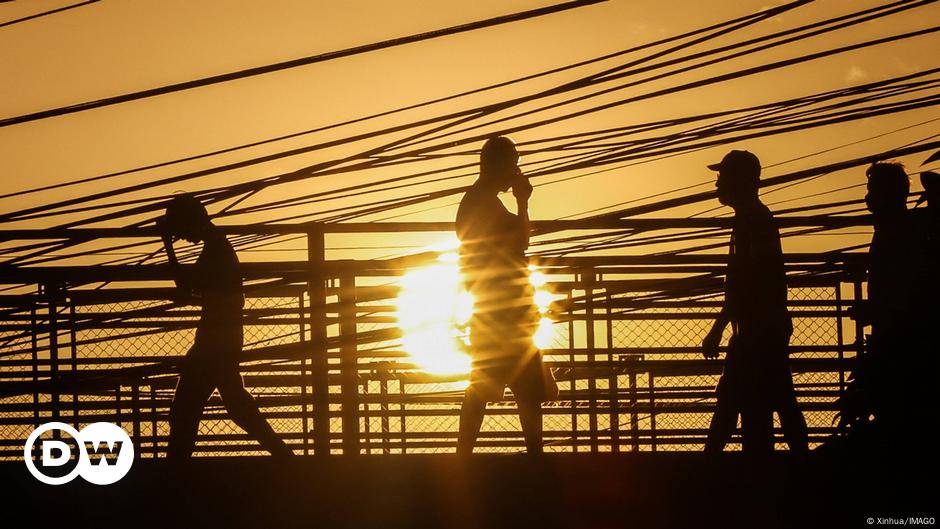
The most powerful El Niño in a century—or at least one of the strongest on record—has reshaped global weather patterns, leading to significant economic volatility and environmental disruption. As international meteorological agencies track the cooling of the phenomenon, the World Meteorological Organization (WMO) has confirmed that the 2023-2024 event ranks among the five strongest ever recorded, directly influencing global temperatures and precipitation cycles. With these shifts come heightened risks for agricultural yields, energy demand, and infrastructure stability worldwide.
According to the World Meteorological Organization, the influence of El Niño began to wane in early 2024, yet its legacy of record-breaking heat and climate extremes persists. The phenomenon, characterized by an abnormal warming of surface waters in the central and eastern Pacific Ocean, acts as a catalyst for atmospheric changes that ripple across continents. For policymakers and business leaders, the challenge now lies in transitioning from emergency response to long-term climate resilience strategies.
How El Niño Alters Global Economic Stability
The economic footprint of an El Niño event is primarily felt through its impact on commodity markets and supply chains. When Pacific temperatures rise, typical rainfall patterns shift, leading to drought in regions like Australia, Southeast Asia, and parts of South America, while causing excessive flooding in other areas. The International Monetary Fund (IMF) has noted that these disruptions frequently lead to localized food price inflation, as agricultural output suffers in key exporting nations.
Beyond agriculture, the energy sector faces significant pressure. Increased temperatures often necessitate higher cooling demand, straining power grids that are already struggling with the transition to renewable sources. In regions dependent on hydroelectric power, decreased rainfall can lead to reduced generation capacity, forcing a shift toward more expensive fossil fuel alternatives. The International Energy Agency (IEA) emphasizes that such climate-driven volatility underscores the urgent need for more diversified and resilient energy infrastructure to mitigate the risk of price spikes during extreme weather events.
Risk Management and Infrastructure Resilience
Preparing for the next major climate anomaly requires a shift in how infrastructure projects are funded and designed. Historically, civil engineering standards were based on historical weather averages; however, the increasing frequency of extreme events has rendered those models insufficient. Governments are increasingly turning to parametric insurance—a type of insurance that makes payments based on a trigger, such as a specific rainfall threshold or wind speed—to provide immediate liquidity following a disaster.
The World Bank reports that investing in early warning systems and climate-resilient infrastructure offers a significant return on investment, often saving $4 for every $1 spent in avoided damages. Despite these findings, the implementation gap remains wide in developing nations, where fiscal constraints limit the ability to upgrade drainage systems, reinforce power grids, or secure reliable water supplies for irrigation. For global businesses, this means that operational risk in emerging markets is increasingly tied to the efficacy of local government investments in climate adaptation.
Comparing Weather Phenomena: El Niño vs. La Niña
Understanding the transition out of El Niño is as critical as monitoring its peak. While El Niño typically brings warmth and drying, its counterpart, La Niña, often results in the opposite conditions, including colder temperatures and increased rainfall in the Pacific. The National Oceanic and Atmospheric Administration (NOAA) provides continuous monitoring of the El Niño-Southern Oscillation (ENSO) cycle, which oscillates between these two states. The transition period is often marked by unpredictable weather, creating a period of heightened uncertainty for logistics, shipping, and global trade routes that rely on stable climate conditions.
| Phenomenon | Primary Climate Impact | Economic Consequence |
|---|---|---|
| El Niño | Global warming, drought in Asia/Australia | Agricultural inflation, energy demand spikes |
| Neutral | Baseline climate conditions | Standard seasonal volatility |
| La Niña | Cooling, increased rainfall in Pacific | Potential flood damage, crop variability |
What Happens Next for Global Markets
As of mid-2024, meteorological data indicates a transition toward ENSO-neutral conditions, with a potential shift toward La Niña later in the year. The NOAA Climate Prediction Center maintains a regular schedule of updates, providing the most current outlook for global temperatures and precipitation. For investors and stakeholders, the focus remains on the lingering effects of the 2023-2024 event, particularly regarding inventory levels for essential grains and the stability of hydro-dependent power grids.

The next official status report from the WMO regarding the evolution of global climate patterns is expected in the coming quarter. Readers are encouraged to monitor these official updates to better navigate the implications for their portfolios and supply chains. Please share your thoughts on how your local region is adapting to these shifts in the comments below.
Keep reading