
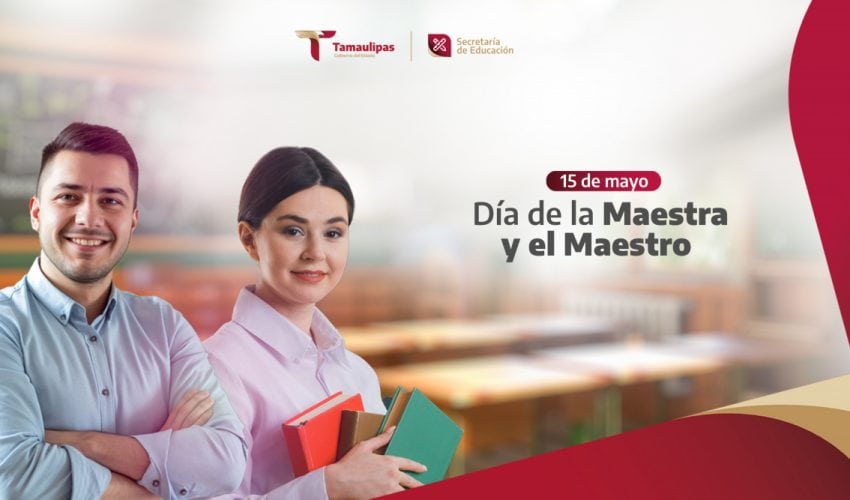
Every May 15, across the diverse landscapes of Mexico, the atmosphere shifts toward a profound sense of gratitude and reflection. This date marks the Día de la Maestra y el Maestro (Teacher’s Day), a national observance dedicated to the men and women who serve as the intellectual and moral backbone of the country’s future. In the state of Tamaulipas, this celebration takes on a particular significance as the Secretaría de Educación de Tamaulipas (SET) recognizes the tireless efforts of educators who navigate the unique challenges of a border state to ensure that children, adolescents and young adults acquire the essential knowledge and skills for life.
For the Government of the State of Tamaulipas, the celebration is more than a calendar event; it is a strategic acknowledgment of the human capital driving the region’s development. Education is the primary engine of social mobility and economic stability, and the teachers employed by the state are the operators of that engine. By honoring these professionals, the state government reaffirms its commitment to an educational framework that values not only academic achievement but also the holistic development of the student.
The impact of a dedicated teacher extends far beyond the classroom walls. In Tamaulipas, where the intersection of industry, agriculture, and international trade creates a complex economic environment, educators are tasked with preparing students for a globalized workforce. The “valuable, permanent, and tireless work” referenced by state authorities underscores the reality that teaching in the 21st century requires constant adaptation, resilience, and an unwavering belief in the potential of every learner, regardless of their socioeconomic background.
The Institutional Role of the Secretaría de Educación de Tamaulipas
The Secretaría de Educación de Tamaulipas operates as the central administrative body responsible for the implementation of educational policies across the state. Its mission is to ensure that the right to education is upheld for all citizens, from early childhood through secondary and vocational training. The SET does not merely manage infrastructure; it oversees the professional growth of thousands of educators, ensuring that the pedagogy used in Tamaulipas aligns with both state goals and the national standards set by the Secretaría de Educación Pública (SEP).

Central to the SET’s current strategy is the integration of “saberes”—a term that encompasses both formal academic knowledge and traditional or practical wisdom. By promoting a curriculum that values various forms of knowing, the state aims to create students who are not only technically proficient but also culturally aware and critically minded. This approach is essential for fostering a generation capable of solving local problems with global perspectives.
the SET focuses on the continuous professionalization of its staff. In an era of rapid technological disruption, the role of the teacher has shifted from being the sole provider of information to becoming a facilitator of learning. The state government’s investment in teacher training and digital literacy is a recognition that the quality of an education system cannot exceed the quality of its teachers.
Bridging the Gap: Education for Children and Youth in Tamaulipas
The educational journey in Tamaulipas is designed to support students through critical developmental stages: childhood, adolescence, and early adulthood. Each stage presents unique challenges that require specialized pedagogical approaches. For young children, the focus is on foundational literacy, numeracy, and social-emotional learning. During these formative years, teachers serve as the first point of contact between the family and the formal state apparatus, often acting as mentors and protectors.
As students transition into adolescence, the role of the educator evolves. This is a period of high vulnerability and significant intellectual growth. Teachers in Tamaulipas work to keep adolescents engaged in school, mitigating dropout rates that can be influenced by economic pressures or social instability. By providing a stable and supportive environment, educators help these students navigate the complexities of their identity while maintaining a trajectory toward graduation.
For the young adults in the state, the focus shifts toward “competencias”—the practical application of knowledge in professional settings. Whether through technical high schools or preparatory academies, the goal is to ensure that the youth of Tamaulipas are competitive in the labor market. The synergy between the Secretaría de Educación and the local business community is vital here, ensuring that the skills taught in the classroom match the demands of the regional economy.
The Significance of the Teaching Vocation
Teaching is often described as a vocation rather than a mere profession. In the context of Tamaulipas, this vocation is tested daily. Educators often work in environments where resources may be limited or where the external social climate is challenging. Despite these hurdles, the commitment to the “incansable” (tireless) nature of the work remains a point of pride for the state’s teaching corps.
The psychological impact of a supportive teacher cannot be overstated. For many students in marginalized areas, the classroom is the safest place in their lives. The teacher becomes a symbol of authority, stability, and hope. This emotional labor, while often invisible in official statistics, is the foundation upon which all academic success is built. When the state celebrates Día de la Maestra y el Maestro, it is acknowledging this invisible labor that sustains the social fabric of the community.
Honoring the Legacy: From Active Service to Retirement
A key component of the celebrations in Tamaulipas is the recognition of retired educators. The Maestro Jubilado represents the living history of the state’s education system. These individuals have seen the evolution of pedagogy, the changing political landscapes of Mexico, and the growth of the students they once taught into the leaders and workers of today.

Recognizing retired teachers serves two purposes. First, it provides a sense of closure and honor to those who have dedicated decades of their lives to public service. Second, it sends a powerful message to current young teachers about the longevity and value of their career path. The transition from active service to retirement is a milestone that the state government marks with respect, acknowledging that the influence of a teacher does not end when they leave the classroom.
These ceremonies often bring together multiple generations of educators, creating a space for the exchange of experience. The wisdom of the retired teacher, combined with the energy and technological fluency of the new recruit, creates a continuum of learning that benefits the entire state.
Challenges and the Path Forward for Tamaulipas Education
While the celebrations of May 15 are filled with joy and gratitude, they also provide an opportunity to reflect on the systemic challenges that remain. Education in a border state like Tamaulipas is uniquely influenced by its proximity to the United States, creating a dynamic where bilingualism and cross-border economic trends play a significant role in educational planning.

- Digital Equity: Ensuring that students in rural areas of Tamaulipas have the same access to technology as those in urban centers like Reynosa or Matamoros.
- Teacher Safety and Wellbeing: Providing the necessary psychological and physical security for educators to work effectively in all regions of the state.
- Curriculum Modernization: Continuously updating the “saberes” to include critical thinking, environmental sustainability, and digital citizenship.
- Inclusive Education: Expanding programs for students with disabilities and those from indigenous or marginalized backgrounds to ensure no child is left behind.
The Government of the State of Tamaulipas, through the SET, continues to seek partnerships with international organizations and private enterprises to address these gaps. The goal is to move toward a model of “educational excellence” where the quality of instruction is consistent across every municipality in the state.
| Focus Area | Target Population | Primary Objective |
|---|---|---|
| Foundational Literacy | Children (Primary) | Establishing core reading and writing skills. |
| Retention Programs | Adolescents (Secondary) | Reducing dropout rates and promoting graduation. |
| Vocational Training | Young Adults | Aligning skills with regional labor market needs. |
| Professional Development | Teachers | Continuous training in modern pedagogical methods. |
Conclusion: The Lasting Impact of the Educator
The Día de la Maestra y el Maestro is more than a tradition; it is a testament to the enduring power of education. In Tamaulipas, the work of the teacher is the bridge between a student’s current reality and their future potential. By recognizing the “valuable and permanent” nature of this work, the state acknowledges that the most sustainable investment a government can make is in the people who teach its children.
As the celebrations conclude and teachers return to their classrooms, the focus shifts back to the students. The knowledge shared, the curiosity sparked, and the confidence instilled by these educators will continue to shape the trajectory of Tamaulipas for years to come. The commitment of the Secretaría de Educación to support these professionals remains the cornerstone of the state’s vision for a more prosperous and equitable society.
For those seeking official updates on educational policies, teacher certifications, or state-wide academic calendars, the official portal of the Secretaría de Educación de Tamaulipas serves as the primary resource for verified information and administrative guidance.
We invite our readers to share their own experiences with the educators who shaped their lives in the comments below. How did a teacher in your community change your perspective on the world?