
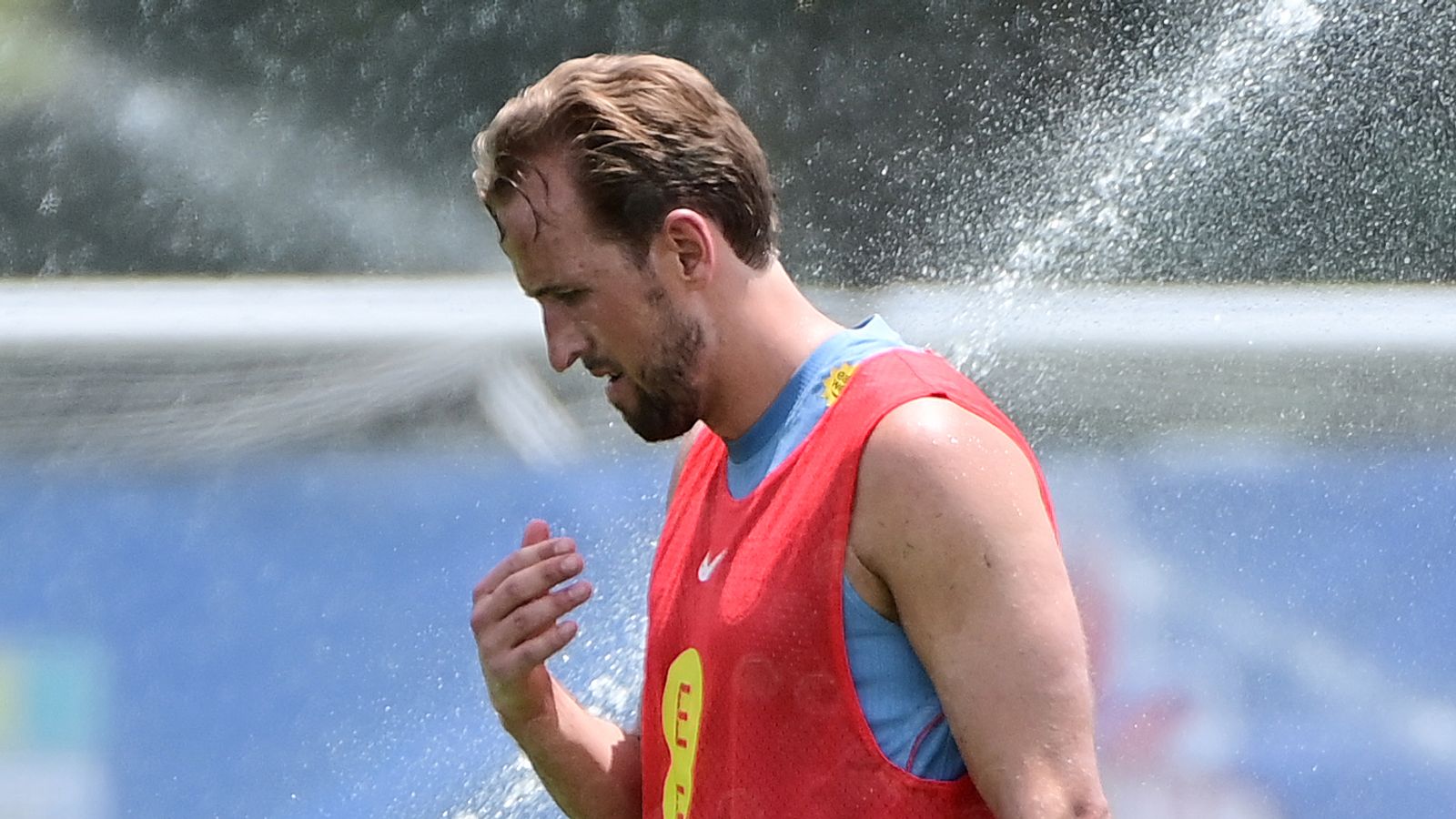
As the international football calendar shifts toward the intensified demands of the 2026 FIFA World Cup, the conversation surrounding the England national team’s tactical evolution has reached a critical juncture. For over a decade, Harry Kane has been the undisputed focal point of the Three Lions’ attack, serving as both a lethal finisher and a creative pivot. However, as we look ahead to the tournament hosted by Canada, Mexico, and the United States, there is a growing consensus among analysts that we could see less of Harry Kane for England at the 2026 World Cup, marking a potential shift in how Gareth Southgate’s successor or the current coaching staff plans to navigate the rigors of a high-stakes summer competition.
The tactical landscape of elite football is increasingly favoring high-intensity pressing and transitional speed—attributes that demand an evolving approach to squad management. While Kane’s technical proficiency remains world-class, the physical toll of a long season in the Bundesliga, combined with the extreme travel and climatic variations expected during the 2026 tournament, necessitates a more robust reliance on the depth of the England striker pool. Managing the minutes of a veteran captain is no longer a luxury. it is a strategic imperative for any team aiming to reach the final stages of the World Cup.
The Evolution of the England Striker Rotation
In previous cycles, the England squad often relied on a singular offensive identity built around Kane’s specific skill set. Today, the depth chart offers a different profile of attacking threats. Younger, pace-oriented forwards are providing tactical versatility that allows the coaching staff to rotate personnel based on the opponent’s defensive structure. According to official FIFA documentation regarding the 2026 World Cup, the tournament will feature 48 teams, significantly increasing the number of matches and requiring squads to demonstrate superior endurance and tactical flexibility throughout the group and knockout stages.
The reliance on a “three-striker” system at this tournament reflects a modern trend in international football where the bench is as important as the starting XI. By integrating substitutes earlier in matches, the coaching staff can maintain a high-press intensity that a static, singular striker might struggle to sustain for 90 minutes in sweltering conditions. This shift is not necessarily a reflection of a decline in Kane’s ability, but rather a sophisticated adaptation to the grueling nature of contemporary tournament football.
Tactical Flexibility and the Impact of Modern Demands
Why might we see less of Harry Kane for England at the 2026 World Cup? The answer lies in the intersection of sports science and tactical necessity. Modern match analysis from institutions like the UEFA Technical Observer reports indicates that teams reaching the latter stages of major tournaments often do so by utilizing a squad-wide approach to physical loading. For a player of Kane’s status, who frequently plays a high volume of matches for both club and country, the risk of fatigue-related injury increases exponentially during tournament play.
the tactical demands of the 2026 World Cup venues, which span diverse time zones and altitudes, place an unprecedented burden on player recovery. The England coaching staff has been vocal about the importance of squad cohesion, emphasizing that the “next man up” mentality is essential for long-term success. By distributing the offensive workload, the team protects its primary assets while simultaneously keeping the entire attacking unit sharp and match-fit for the high-intensity knockout rounds.
Key Considerations for the Three Lions’ Attack
- Tactical Rotation: Utilizing a rotation of strikers allows the team to switch between a target-man system and a counter-attacking, pace-heavy setup depending on the match state.
- Physical Load Management: Data-driven monitoring of player fatigue levels is now standard practice, influencing substitution patterns to prevent burnout.
- Tournament Depth: The expanded 48-team format means teams must navigate more fixtures, making the quality of the bench a deciding factor in overall performance.
The Strategic Value of the Bench
It is important to view this development as a positive evolution rather than a diminishing of a legend’s role. Harry Kane remains a vital leader, both on the pitch and in the dressing room. However, his influence may manifest differently in 2026. Instead of attempting to anchor the attack for every minute of every match, he may serve as a clinical finisher deployed in high-leverage situations, allowing younger players to stretch opposing defenses and create space. This nuance is supported by the Football Association’s ongoing commitment to performance analysis, which prioritizes long-term tournament success over individual game-by-game reliance on a single player.
As we move deeper into the tournament, the ability of England’s replacements to step into the spotlight will define the team’s ceiling. The transition period between the classic “number nine” role and the modern, fluid attacking system is well underway. Fans should expect to see a more democratic distribution of minutes, ensuring that when the most critical moments arrive, the entire squad is firing on all cylinders.
Looking Ahead: The Road to the Final
The path to the 2026 World Cup final is fraught with logistical challenges and elite competition. England’s strategy will likely remain fluid, adapting to the specific demands of each venue and opponent. The focus for the remainder of the tournament will be on maintaining the delicate balance between experience and energy. The coaching staff is expected to provide further updates on squad rotation following the conclusion of the current group stage fixtures, as reported in the latest official tournament media briefings.
the goal remains the same: bringing home the trophy. Whether that involves Harry Kane leading the line for 90 minutes or acting as a decisive impact player off the bench, the strategy will be dictated by one priority—winning. We will continue to track these developments closely as the tournament progresses. What are your thoughts on England’s current attacking rotation? Join the conversation in the comments below and share this analysis with your fellow football fans.