The future of AI Hinges on Your Data Infrastructure: 3 Predictions for 2026
Artificial intelligence is no longer a futuristic concept; it’s actively reshaping how businesses operate. But the success of your AI initiatives in 2026 won’t depend on the latest large language model. It will depend on the foundation underneath – your data infrastructure.
Here are three key trends to watch, and how to prepare your organization for a data-driven AI future.
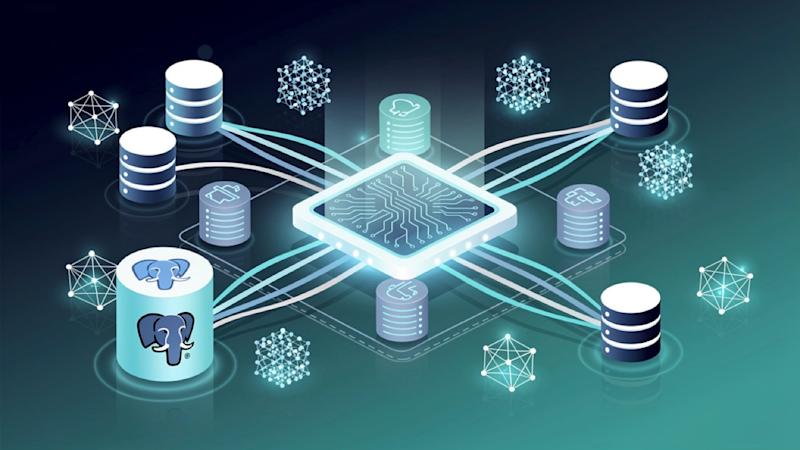
1. PostgreSQL is Poised to Become the AI Database Standard
for years, the database world has been dominated by a few key players. Now, a clear shift is happening. PostgreSQL is rapidly becoming the database of choice for AI applications, and the recent investment activity proves it.
Consider these moves:
* Snowflake acquired Crunchy Data for $250 million.
* Databricks invested $1 billion in Neon.
* Supabase secured $100 million in Series E funding, achieving a $5 billion valuation.
This influx of capital signals a strong industry belief in PostgreSQL’s capabilities. Its open-source nature, inherent flexibility, and robust performance make it ideal for demanding AI workloads, particularly “vibe coding” – a core function for platforms like Supabase and Neon.
What you should do: Evaluate PostgreSQL as a potential foundation for your AI projects. Don’t dismiss it as ”just another database.” Its growing ecosystem and AI-focused tooling are worth serious consideration. Expect continued growth and adoption throughout 2026.
2. Don’t Assume “Solved” Data problems Are Truly Solved
Innovation in data processing isn’t about new problems, it’s about better solutions to existing ones. in 2025, we saw a resurgence of effort around capabilities many assumed were already mature.
For example:
* PDF Parsing: While AI-powered PDF data extraction has existed for some time, operationalizing it at scale proved surprisingly tough. Databricks and Mistral are now leading the charge with improved parsers.
* Natural Language to SQL: Converting natural language queries into SQL code is another area seeing continuous improvement. Google Cloud, among others, is pushing the boundaries of this technology.
These examples highlight a critical point: foundational data capabilities are constantly evolving.
What you should do: Stay vigilant. Don’t rely on legacy tools or assume existing solutions are optimal.Continuously evaluate new approaches to parsing, natural language processing, and data conversion. A small improvement in these areas can have a meaningful impact on your AI’s performance and scalability.
3. Expect Continued Consolidation and Acquisition in the Data Space
2025 witnessed a massive wave of investment and acquisition activity in the data vendor landscape. This trend will continue into 2026,driven by the understanding that data is the lifeblood of prosperous agentic AI.
Here’s a snapshot of recent deals:
* Meta invested $14.3 billion in Scale AI (data labeling).
* IBM plans to acquire Confluent for $11 billion (data streaming).
* Salesforce acquired Informatica for $8 billion (data integration).
This consolidation isn’t just about big companies getting bigger. It’s about building comprehensive platforms capable of supporting the complex demands of AI.
What you should do: Be prepared for potential disruption. Acquisitions can lead to vendor lock-in, but also to expanded platform capabilities. Diversify your data infrastructure where possible, and carefully assess the implications of any vendor changes on your AI roadmap.
Durable Data Infrastructure: The Key to Long-Term AI success
in 2026, the question won’t be if you’re using AI, but whether your data systems can sustain it. Agentic AI demands a robust, scalable, and adaptable data infrastructure. Clever prompts and short-term fixes won’t cut it.
Investing in a durable data foundation – one built on principles of flexibility, performance, and continuous improvement – is the single most crucial thing you can do to ensure your AI initiatives deliver lasting value. Focus on building that foundation now, and you’ll be well-positioned to thrive in the age of intelligent automation.
Worth a look