
Smaller healthcare organizations are increasingly adopting Epic’s electronic health record (EHR) software through Community Connect, a model that allows affiliate sites to access the infrastructure of a larger “host” health system. By joining an existing instance rather than managing an independent installation, these smaller entities gain access to advanced clinical tools and interoperability features, though the arrangement introduces unique operational and financial tradeoffs. According to recent market analysis, Epic Systems Corporation maintains approximately 43.7% of the acute care EHR market in the United States, with a significant portion of that footprint expanding through these affiliate partnerships rather than direct, independent contracts with the vendor (KLAS Research, 2024).
Understanding the Community Connect Model
Community Connect is an extension strategy where a large health system, which acts as the “host,” extends its own licensed version of Epic software to smaller, often independent, community hospitals or physician practices. This arrangement allows the smaller site to operate on the same platform as the host, facilitating seamless data sharing and standardized workflows. In this model, the smaller organization does not contract directly with the software developer for the core system. Instead, the legal and financial relationship is primarily between the host system and the affiliate, with the host providing the technical support, training, and maintenance required to run the software.
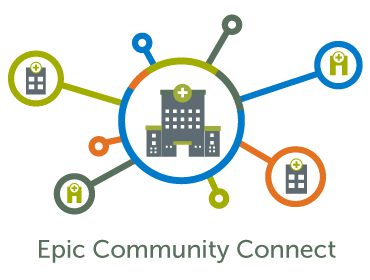
For smaller systems, the primary incentive is the reduced burden of IT management. Implementing a standalone EHR system is a capital-intensive process that requires significant internal expertise to manage servers, cybersecurity, and regulatory updates. By “plugging in” to a larger system, the affiliate offloads much of this technical overhead. Furthermore, the model enhances regional interoperability. Because both the host and the affiliate share the same database environment, patient records are immediately accessible across both settings without the need for complex interface engines or health information exchange (HIE) protocols, as noted in industry reports on national interoperability standards.
Operational and Financial Tradeoffs
While the model offers technical advantages, it creates a dependency that can complicate long-term strategic autonomy. The affiliate is inherently bound to the host’s clinical and administrative configurations. If the host decides to update a module or change a clinical workflow, the affiliate must generally adapt to those changes, regardless of whether they align perfectly with their local patient population or specific specialty needs. This lack of customization is a frequent point of negotiation during the initial contract phase between host and affiliate.
Financial structures also differ significantly from independent implementations. Rather than paying the full, upfront licensing fees associated with an independent Epic contract, affiliates typically pay a recurring fee to the host system. This fee covers a portion of the host’s licensing costs, infrastructure maintenance, and support services. While this lowers the barrier to entry, it creates a long-term operational cost that can be higher than the maintenance costs of a smaller, less complex EHR system. Organizations must perform a detailed total cost of ownership (TCO) analysis to determine if the clinical benefits of the platform justify these ongoing service fees, according to guidance from the Healthcare Information and Management Systems Society (HIMSS).
Strategic Implications for Smaller Systems
Beyond the technical and financial aspects, Community Connect serves as a bridge for smaller health systems to align themselves with larger, often academic or regional, tertiary care centers. This alignment can be a precursor to closer clinical integration, such as referral management or coordinated care programs. However, it also limits the affiliate’s ability to switch software vendors. Moving from a Community Connect setup to an independent system requires a full data migration, which is often complex and costly, creating a form of “vendor lock-in” that extends beyond the software itself to the host system’s specific ecosystem.

When evaluating this path, leadership teams are encouraged to prioritize governance agreements. Clear documentation regarding who controls the build, who manages the data, and how the affiliate can exit the arrangement is essential for protecting the smaller organization’s future flexibility. As the EHR market continues to consolidate, the role of these hosted models is expected to grow, particularly as federal regulations—such as those enforced by the Office of the National Coordinator for Health Information Technology (ONC)—continue to push for higher standards of data transparency and patient record accessibility across disparate systems.
Future Outlook and Reporting
As of mid-2024, the landscape for EHR adoption remains highly competitive, with a trend toward platform consolidation among smaller community hospitals. Analysts continue to monitor how these hosted models impact market concentration and the ability of smaller providers to maintain their independent clinical decision-making. No major regulatory changes to the Community Connect model have been announced by the Centers for Medicare & Medicaid Services (CMS) as of this report. Readers interested in the latest market shifts can monitor official updates via the CMS data and research portal for emerging trends in hospital health IT adoption.
We welcome your perspectives on how these integrated EHR models are affecting patient care in your local communities. Please share your experiences or questions in the comments section below to contribute to our ongoing coverage of health technology infrastructure.
Worth a look