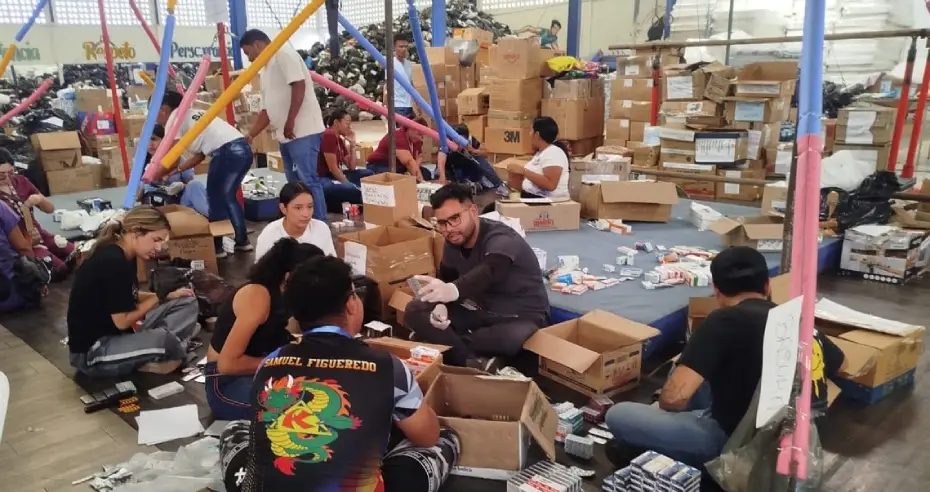
The health authority of Aragua state, Corposalud Aragua, has deployed logistical support teams to manage the distribution of medications, non-perishable foods, and clothing under the direction of the Ministry of People’s Power for Health (MPPS). This operation, coordinated through the Pharmaceutical Products Review Board (Junta Revisora de Productos Farmacéuticos), focuses on the inventory and delivery of essential supplies to regional health centers and vulnerable populations.
The deployment aims to streamline the supply chain for medical resources and basic necessities within the state. According to official communications from the MPPS, the initiative includes the registration and verification of non-perishable food items and clothing alongside pharmaceutical supplies to ensure that aid reaches designated health facilities and beneficiaries without administrative delays.
This logistical push is part of a broader effort by the Venezuelan government to stabilize the distribution of health inputs across its states. By utilizing the Pharmaceutical Products Review Board, the ministry intends to audit current stocks and prevent the expiration or misuse of critical medications before they are dispatched to clinics and hospitals in Aragua.
How the Pharmaceutical Review Board Manages Supplies
The Pharmaceutical Products Review Board acts as the primary auditing body for the deployment. Its role involves the systematic registration of every item entering the logistical chain. This process includes verifying the expiration dates of medicines and the quality of non-perishable food items to meet health safety standards before distribution.

Logistical support in this context involves more than transportation. The teams are tasked with the “preparación” (preparation) of kits, which often combine medical treatments with basic sustenance and clothing. This integrated approach is designed to address the immediate social needs of patients who may lack the resources to support their medical recovery at home.
According to the Ministerio del Poder Popular para la Salud (MPPS), these review boards are essential for maintaining transparency in the allocation of state resources. By documenting the movement of goods from central warehouses to local health posts, the ministry seeks to reduce discrepancies in medical inventories.
The Impact of Logistical Deployment in Aragua
Aragua state serves as a critical hub for healthcare in central Venezuela. The deployment of Corposalud Aragua teams is intended to alleviate shortages in regional clinics by ensuring a steady flow of pharmaceutical inputs. The focus on “logistical support” specifically targets the “last mile” of delivery—the movement of goods from state hubs to the specific points of care where patients are treated.
The inclusion of non-perishable foods and clothing suggests that the operation is targeting populations facing socioeconomic instability. In public health, the availability of nutrition and adequate clothing is recognized as a social determinant of health; without these basics, medical treatments for chronic conditions are often less effective.
Health officials in the region have indicated that the registration process for these supplies allows the state to identify which municipalities are experiencing the highest demand. This data-driven approach allows Corposalud Aragua to shift resources in real-time based on the needs of specific hospitals or community health centers.
Broader Context of Healthcare Logistics in Venezuela
The current operation in Aragua reflects a national strategy by the MPPS to centralize the review of pharmaceutical products while decentralizing the actual delivery. By placing the logistical burden on regional bodies like Corposalud, the national government attempts to speed up the response time for medical emergencies and routine supply replenishment.
This model of “logistical deployment” is frequently used during national health campaigns or in response to localized crises. The use of a review board to oversee the process is a measure intended to combat the loss of supplies and ensure that the pharmaceutical registry remains accurate across different administrative levels.

For residents of Aragua, these operations typically manifest as the arrival of supply trucks at local “Consultorios Populares” (Popular Clinics) and larger state hospitals. The MPPS continues to emphasize that the registration of all donated or state-provided items is mandatory to maintain the integrity of the public health system.
The next phase of the operation involves a scheduled audit of the distributed supplies to verify that the medications and food items reached the intended recipients. Official updates on the volume of supplies delivered will be released through the MPPS regional communication channels.
Readers are encouraged to share this report and provide comments on the availability of health services in their local regions.