
As the United States approaches its 250th anniversary on July 4, 2026, the nation faces a complex intersection of historical reflection and future-oriented planning. The semiquincentennial marks a quarter-millennium since the adoption of the Declaration of Independence in 1776, serving as a focal point for federal agencies, cultural institutions, and the public to evaluate the country’s trajectory. According to the U.S. Semiquincentennial Commission, established by Congress under the Semiquincentennial Commission Act of 2016, the commemoration aims to engage all Americans in a multi-year observance of the nation’s history, diversity, and democratic principles.
Institutional Efforts to Preserve Historical Narratives
Cultural institutions across the United States are currently navigating the challenge of presenting a comprehensive account of American history. Museums and national parks are increasingly tasked with balancing traditional narratives of independence with the complexities of the nation’s past, including the experiences of marginalized communities. The National Park Service (NPS) has initiated efforts to update interpretive materials at various historic sites to reflect more inclusive historical perspectives. These initiatives are designed to provide visitors with a more complete understanding of the events and figures that shaped the country, as reported by the National Park Service.
The process of updating these historical markers and exhibits involves rigorous academic review and community engagement. By incorporating diverse voices and documented experiences into public history, institutions seek to address gaps in the national story. This approach is intended to foster a more nuanced public discourse regarding the country’s origins and its ongoing evolution as a democratic republic.
The Role of the Semiquincentennial Commission
The U.S. Semiquincentennial Commission, often referred to as America250, is the primary body responsible for coordinating the 250th-anniversary activities. The commission, as outlined in Public Law 114-196, is composed of private citizens and members of Congress tasked with planning a nationwide celebration. Their mandate includes the development of educational programs, public events, and commemorative initiatives that reach every state and territory.
Strategic planning for the anniversary involves collaboration between federal, state, and local governments, as well as non-profit organizations and the private sector. The commission’s objective is to ensure that the commemoration is accessible and meaningful to a broad, diverse population. Public updates on the progress of these initiatives are available through the official portal at america250.gov, where the commission regularly publishes information regarding upcoming events and partnership opportunities.
Future Projections and Demographic Shifts
In anticipation of the 250th milestone, various analysts and researchers have examined the demographic and technological trends that will likely define the country’s next century. Data from the U.S. Census Bureau indicates a significant shift in the nation’s demographic composition, with projections suggesting continued growth in diversity and an aging population. These shifts are widely viewed as critical factors that will influence future public policy, economic development, and social cohesion.
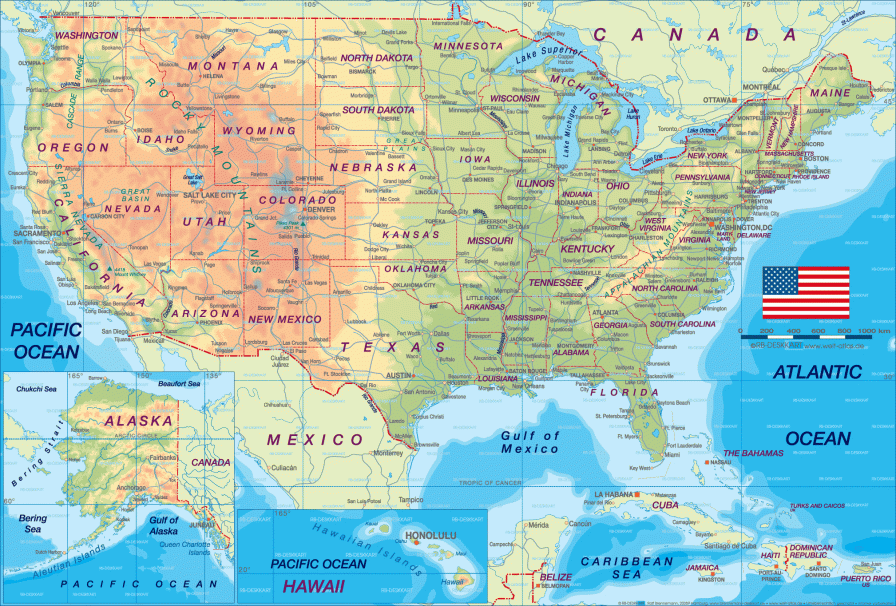
Technological integration remains another central theme in discussions regarding the future of the United States. Experts in sociology and economics have noted that the rapid adoption of digital tools and automation will continue to transform the American labor market and social interactions. These projections highlight the necessity of adaptive policy frameworks that can address the challenges posed by technological disruption while maximizing the benefits of innovation for all citizens.
Public Sentiment and National Identity
The lead-up to the 250th anniversary has prompted widespread public discourse regarding the state of American democracy and national identity. Public opinion research, such as those conducted by the Pew Research Center, suggests that while citizens hold diverse views on the current political environment, there is a consistent interest in the fundamental values that underpin the nation. This period of reflection provides an opportunity for the country to engage in a collective assessment of its progress and the challenges that remain in fulfilling the promises set forth in the founding documents.

As the nation moves closer to July 4, 2026, the focus remains on the synthesis of historical integrity and forward-looking vision. The ongoing work by historians, civic leaders, and the public reflects a commitment to understanding the complexities of the American experience. For the most current information regarding official commemorations and how to participate, citizens are encouraged to monitor updates from the America250 official website. We invite our readers to share their thoughts on the significance of this milestone in the comments section below.