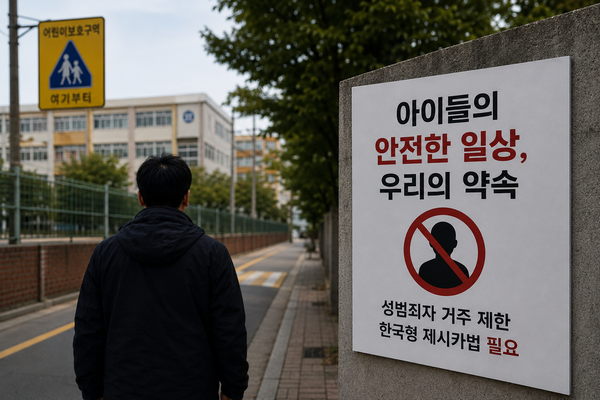
The South Korean government is currently evaluating the implementation of a “Korean-style Jessica’s Law,” a legislative proposal designed to restrict the residential locations of high-risk sex offenders upon their release from prison. The policy aims to prevent recidivism by prohibiting individuals convicted of sexual offenses against minors from residing in close proximity to schools, kindergartens, and other youth-oriented educational facilities.
This legislative movement draws inspiration from the American model known as Jessica’s Law, which in states like Florida imposes significant geographical restrictions on where convicted sex offenders can live. As debates continue within the National Assembly and the Ministry of Justice, the primary objective remains the enhancement of public safety for children and the reduction of repeat offenses by high-risk individuals. According to the Ministry of Justice of the Republic of Korea, the proposed system seeks to balance personal freedom with the urgent need for community protection, particularly in densely populated urban areas where schools are ubiquitous.
Understanding the Mechanics of Residential Restrictions
The core of the proposed legislation involves setting a specific radius around sensitive facilities—such as elementary schools and child-care centers—within which high-risk sex offenders would be legally barred from establishing residency. In the United States, the original Jessica’s Law, named after Jessica Lunsford, served as a catalyst for various state-level residency restrictions that often span hundreds of meters. South Korean policymakers are currently reviewing how to adapt these standards to the country’s unique geography, where schools and residential apartment complexes are often integrated into the same neighborhoods.
Legal experts and government officials are working to determine the appropriate distance requirements. A potential restriction of 600 to 700 meters, often cited in domestic policy discussions, would necessitate a significant overhaul of current residential monitoring systems. The Government of the Republic of Korea has indicated that the implementation would likely target only those offenders deemed to have a high probability of re-offending, rather than applying a blanket ban to all sex offenders, in an effort to ensure the policy remains consistent with constitutional protections regarding freedom of residence.
Balancing Public Safety and Constitutional Rights
The proposal has sparked a complex debate regarding the constitutional rights of offenders versus the state’s obligation to protect citizens. Critics of similar residency-restriction laws elsewhere have pointed to the potential for “clustering” effects, where offenders are pushed into marginalized areas or become homeless, which some researchers argue can actually increase the risk of recidivism. Conversely, proponents argue that the psychological deterrent and the physical barrier provided by these zones are essential for community peace of mind.
The Ministry of Justice has emphasized that any final version of the law must be robust enough to withstand legal challenges. In South Korea, the Constitutional Court of Korea has previously reviewed cases related to electronic ankle monitors and other post-release restrictions, establishing a precedent that measures must be both necessary and proportional to the threat posed. The current legislative push is part of a broader strategy to refine the “electronic supervision” system, which already employs GPS tracking and dedicated probation officers to monitor high-risk individuals in real-time.
Future Outlook and Legislative Steps
As the bill moves through the legislative process, the focus remains on the feasibility of enforcement. Local governments and law enforcement agencies are evaluating the logistical challenges of identifying suitable housing for offenders who fall under these new restrictions. Because South Korea features high-density housing, finding locations that are both affordable and compliant with a 600–700 meter exclusion zone presents a unique challenge for urban planners and the Ministry of Justice.

The next major checkpoint for this policy will be the parliamentary review sessions where the specific distance requirements and the criteria for “high-risk” classification will be debated. Stakeholders, including parents’ associations and legal advocacy groups, are expected to submit public commentary before a final draft is put to a vote. For updates on the status of this legislation, citizens can monitor the National Assembly of the Republic of Korea website, which provides access to pending bills, committee hearing schedules, and official legislative reports.
Public interest in this topic remains high, reflecting a broader societal concern regarding the protection of minors. As the government continues its consultations, further refinements to the bill are anticipated to ensure it meets both the safety expectations of the public and the requirements of the legal system.