
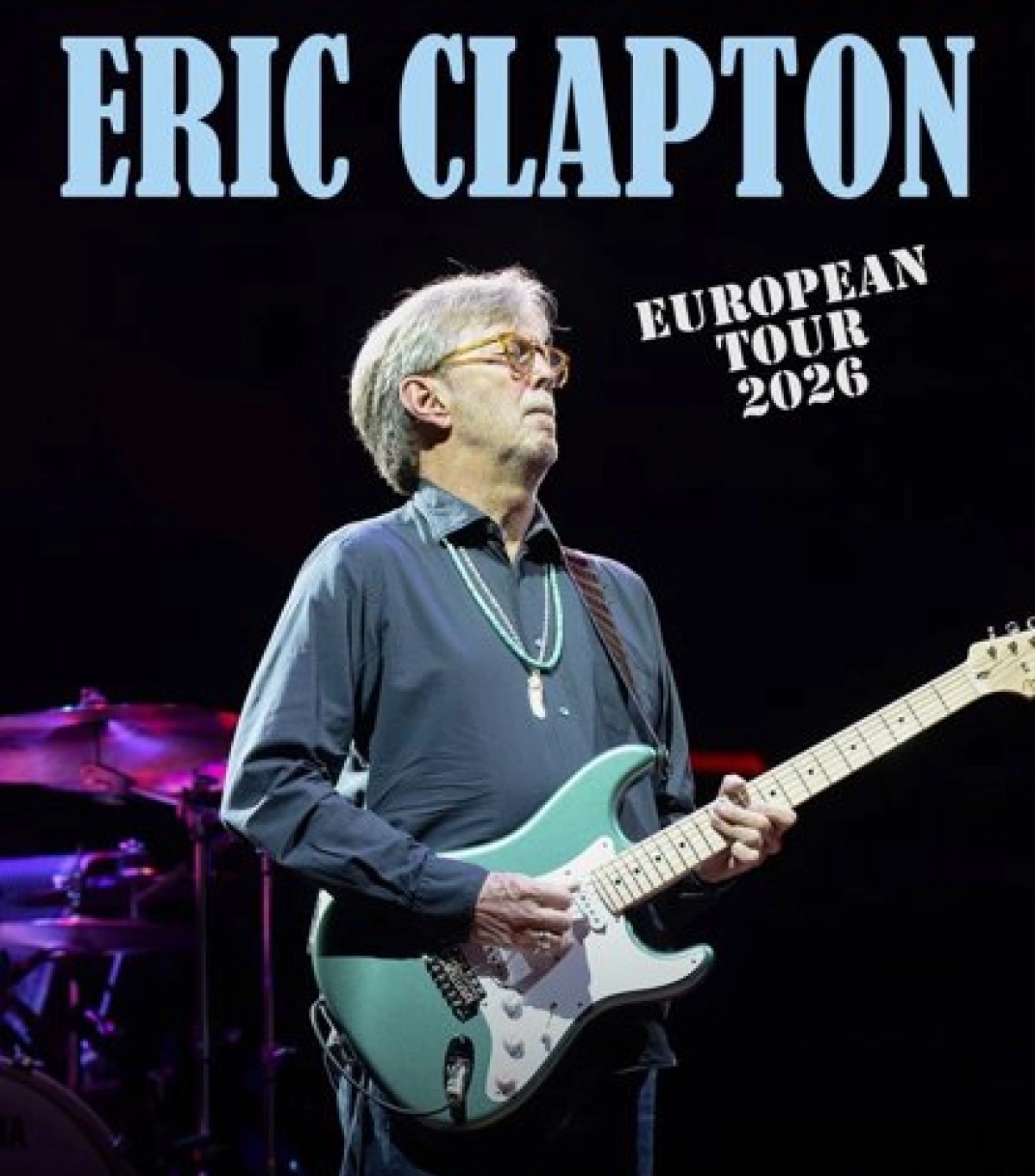
Eric Clapton’s Silent Mastery: A Night of Guitar Magic in Antwerp’s AFAS Dome
Antwerp, Belgium — The AFAS Dome fell into a hush as the lights dimmed on Sunday, April 26, 2026. Eric Clapton, the 79-year-old guitar legend, stood alone on stage, his silhouette framed by a single spotlight. Without a word of introduction, he launched into the opening notes of “Layla,” his fingers dancing across the fretboard with a precision that belied his age. For the next two hours, Clapton let his guitar do the talking—literally. According to concertgoers and reviewers, he uttered no more than sixteen words the entire night, a testament to his belief that music, not speech, is the universal language.
The performance, part of Clapton’s 2026 world tour, was a masterclass in restraint and emotion. Fans who packed the AFAS Dome, a venue typically reserved for sporting events and large-scale concerts, were treated to a setlist that spanned his six-decade career, from the bluesy depths of “Crossroads” to the soulful melancholy of “Tears in Heaven.” The concert was a rare opportunity to witness one of rock’s most influential figures in an intimate—if cavernous—setting, where every note resonated with the weight of history.
But Clapton’s near-silence was not the only story of the night. The concert coincided with the Antwerp 10 Miles, one of Belgium’s largest running events, which forced the closure of several major tunnels and roads in the city. The logistical challenges added an unexpected layer of drama to the evening, as fans navigated detours to reach the venue. Yet, for those who made it, the reward was a performance that will be remembered as one of the year’s most unforgettable musical experiences.
The Setlist: A Journey Through Clapton’s Legacy
Clapton’s setlist was a carefully curated journey through his storied career, blending iconic hits with lesser-known gems. The concert opened with the fiery “Layla,” a song that has defined his legacy since its release in 1970 with Derek and the Dominos. The performance was a reminder of why Clapton is often called “Slowhand”—his playing was deliberate, each note ringing with clarity and purpose. The crowd erupted as the familiar riff filled the dome, setting the tone for the evening.
From there, Clapton wove through a tapestry of his greatest works. “Wonderful Tonight,” with its delicate arpeggios, showcased his ability to convey deep emotion with minimal notes. “Cocaine,” a blues-rock staple, brought a raw energy to the stage, while “White Room” highlighted his versatility, shifting seamlessly between gentle verses and explosive solos. The setlist also included deeper cuts like “Badge,” a collaboration with George Harrison, and “Old Love,” a track from his 1989 album Journeyman, which demonstrated his enduring songwriting prowess.
One of the night’s most poignant moments came with “Tears in Heaven,” Clapton’s heartbreaking tribute to his late son, Conor. The song, written in the aftermath of Conor’s tragic death in 1991, is a raw and intimate ballad that has resonated with audiences for decades. On this night, Clapton’s performance was stripped down, his voice barely audible over the gentle strumming of his acoustic guitar. The crowd, too, seemed to hold its breath, creating an atmosphere of collective reverence.
For the encore, Clapton returned to the stage with a smile, finally breaking his silence—if only briefly. “Thank you,” he murmured, before launching into “Sunshine of Your Love,” the Cream classic that has become one of his signature songs. The crowd sang along, their voices rising in unison as Clapton’s guitar soared above them. It was a fitting end to a night that had been defined by the power of music to connect, heal, and inspire.
The Man of Few Words: Clapton’s Philosophy of Performance
Clapton’s decision to let his guitar speak for him is not a new one. Throughout his career, he has often been described as a reluctant frontman, preferring to let his music accept center stage. In interviews, he has spoken about his discomfort with public speaking, particularly in the early years of his career. “I’m not a natural performer in the sense of being a showman,” he once told Rolling Stone in 2007. “I’m more comfortable just playing.”

This philosophy was on full display in Antwerp. According to Nieuwsblad, a Belgian newspaper that reviewed the concert, Clapton’s near-total silence was a deliberate choice. Between songs, he would occasionally nod to his band or adjust his guitar, but he rarely addressed the audience directly. When he did speak, his words were brief and to the point. “He said ‘thank you’ a few times, and that was about it,” one reviewer noted. “The rest was all in the music.”
Clapton’s band, a group of seasoned musicians who have toured with him for years, seemed to understand his approach intuitively. The ensemble included longtime collaborators like drummer Steve Gadd and bassist Nathan East, both of whom have played with Clapton on some of his most iconic recordings. Their chemistry was evident throughout the night, with each member contributing to the seamless flow of the performance. The absence of extended banter or stage patter allowed the music to breathe, creating a sense of intimacy that belied the size of the venue.
For fans, Clapton’s silence was not a distraction but a gift. In an era where concerts often feel like overproduced spectacles, his understated approach was a refreshing reminder of what live music can—and perhaps should—be. “It was like watching a master painter at work,” said one attendee. “Every stroke was deliberate, every color perfectly placed. There was no necessitate for words.”
The Logistics: Navigating Antwerp’s Tunnel Closures
The concert was not without its challenges, both for the organizers and the audience. The AFAS Dome, located in the Merksem district of Antwerp, is a sprawling venue that can accommodate up to 23,000 people. Still, its location also meant that fans had to contend with the city’s extensive tunnel closures, which were put in place for the Antwerp 10 Miles running event. The closures, which began on Saturday, April 25, and lasted through Sunday evening, affected several major arteries, including the Kennedytunnel, Waaslandtunnel, and Jan de Vostunnel.
The City of Antwerp had issued warnings in advance, urging concertgoers to plan their routes carefully. The Kennedytunnel, a critical link between Antwerp and the Netherlands, was closed in the direction of the Netherlands from 8:30 AM to 4:30 PM on Sunday. The Liefkenshoektunnel, which runs parallel to the Kennedytunnel, was made toll-free during the closure to help alleviate traffic congestion. Meanwhile, the Waaslandtunnel was closed in both directions from Saturday at 8:00 AM until Sunday at 7:00 PM, forcing drivers to seek alternative routes.
For fans traveling from outside Antwerp, the closures added an extra layer of complexity to an already high-stakes evening. Some opted to take public transportation, while others arrived early to avoid the worst of the traffic. The AFAS Dome’s organizers also provided guidance on their website, including a route planner to help attendees navigate the detours. Despite the challenges, the concert proceeded without major delays, a testament to the planning and coordination of the event’s staff.
The tunnel closures were not the only logistical hurdle. The Antwerp 10 Miles, which attracted thousands of runners, also led to the closure of numerous streets in the city center and on Linkeroever, a district on the left bank of the Scheldt River. For those unfamiliar with Antwerp’s geography, the detours could be confusing, but the city’s efforts to provide clear signage and real-time updates helped mitigate the disruption.
The Legacy of Eric Clapton: Why This Concert Mattered
Eric Clapton’s career spans more than six decades, during which he has become one of the most influential guitarists in the history of rock and blues. His work with bands like The Yardbirds, Cream, and Blind Faith, as well as his solo career, has earned him 18 Grammy Awards and a place in the Rock & Roll Hall of Fame—not once, but three times (as a solo artist, with Cream, and with The Yardbirds). His influence can be heard in the playing of countless guitarists, from Jimmy Page to Jimi Hendrix to modern-day virtuosos like John Mayer.
Yet, despite his legendary status, Clapton has always been something of an enigma. Unlike many of his peers, he has shied away from the spotlight, preferring to let his music speak for itself. This approach has endeared him to fans who appreciate his humility and dedication to his craft. In Antwerp, that dedication was on full display. The concert was not about flashy stage effects or elaborate production—it was about the music, pure and simple.
For younger fans, the concert was an opportunity to experience a living legend in person. For older fans, it was a chance to relive the magic of Clapton’s greatest hits. And for everyone in attendance, it was a reminder of why music matters. In a world that often feels chaotic and divided, Clapton’s performance was a unifying force, a shared experience that transcended language, age, and background.
As the final notes of “Sunshine of Your Love” faded into the night, the crowd rose to its feet in a standing ovation. Clapton, ever the humble performer, gave a small wave before exiting the stage. There were no grand speeches, no lengthy goodbyes—just the quiet satisfaction of a job well done. For those who were there, it was a night they won’t soon forget.
What’s Next for Eric Clapton?
Clapton’s 2026 world tour is far from over. Following his performance in Antwerp, he is scheduled to play a series of dates across Europe, including stops in Paris, Berlin, and London. Fans can check his official website for the latest tour updates and ticket information.
For those who missed the Antwerp concert, there is still hope. Clapton’s performances are often recorded for posterity, and there is a chance that this show could be released as a live album or concert film in the future. In the meantime, fans can relive some of his greatest moments through his extensive discography, which includes timeless classics like 461 Ocean Boulevard, Slowhand, and Unplugged.
As for Clapton himself, he shows no signs of slowing down. Despite his age, he remains a vital force in the music world, continuing to tour and record new material. His most recent album, Happy Xmas, released in 2018, was a collection of holiday standards that showcased his enduring love for the blues. While there has been no official announcement about new music, fans are hopeful that Clapton will continue to share his gift with the world for years to come.
Final Thoughts: A Night to Remember
Eric Clapton’s concert in Antwerp was more than just a performance—it was a masterclass in the power of music. In a world where words often fail us, Clapton’s guitar spoke volumes, conveying emotions that transcended language. His near-total silence was not a gimmick but a statement, a reminder that sometimes, the most profound messages are the ones that don’t need to be spoken.
For those who braved the tunnel closures and made it to the AFAS Dome, the night was a triumph. It was a chance to witness a living legend in action, to hear the songs that have defined generations, and to be part of something truly special. And while Clapton may have said only sixteen words, the impact of his performance will resonate for years to come.
What did you think of Eric Clapton’s performance in Antwerp? Did you attend the concert, or have you seen him live before? Share your thoughts and memories in the comments below, and don’t forget to share this article with fellow music lovers!