
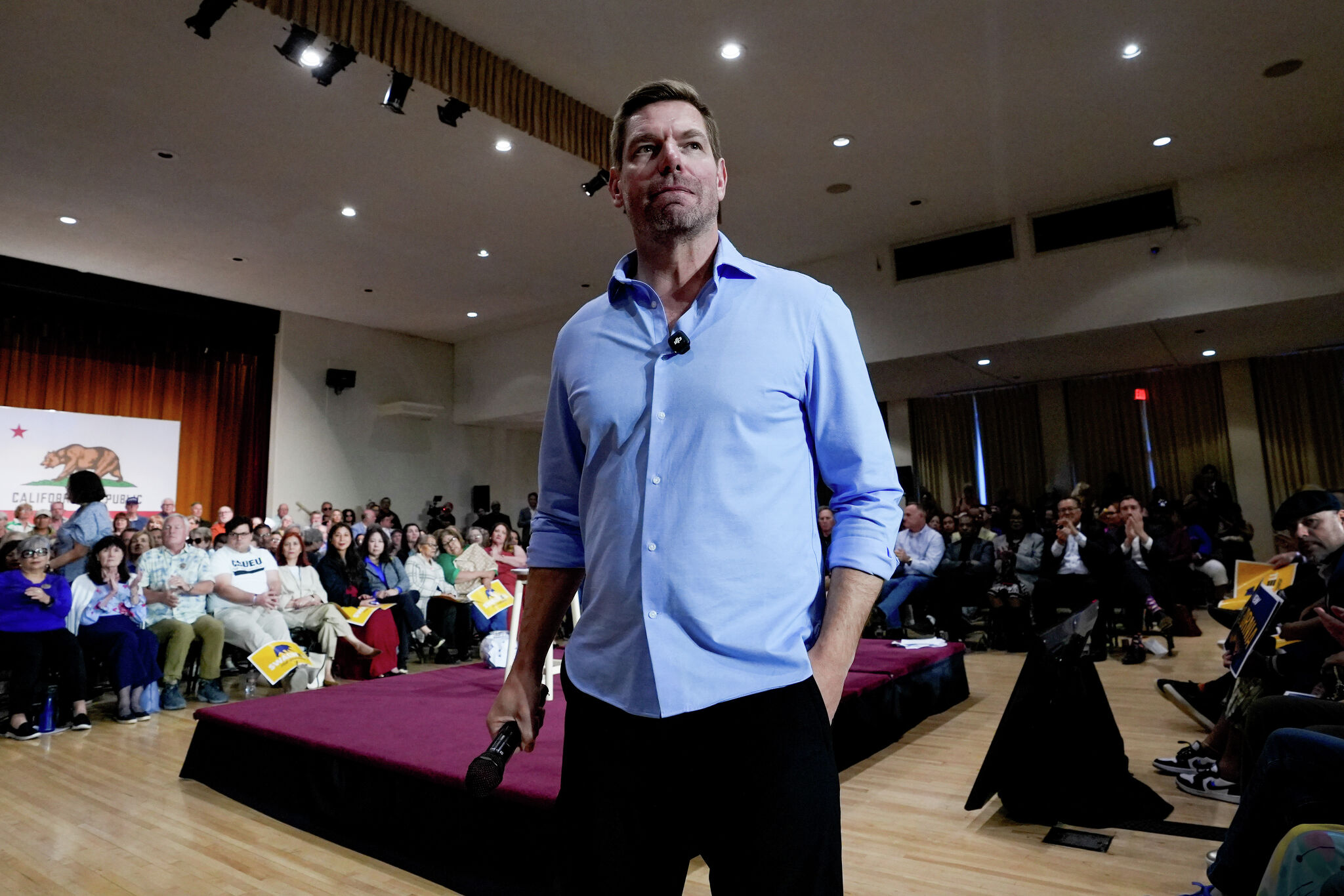
Democratic Representative Eric Swalwell, who is currently seeking the office of Governor of California, is facing a serious sexual assault allegation from a former staff member. The accusation, which has surfaced amidst his gubernatorial campaign, alleges that the congressman engaged in non-consensual sexual contact, creating a volatile political climate for the candidate as he seeks to lead the nation’s most populous state.
The allegation centers on an encounter with a former staffer who claims that Swalwell used his position of power to commit sexual assault. This development comes at a critical juncture for the California governor’s race, placing the Representative’s personal conduct and professional ethics under intense scrutiny from both the public and political opponents.
In response to the claims, Swalwell’s legal team has moved aggressively to shut down the narrative, issuing a cease-and-desist notice. His attorneys have characterized the allegations as unverified and baseless, asserting that the claims are an attempt to derail his political aspirations through misinformation. This legal maneuver highlights the high stakes of the accusation, as the campaign fights to maintain its viability in a competitive electoral field.
The fallout from the allegation has already manifested in the campaign’s operational schedule. Reports indicate that the Representative has canceled planned public appearances, including a scheduled town hall in Palm Desert, as his team manages the crisis. The intersection of a high-profile campaign and a serious criminal allegation has left the Swalwell camp in a defensive posture, attempting to stabilize a campaign that some observers suggest is beginning to fracture under the pressure.
Legal Maneuvers and the Campaign’s Defense
The primary strategy employed by Eric Swalwell’s legal representatives has been one of total denial and legal deterrence. By issuing a cease-and-desist notice, the campaign is attempting to prevent the further spread of the allegations, arguing that the claims lack evidentiary support. In the realm of high-stakes political litigation, such notices are often used to signal that the accused is prepared to pursue defamation lawsuits if the claims are not retracted or proven.
Legal experts note that the timing of such allegations—occurring during a campaign for governor—often leads to intense debates over political motivation versus the necessity of reporting sexual misconduct. For the accuser, the decision to come forward involves significant personal and professional risk. For the accused, the burden of proof in the court of public opinion often arrives long before any formal legal charges are filed in a court of law.
The campaign’s decision to cancel public events, such as the town hall in Palm Desert, suggests a strategic retreat. In political crisis management, “going dark” or limiting public exposure is a common tactic used to prevent spontaneous confrontations and to allow the legal team to coordinate a unified response. This tactical shift indicates that the campaign views the allegation not merely as a PR hurdle, but as a potential existential threat to his candidacy.
Impact on the California Gubernatorial Race
California’s political landscape is notoriously complex and a gubernatorial race is one of the most expensive and scrutinized contests in the United States. The introduction of a sexual assault allegation introduces a volatile element into the race, potentially alienating key Democratic constituencies, particularly those focused on women’s rights and workplace safety.
The “power imbalance” mentioned in the staffer’s account is a central theme in contemporary political discourse. When a superior is accused of assaulting a subordinate, the conversation shifts from the specific act to the systemic issue of workplace harassment. This makes the allegation particularly damaging for a candidate who may have campaigned on platforms of equity, and justice.
Political analysts are closely watching how other candidates in the race and leadership within the Democratic Party will respond. In previous cycles, party support has often hinged on whether an allegation is accompanied by a formal police report or a civil lawsuit. Until such documents emerge, the political community may remain divided, with some calling for an immediate exit and others urging a “wait and see” approach until the facts are fully adjudicated.
Understanding the Legal Implications of Sexual Assault Allegations
In the United States, sexual assault is a serious crime that can be prosecuted at both the state and federal levels, depending on the jurisdiction and the nature of the crime. A formal investigation typically begins with a police report, followed by the collection of evidence, witness interviews, and forensic analysis. If a prosecutor finds sufficient evidence, they may bring formal charges, which can lead to a criminal trial.
Parallel to criminal proceedings, victims often file civil lawsuits for damages. Civil cases have a lower burden of proof—the “preponderance of the evidence”—compared to the “beyond a reasonable doubt” standard required for criminal convictions. A cease-and-desist notice, while a strong signal of intent, does not prevent a victim from filing a police report or a civil suit.
The Role of Staffers and Power Dynamics in Political Offices
The relationship between a Member of Congress and their staff is characterized by a steep power gradient. Staffers are often young professionals whose career trajectories are heavily dependent on the recommendations and goodwill of their employer. This dynamic is frequently cited in cases of workplace misconduct, as the fear of professional retaliation can silence victims for years.
The “culture of silence” in political offices has been a subject of reform efforts in recent years. The introduction of more robust reporting mechanisms and the influence of the #MeToo movement have encouraged more individuals to report misconduct. However, the risk of being labeled “politically motivated” remains a significant barrier for those accusing high-ranking officials during an election cycle.
Key Takeaways and Current Status
- The Allegation: A former staff member has accused Rep. Eric Swalwell of sexual assault.
- The Defense: Swalwell’s attorneys have denied the claims and issued a cease-and-desist notice, calling the allegations unverified.
- Campaign Impact: The candidate has canceled public events, including a town hall in Palm Desert, amid the controversy.
- Political Stakes: The allegations threaten Swalwell’s candidacy for Governor of California by challenging his standing with key voter blocs.
- Legal Status: As of the current reporting, there has been no confirmation of formal criminal charges or a filed civil lawsuit.
What Happens Next?
The immediate future of Eric Swalwell’s campaign depends on whether the accuser chooses to elevate these claims from public statements to formal legal filings. The filing of a police report or a civil complaint would move the matter from the realm of political scandal into a judicial process, requiring the discovery of evidence and sworn testimony.
Observers will too be looking for statements from the California Democratic Party and other high-ranking party officials. Any withdrawal of endorsements or calls for Swalwell to suspend his campaign would signal a loss of institutional support that would be difficult to recover from.
The next critical checkpoint will be the candidate’s return to the public campaign trail and whether he chooses to address the allegations directly in a press conference or continue relying on legal notices. As the election cycle progresses, the pressure for a transparent accounting of the events will likely intensify.
World Today Journal will continue to monitor this story as new evidence or official filings emerge. We invite our readers to share their thoughts on the intersection of political power and accountability in the comments below.