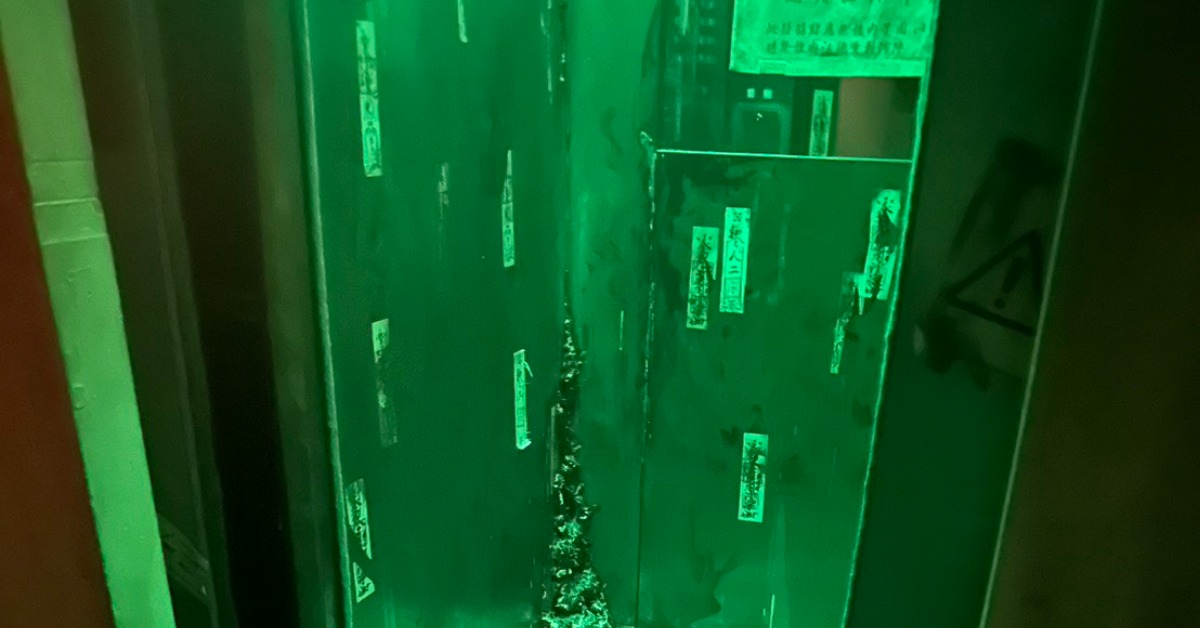
LONDON — A tragic accident at a popular immersive entertainment venue in Taipei has claimed the life of a 29-year-old woman, raising urgent questions regarding safety protocols within the rapidly growing “immersive horror” industry. The employee, who was performing a specialized role as part of a theatrical scenario, succumbed to injuries sustained during a workplace mishap that occurred earlier this month.
The incident took place at the Xinyi District branch of the escape room operator known as Logic Screwdriver (邏思起子). According to local authorities and investigative reports, the victim was participating in a high-intensity horror simulation designed to provide a realistic, visceral experience for participants. What was intended to be a choreographed performance turned fatal when the employee became trapped in a simulated hanging scenario.
This tragedy marks a grim milestone for the immersive entertainment sector in Taiwan, an industry that has seen a surge in popularity through “live-action” horror experiences that utilize physical props, dark environments, and close-contact interactions to heighten tension. The death of the staff member has prompted immediate scrutiny from law enforcement and municipal regulators regarding the mechanical and procedural safety of these high-stakes environments.
Timeline of the Incident: The 25-Minute Window
The accident occurred on the evening of Friday, May 10, during a scheduled session of the “Yongchun Hospital” (永春醫院) attraction. The game, which is marketed as one of the most intense immersive experiences in northern Taiwan, features deep narrative immersion and interactive elements. The victim was tasked with portraying a “hanging ghost,” a role that required the use of a rope to simulate a suspended, deceased figure within the game’s narrative framework.
Reports indicate that the employee began the performance at approximately 7:00 PM. However, when staff members realized the employee was not emerging from the designated area at the expected time, a search was initiated. At approximately 7:25 PM, colleagues discovered the woman in a state of unconsciousness, with a hemp rope wrapped around her neck. The delay in discovery—estimated to be roughly 25 minutes—is a critical focus of the ongoing investigation into whether communication protocols or monitoring systems failed during the performance.
Emergency responders arrived on the scene shortly after the discovery. The employee was rushed to a nearby hospital for intensive care. While medical teams were able to restore some vital signs initially, the prolonged period of asphyxiation had caused severe physiological damage. Following a five-day struggle for survival in critical condition, the employee passed away, as confirmed by medical sources and local news outlets.
Safety Concerns in Immersive Horror Experiences
The “Yongchun Hospital” attraction, much like many modern escape rooms, relies on “near-body” interaction and highly realistic props to maintain the illusion of terror. While these elements are central to the commercial appeal of the genre, they introduce significant occupational hazards for the staff members required to inhabit these roles.
Industry experts note that the distinction between a “prop” and a “hazard” can become blurred in dark, confined spaces. The use of ropes, harnesses, or any mechanism involving suspension requires rigorous, redundant safety checks and, ideally, an “instant-release” or “kill-switch” mechanism that can be activated by either the performer or a remote supervisor. The fact that the employee remained in a state of suspension for 25 minutes suggests a significant breakdown in these essential safety layers.
Key areas of concern currently under investigation include:
- Mechanical Integrity: Whether the rope and suspension hardware were fit for purpose or if they malfunctioned under the weight of the performer.
- Supervision Protocols: The adequacy of real-time monitoring for employees performing physically demanding or high-risk roles.
- Emergency Response Training: The speed at which staff identified the distress and the effectiveness of the immediate intervention.
- Regulatory Compliance: Whether the venue met the specific safety standards required for “specialized entertainment venues” in the Taipei metropolitan area.
Regulatory Fallout and Legal Scrutiny
In the wake of the fatality, the Taipei City Government and local police have launched a formal inquiry. Law enforcement is currently working to determine if the incident constitutes criminal negligence or if it was a tragic mechanical accident. Investigators are looking closely at the employment history of the victim, who had reportedly been with the company for three years and was familiar with the specific game scenario.
The investigation is not limited to the specific mechanics of the “hanging ghost” prop. Authorities are also examining the broader operational standards of the Logic Screwdriver Xinyi branch. Following the incident, there has been increased pressure on municipal departments to conduct specialized inspections of escape rooms and immersive theaters, which often operate in converted spaces or utilize complex, non-standard equipment.
Legal experts suggest that the family of the deceased may pursue civil litigation against the operator, citing equipment failure or inadequate workplace safety measures. As the investigation continues, the industry faces a potentially significant shift in how “horror” experiences are regulated, with calls for mandatory safety certifications for any venue utilizing physical suspension or high-immersion props.
Key Takeaways: The Impact of the Tragedy
- Incident Location: Logic Screwdriver (邏思起子) Xinyi branch, Taipei.
- Cause of Death: Asphyxiation resulting from a rope-based performance prop.
- Critical Timeline: The victim was trapped for approximately 25 minutes before being discovered.
- Industry Impact: The event has triggered a re-evaluation of safety standards for immersive and “live-action” horror entertainment.
- Current Status: An active police and municipal investigation is underway to determine liability and negligence.
As this story develops, the focus will likely shift toward the results of the forensic investigation and whether the Taipei City Government will implement new, mandatory safety guidelines for the immersive entertainment sector. For now, the tragedy serves as a sobering reminder of the risks inherent in the pursuit of extreme realism in the workplace.
We will continue to monitor official police statements and regulatory filings as more information becomes available.
Editor’s Note: If you found this report informative, please share it with your network and leave your thoughts in the comments below. How should cities regulate high-immersion entertainment to ensure worker safety?
Keep reading