
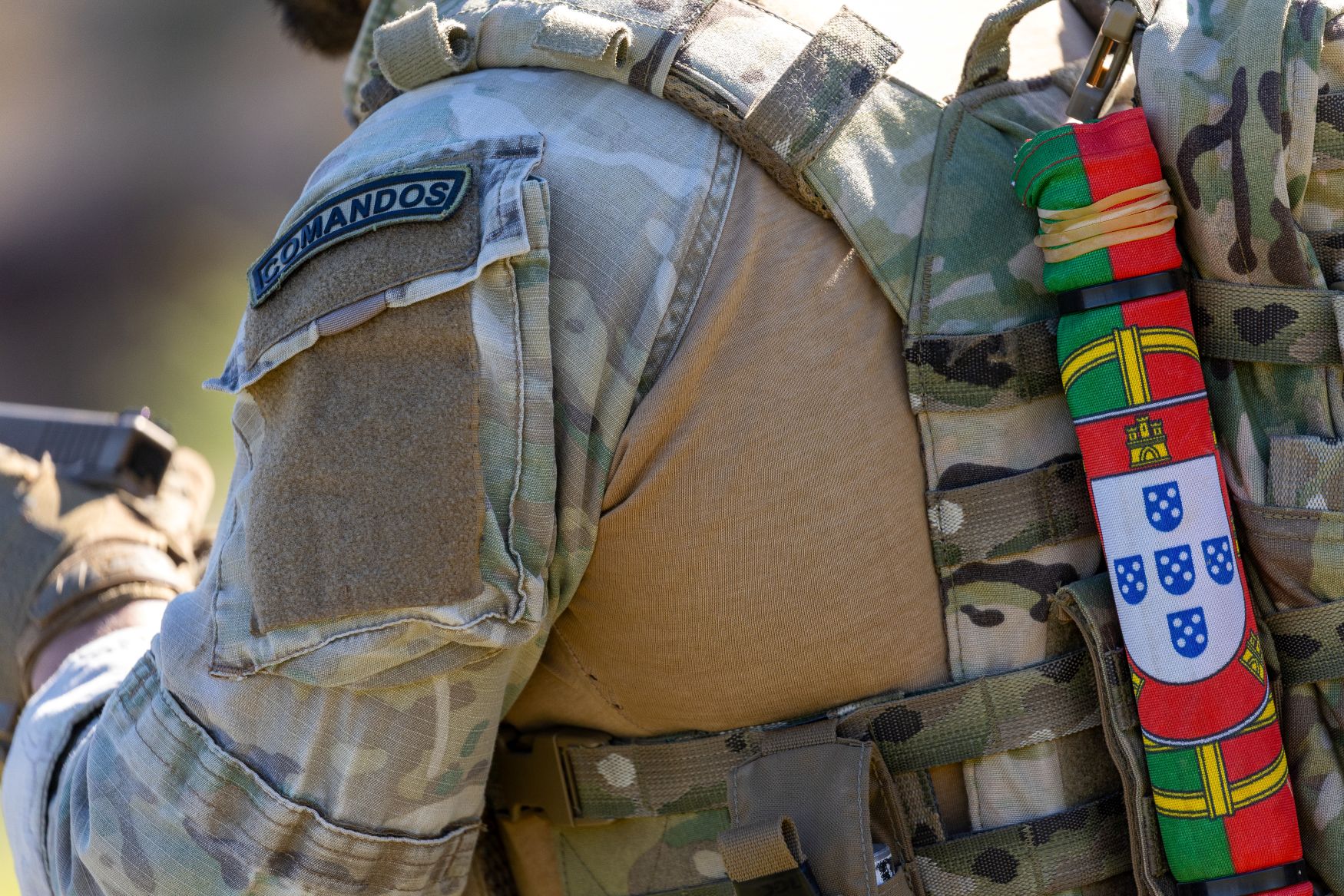
The Portuguese Army’s Commando Battalion conducted the “ESTIO 26-1” exercise from March 26 to April 1, 2026, at the Campo Militar de Santa Margarida in Constância, Portugal. This training activity formed part of an ongoing cycle designed to prepare troops for deployment to one of the most complex and unpredictable operational environments in which Portugal has previously been engaged: the Central African Republic.
The exercise specifically aimed to validate the readiness of the 19th National Detached Force (FND), a unit comprising 191 soldiers designated as the Quick Reaction Force (QRF) for the United Nations Multidimensional Integrated Stabilization Mission in the Central African Republic (MINUSCA). This contingent is scheduled for deployment to the African theater in early June 2026.
Training scenarios during “ESTIO 26-1” focused on simulating the ambiguous and volatile conditions faced by peacekeepers in the Central African Republic, where clearly defined front lines are absent and combatants often blend with civilian populations. Soldiers practiced making split-second decisions about potential threats versus civilians, a process described as extending beyond tactical considerations into broader judgment under pressure.
A notable detail highlighted in training materials was the visual distinction of vehicles used in the exercise: VAMTAC armored vehicles were painted white, in accordance with the traditional color scheme for UN peacekeeping operations. This marking serves to clearly identify the vehicles as part of a humanitarian mission rather than a combat operation.
The exercise was observed by representatives from Militär Aktuell, a defense-focused media outlet, which provided on-the-ground coverage of the training activities. Their presence underscored the significance of the drill as part of Portugal’s broader preparation for its upcoming contribution to MINUSCA.
According to official sources, the 19th FND will operate under the mandate of MINUSCA, which was established by the United Nations Security Council to support humanitarian efforts, protect civilians, and assist in the disarmament, demobilization, and reintegration processes within the Central African Republic. The mission remains active amid ongoing instability in various regions of the country.
Portugal has maintained a consistent presence in international peacekeeping efforts, with previous contributions to UN missions in regions such as the Balkans, Timor-Leste, and various African states. The deployment of the 19th FND represents a continuation of this commitment to multilateral security and stabilization initiatives.
The Campo Militar de Santa Margarida, located in the Santarém district of Portugal, regularly hosts military training exercises due to its varied terrain and infrastructure suited for simulating diverse operational environments. Its leverage for “ESTIO 26-1” aligns with established patterns of preparation for overseas deployments.
As the June 2026 deployment date approaches, further preparations for the 19th FND will likely include additional specialized training, logistical coordination, and final readiness assessments. Official updates on the mission’s status are expected to be released through the Portuguese Ministry of National Defense and the United Nations Peacekeeping website as the deployment timeline progresses.
For readers seeking to follow developments related to Portugal’s involvement in MINUSCA or broader UN peacekeeping efforts, official sources provide the most reliable and timely information. Engaging with these resources ensures access to verified updates on troop movements, mission mandates, and operational developments.
Stay informed about international peacekeeping initiatives and share insights on how multinational efforts contribute to global stability.