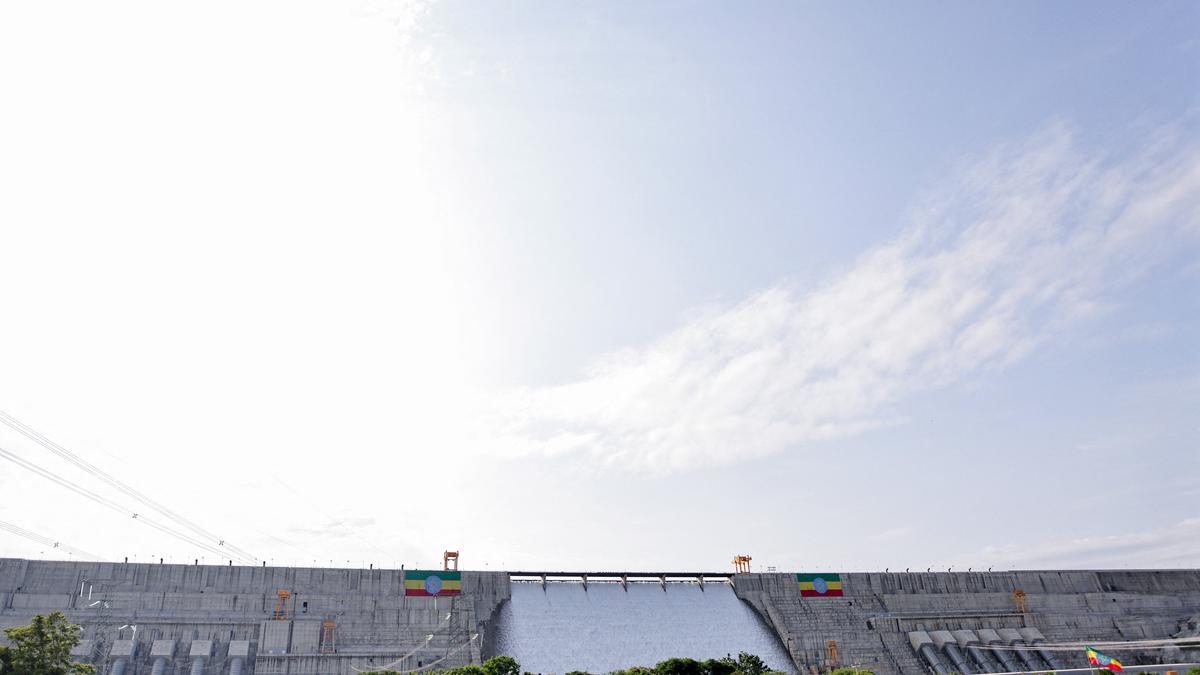
The Grand Ethiopian Renaissance Dam: A Transformative Project, A Regional Flashpoint
The inauguration of the Grand Ethiopian Renaissance Dam (GERD) in September 2025 marks a pivotal moment - a source of immense national pride for Ethiopia and a potential catalyst for regional development, yet concurrently a source of escalating tension with downstream nations, notably Egypt. Prime Minister Abiy Ahmed hailed the completion of the $4 billion megastructure as “a great achievement for all black people,” a statement reflecting the dam’s symbolic weight as a testament to African ingenuity and self-reliance. However, this celebratory moment was immediately met with a formal protest to the United Nations from Egypt, underscoring the deeply complex geopolitical implications of this ambitious project.
A Monumental Undertaking & Ethiopia’s Energy Future
Construction on the GERD, located on a major tributary of the Nile River, began in 2011.Towering 170 meters high and stretching nearly 2 kilometers across the Blue Nile near the Sudanese border, the dam represents a feat of engineering and a national project of historic scale. For a nation grappling with internal conflicts,the GERD has emerged as a rare unifying force,embodying a shared vision for progress and prosperity.
The dam’s capacity is staggering: it can hold 74 billion cubic meters of water and generate 5,150 megawatts of electricity.This more than doubles Ethiopia’s current power capacity, making it the largest hydroelectric dam in Africa – tho still outside the top ten globally in terms of overall power generation. This surge in energy production promises to be transformative for Ethiopia, a country where approximately 45% of it’s 130 million citizens currently lack access to electricity, and frequent blackouts plague both businesses and households.The potential benefits extend beyond simply illuminating homes and powering industries. Analysts predict the GERD will fuel Ethiopia’s industrial growth, facilitate a transition to electric vehicles, and enable the export of electricity to neighboring countries, potentially reaching as far as Tanzania. Pietro Salini, CEO of Webuild, the Italian firm responsible for the dam’s construction, succinctly stated, “It is no longer a dream but a fact,” highlighting the culmination of years of overcoming significant logistical, financial, and political hurdles – including the challenges posed by the 2020-2022 civil war in the Tigray region. Salini further emphasized the dam’s operational nature: “this country that was dark in the evening… is selling energy to neighbouring countries.”
Egypt’s Existential Concerns & The Water Security dilemma
While Ethiopia celebrates, Egypt views the GERD with profound apprehension. Dependent on the Nile River for a staggering 97% of its water supply, Egypt considers the dam an “existential threat” to its water security, as articulated by President Abdel Fattah al-Sisi. Egypt’s recent letter to the United Nations Security Council characterized the inauguration as a “unilateral measure that violates international law” and a direct challenge to the well-being of its population.
These concerns are not unfounded. The Blue Nile contributes up to 85% of the water that ultimately forms the Nile River, flowing through Sudan and into Egypt. Egypt fears that the dam’s massive reservoir will considerably reduce the downstream flow of water, impacting agricultural production, industrial processes, and the overall availability of this vital resource.
Mohamed Mohey el-deen, a former member of Egypt’s GERD impact assessment team, explains the depth of the issue: “For the Egyptian leadership, GERD is not just about water, it is about national security. A major drop in water supply threatens Egypt’s internal stability. The stakes are economic, political and deeply social.” This highlights the fact that the dispute transcends purely technical considerations and touches upon essential issues of national survival for Egypt.
Addressing Concerns & The Path Forward
Ethiopia maintains that the GERD is designed to regulate water flow, not to consume it. Prime Minister Abiy Ahmed reiterated this point at the inauguration, stating that the dam ”will not affect your development at all” for downstream countries. Webuild’s CEO, Pietro Salini, echoed this sentiment, clarifying that the dam is a hydroelectric project, not an irrigation scheme, and therefore dose not significantly alter the overall river flow.
However, these assurances have done little to alleviate Egypt’s anxieties.The core of the dispute lies in the lack of a comprehensive and legally binding agreement governing the filling and operation of the dam, particularly during periods of drought.
over the past decade, numerous mediation efforts – led by the United States, the World Bank, Russia, the UAE, and the African union – have repeatedly