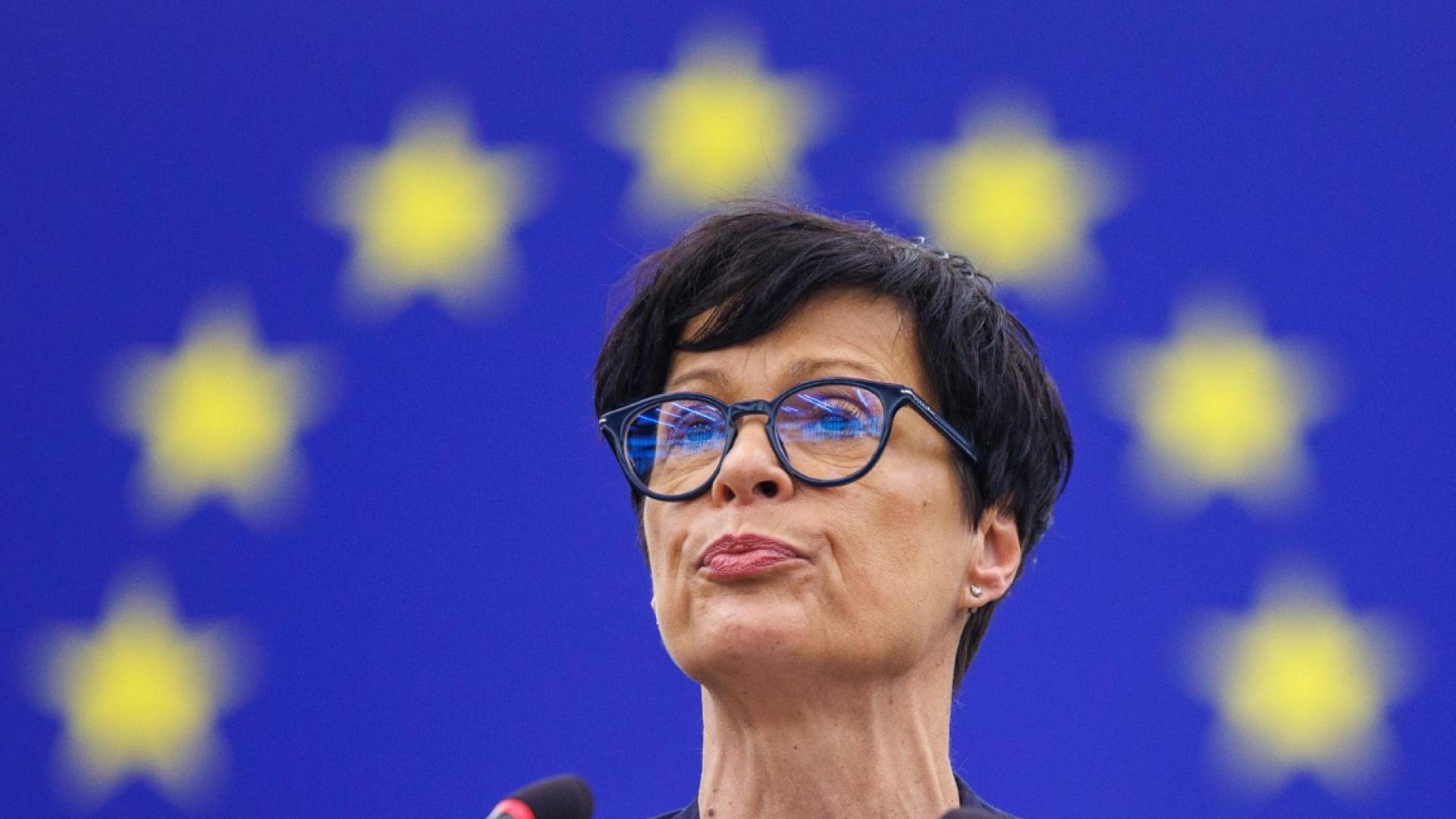
European Commissioner-designate for Enlargement Marta Kos has signaled a firm stance regarding North Macedonia’s path toward European Union membership, emphasizing that the country must fulfill its constitutional obligations without further delay. During recent diplomatic engagements, Kos underscored that the integration process remains strictly conditional on the inclusion of the Bulgarian minority in the North Macedonian constitution, a requirement rooted in existing bilateral agreements.
The diplomatic pressure comes as the government of Prime Minister Hristijan Mickoski seeks to navigate domestic political opposition while maintaining the country’s aspirations for EU accession. According to statements monitored by regional news agencies, Kos’s message to Skopje is direct: the path to Brussels is not paved with excuses, and failure to implement agreed-upon reforms will inevitably lead to the country falling further behind its regional peers.
Constitutional Requirements and the EU Framework
The core of the current impasse lies in the implementation of the 2022 proposal, often referred to as the “French proposal,” which facilitated the start of North Macedonia’s EU accession negotiations. A central pillar of this framework is the modification of the North Macedonian constitution to explicitly recognize the Bulgarian minority. This requirement is not a new demand, but rather a long-standing condition reiterated by the European Commission as a prerequisite for opening the first cluster of negotiation chapters.

European officials have consistently maintained that the rules for accession are uniform. As reported by the European Commission, the enlargement process is merit-based and requires full adherence to the fundamental rights and commitments made by candidate states. For the government in Skopje, the political challenge involves securing a two-thirds majority in parliament to pass the constitutional amendments—a threshold that remains elusive given the current composition of the Sobranie.
The Stance of the Mickoski Administration
Prime Minister Hristijan Mickoski has previously voiced reservations regarding the constitutional amendments, suggesting that they should only come into effect after North Macedonia’s EU membership is guaranteed. This position has encountered significant resistance from Brussels and individual member states, who argue that the sequence of events is non-negotiable. The European Union’s position, frequently communicated through official channels including the Directorate-General for Neighbourhood and Enlargement Negotiations, remains that the constitutional change must precede the next steps in the accession process.

Marta Kos, in her capacity as the incoming Commissioner for Enlargement, has reinforced this consistency. Her communication suggests that the European Commission is unlikely to entertain renegotiations of the existing framework. Analysts note that for the current administration in Skopje, the lack of progress is increasingly viewed as an isolationist risk, as other countries in the Western Balkans continue to advance through the technical stages of the accession process.
Geopolitical Implications for Western Balkan Integration
The delay in North Macedonia’s progress is occurring against the backdrop of a renewed EU focus on the Western Balkans. The European Union has indicated that the enlargement process has regained momentum due to the shifted geopolitical climate in Europe. However, this momentum does not translate into a relaxation of the “Copenhagen criteria” or specific bilateral obligations.
According to reports from the Council of the European Union, the stability and democratic standards of candidate countries are strictly monitored. For North Macedonia, the failure to meet the constitutional requirement serves as a primary obstacle that prevents the opening of negotiations on essential policy areas, such as the rule of law and economic integration. The message from Brussels is clear: the procedural requirements are not a matter of political negotiation, but a prerequisite for the next phase of integration.
What Happens Next
The next critical checkpoint involves the ongoing dialogue between the North Macedonian government and the European Commission. While no specific date has been set for a breakthrough, the pressure remains on the government in Skopje to present a viable plan for constitutional reform to the parliament. Failure to do so risks an indefinite delay in the country’s EU accession timeline, potentially leaving North Macedonia as an outlier in the regional push for European integration.

As the situation continues to develop, observers are looking for signals from the upcoming parliamentary sessions in Skopje to see if the government will seek a consensus with the opposition. We will continue to monitor official statements from the European Commission and the North Macedonian government. Readers are encouraged to share their perspectives on the implications of these developments for the region in the comments section below.