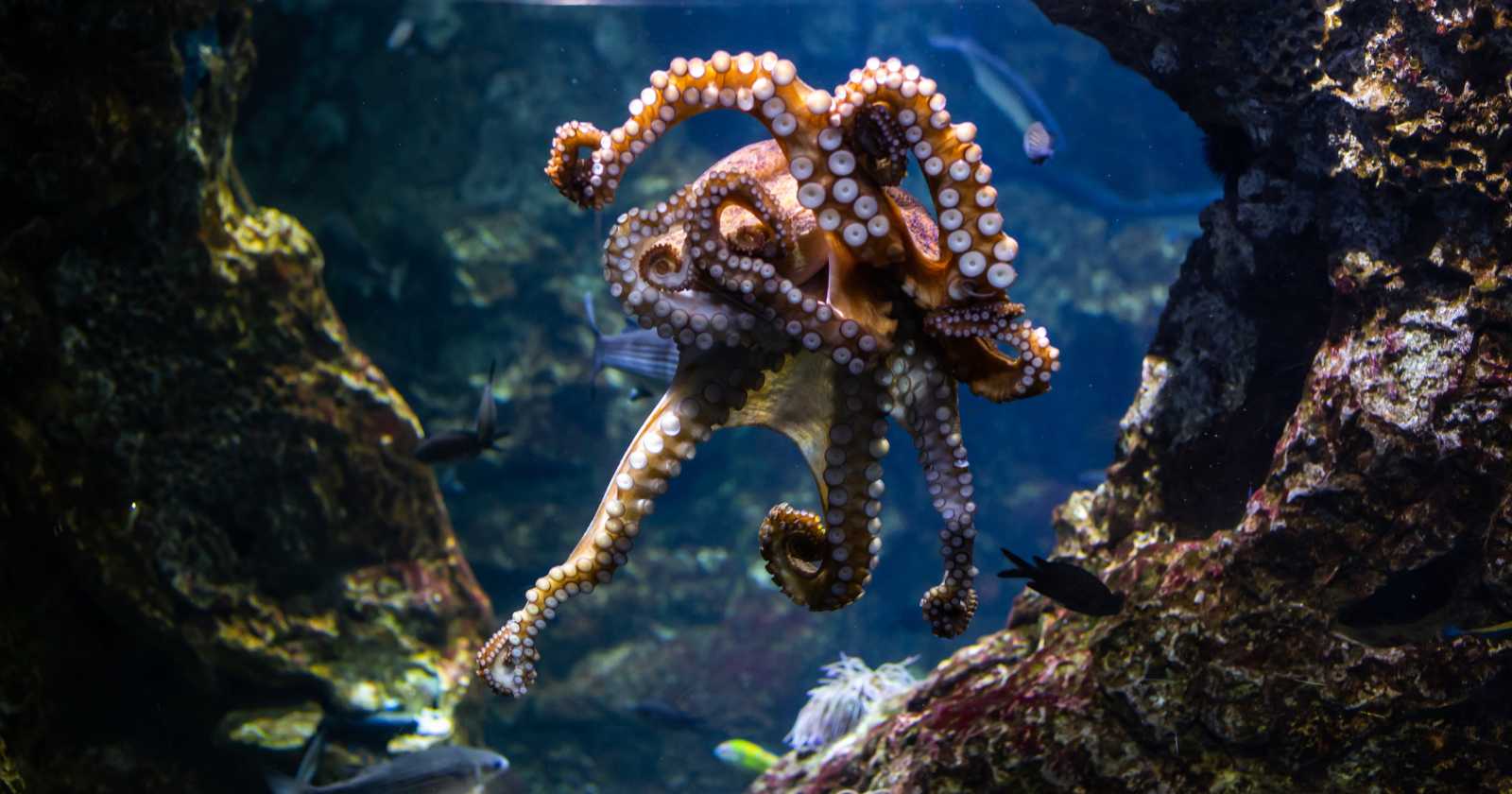
Octopuses possess a unique decentralized nervous system that challenges traditional understandings of animal intelligence. While these cephalopods have approximately 500 million neurons, only about one-third are located in their central brain. The remaining two-thirds are distributed throughout their eight arms, allowing each limb to function with a high degree of autonomy. According to research published by Nature, this neural arrangement enables individual arms to taste, sense their environment, and execute complex motor tasks without waiting for instructions from the animal’s central brain.
This biological configuration is an evolutionary adaptation that supports the octopus’s highly active, predatory lifestyle in complex marine environments. Because an octopus lacks a rigid skeletal structure, its arms can move in an infinite number of directions. The Current Biology journal reports that this decentralized control allows the octopus to process sensory information in real time across its entire body, effectively performing multiple tasks simultaneously. While the central brain maintains overall supervision, the arms operate as semi-autonomous units capable of solving local problems, such as navigating crevices or manipulating prey.
Neural Distribution and Motor Autonomy
The distribution of neurons in an octopus is fundamentally different from that of vertebrates, where the vast majority of neural processing occurs in the central nervous system. In cephalopods, the arms contain nerve cords that branch into a complex network of peripheral neurons. This peripheral nervous system allows the arms to respond to chemical and mechanical stimuli independently. As noted by the Smithsonian Magazine, an octopus arm can continue to react to sensory inputs even if it is severed from the body, demonstrating the profound level of localized processing power inherent in their anatomy.
This autonomy provides a significant advantage for survival. When hunting, an octopus does not need to consciously direct every movement of its suckers. Instead, the arms act on local sensory feedback to secure prey, allowing the central brain to focus on higher-level navigation and threat detection. Researchers have observed that this “distributed brain” model allows the octopus to maintain a high level of efficiency while multitasking in dense underwater habitats.
Sensory Capabilities in the Arms
Each octopus arm is equipped with hundreds of suckers, each containing a high density of chemoreceptors and mechanoreceptors. These receptors function like a sophisticated sensory array, allowing the arm to “taste” the surface of rocks or identify the texture of potential food items through touch. The Cell Press research highlights that this sensory input is processed locally within the arm’s nervous system, triggering immediate muscle contractions or relaxations before a signal even reaches the central brain.
This capability is critical for the creature’s ability to manipulate objects. By offloading the computational burden of sensory processing to the periphery, the octopus avoids the bottleneck that would occur if the central brain had to process every individual touch sensation from thousands of suckers simultaneously. This specialization is a primary reason why octopuses are considered among the most intelligent invertebrates in the ocean.
Evolutionary Significance of Decentralized Intelligence
The evolution of this decentralized nervous system is linked to the octopus’s lack of a protective shell, which forced the species to develop sophisticated behavioral strategies for defense and hunting. By evolving a brain that is distributed rather than centralized, the octopus gained the ability to interact with its surroundings in a highly flexible manner. According to studies highlighted by the Scientific American, the octopus represents a unique evolutionary experiment in intelligence, proving that complex problem-solving does not strictly require a large, centralized brain.

Current research continues to explore how these peripheral neurons communicate with the central brain to coordinate movement. While the exact mechanisms of this integration remain a subject of ongoing study, the existing data consistently points to a model of “embodied intelligence,” where the body itself—and not just the brain—serves as a core component of the creature’s cognitive process. Future observations in marine biology are expected to provide further clarity on how these neurons adapt to different environmental stressors and physical injuries over the lifespan of the animal.
Researchers interested in the latest findings regarding cephalopod neurobiology can monitor updates from the Marine Biological Laboratory, which frequently publishes reports on the physiological and behavioral patterns of marine invertebrates. If you have questions about the cognitive abilities of octopuses or related marine life, feel free to share your thoughts or observations in the comments section below.