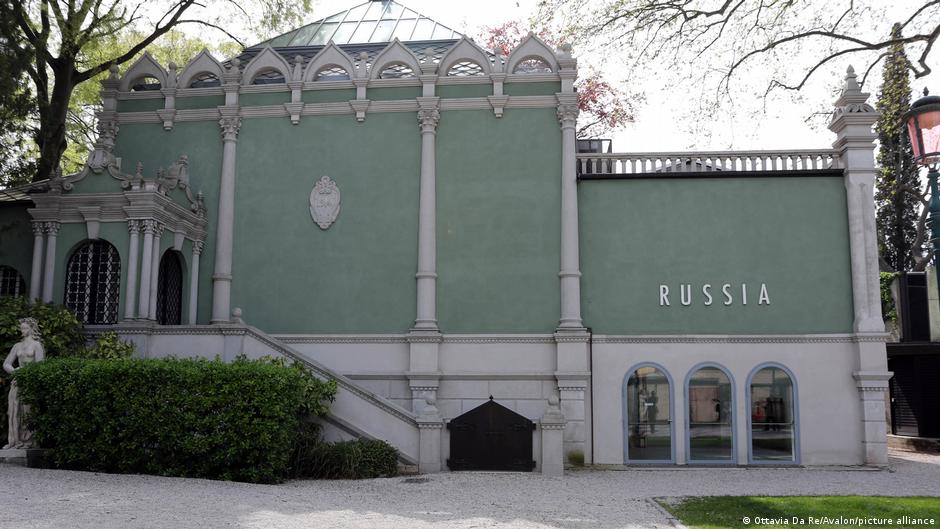
Kaja Kallas, the European Union’s High Representative for Foreign Affairs and Security Policy, has announced that the EU will reduce its financial support for the Venice Biennale due to Russia’s participation in the 2026 edition. This decision comes amid growing international criticism over Russia’s return to the prestigious art exhibition for the first time since the full-scale invasion of Ukraine began in 2022.
The announcement was made during a press briefing in Brussels, where Kallas emphasized that the EU’s cultural funding policies must align with its broader stance against Russia’s actions in Ukraine. She stated that continued financial backing for an event featuring Russian representation would contradict the union’s position on accountability and cultural diplomacy during wartime.
Russia’s participation in the 2026 Venice Biennale marks its first appearance at the event since 2021, following a conspicuous absence in 2022 and 2024 amid widespread condemnation of its military aggression. The decision to invite Russia has reignited debate over the separation of art and politics, with Ukrainian officials and several EU member states arguing that cultural engagement with Russia risks legitimizing its wartime narrative.
According to verified reports, the Russian pavilion for the 2026 Biennale is being overseen by Anastasia Karneeva, daughter of a senior official at Rostec, Russia’s state-owned defense conglomerate. Her appointment has drawn particular scrutiny, with critics suggesting it reflects an effort to leverage cultural platforms for geopolitical influence.
Ukraine has formally protested Russia’s inclusion, urging Italian authorities not to issue visas to Russian participants and calling on Biennale organizers to reverse their decision. Ukrainian Foreign Minister Andrii Sybiha and Minister of Culture Tatiana Berezhna issued a joint statement asserting that allowing Russia to participate undermines the principles upheld during previous editions when the country was excluded.
Several European nations have echoed these concerns. Finland has announced it will limit its own participation in the 2026 Biennale in response to Russia’s return, although Italy’s Ministry of Culture has publicly criticized the Russian pavilion’s concept, despite not having the authority to block national pavilion entries under Biennale rules.
The Venice Biennale Foundation has maintained that it does not control national pavilions and cannot exclude countries based on political grounds, citing its commitment to artistic freedom and non-censorship. However, this stance has intensified tensions between those who view the Biennale as a neutral cultural forum and those who argue that state-sponsored art from aggressor nations serves as soft power propaganda.
As the controversy unfolds, the EU’s decision to scale back its funding signals a significant shift in how cultural institutions are being evaluated through the lens of geopolitical accountability. The move may encourage other international cultural bodies to reassess their engagement with states involved in active conflicts.
Officials have not yet disclosed the exact amount of funding that will be reduced or redirected, nor have they specified whether the cuts will affect specific programs or general support for the Biennale. Further details are expected in the coming weeks as the EU finalizes its cultural budget allocations for 2026.
For ongoing updates on this developing story, readers are encouraged to monitor official communications from the European External Action Service and the Venice Biennale Foundation.
Share your thoughts on this issue in the comments below, and help spread awareness by sharing this article with your network.
Keep reading