
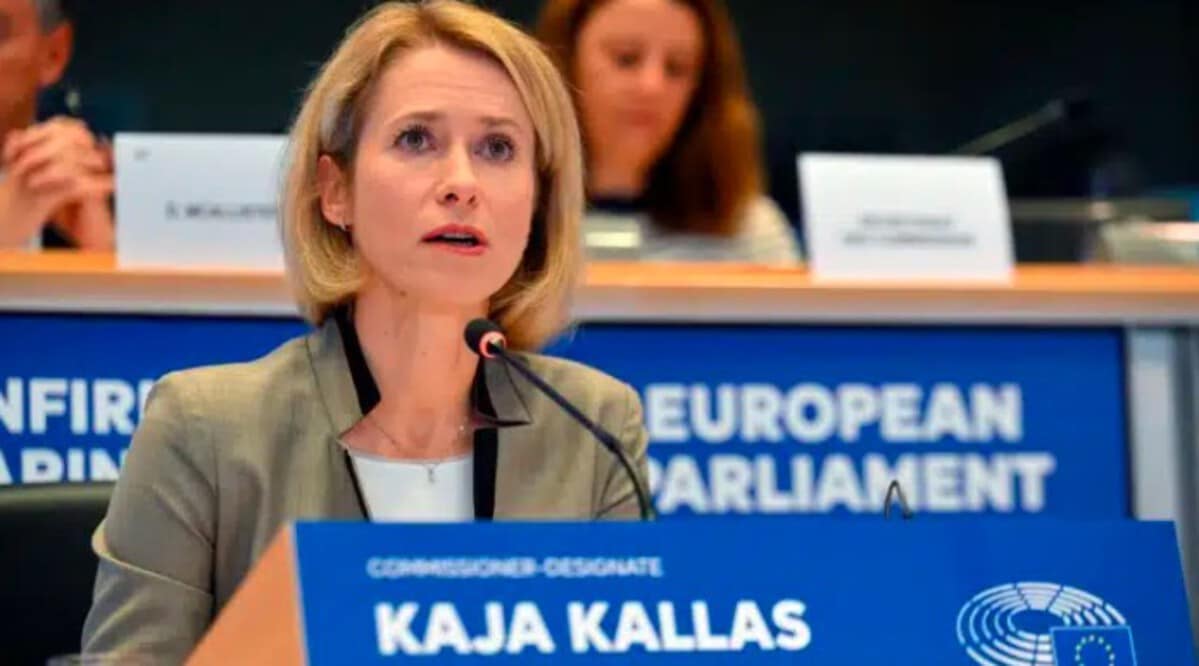
On Wednesday, April 15, 2026, the High Representative of the European Union, Kaja Kallas, arrived in Morocco for an official visit designed to solidify the diplomatic and economic ties between Rabat and Brussels. The visit coincides with the convening of the 15th EU-Morocco Association Council, a pivotal meeting aimed at recalibrating the bilateral relationship to meet the demands of a shifting global landscape.
Following the council’s deliberations, High Representative Kaja Kallas and the Moroccan Minister of Foreign Affairs, Nasser Bourita, issued a joint communiqué. The document emphasizes a commitment to reinforcing the EU-Morocco strategic partnership throughout 2026, specifically focusing on the necessity of a unified front against regional and global challenges. This high-level engagement underscores the importance Morocco holds as a key partner in the Mediterranean and African regions.
The current diplomatic momentum is built upon a foundation of “Advanced Status,” a designation that allows Morocco to engage in high-level political cooperation with the European Union. This relationship is primarily governed by the EU-Morocco association agreement of 2000, which serves as the legal bedrock for their cooperation across various sectors, including trade and political dialogue.
Strengthening the EU-Morocco Strategic Partnership for 2026
The primary objective of the 15th Association Council is to ensure that the partnership remains resilient in the face of geopolitical instability. By focusing on a strategic partnership for 2026, both parties are seeking to align their policies on security, stability and economic growth. The joint communiqué between Kallas and Bourita signals a desire to move beyond traditional cooperation toward a more integrated strategic alignment.
This alignment is particularly critical given Morocco’s role within the European Neighborhood Policy and the Union for the Mediterranean. The “Advanced Status” granted to Morocco distinguishes it among neighborhood countries, facilitating deeper integration and more streamlined political cooperation. This status is essential for managing shared interests in regional security and economic stability.
Digital Transformation and Research Cooperation
A significant portion of the current dialogue focuses on the “digital frontier.” The European Commission and the Kingdom of Morocco have recently launched a digital dialogue intended to strengthen cooperation in the tech sector. This effort was further bolstered by the participation of Executive Vice-President Henna Virkkunen at GITEX Africa, an event used to drive the digital agenda forward between the two entities.
Beyond digital infrastructure, the partnership is investing heavily in intellectual and scientific capital. The EU and Morocco have renewed the PRIMA agreement, which focuses on Mediterranean research cooperation. This renewal ensures that joint scientific efforts to address regional environmental and agricultural challenges continue without interruption.
the Delegation of the European Union to Morocco, in partnership with the European Investment Bank (EIB) and the Euro-Mediterranean University of Fez (UEMF), has launched the second edition of the “Students’ Innov’Up” hackathon. This initiative is specifically designed to encourage students and student-entrepreneurs to innovate and launch new ventures, bridging the gap between academic research and market application.
Addressing Migration, Mobility, and Social Justice
Migration remains a cornerstone of the Rabat-Brussels dialogue. The two parties are currently implementing the Programme de Soutien au Dialogue Afrique-UE sur la Migration et la Mobilité (MMD III), which seeks to create sustainable frameworks for migration and mobility between Africa and the European Union.
In addition to migration, the partnership is expanding its focus to include social and legal reforms. Recent activities have included seminars focused on women’s access to justice in Morocco, reviewing both the achievements and the remaining perspectives for improvement. On the development front, France and Morocco have jointly launched the THAMM+ programs, adding another layer of regional cooperation to the broader EU-Morocco framework.
Key Pillars of the Current EU-Morocco Framework
| Focus Area | Key Initiative/Agreement | Primary Objective |
|---|---|---|
| Diplomacy | 15th Association Council | Reinforcing strategic partnership for 2026 |
| Technology | Digital Dialogue / GITEX Africa | Strengthening digital cooperation and innovation |
| Research | PRIMA Agreement | Mediterranean research cooperation |
| Migration | MMD III Programme | Supporting Africa-EU dialogue on mobility |
| Entrepreneurship | Students’ Innov’Up | Encouraging student-led innovation |
The Institutional Backbone of the Relationship
The operational side of this partnership is managed by key diplomatic figures. The Mission of Morocco to the European Union is led by Ambassador Ahmed Reda Chami in Brussels, while the Delegation of the European Union to Morocco is headed by Ambassador Patricia Llombart Cussac in Rabat. These offices ensure that the high-level goals set by figures like Kaja Kallas and Nasser Bourita are translated into actionable policies.
Historically, the relationship has not been without friction. For instance, in February 2016, Morocco suspended contacts with the EU following a Court of Justice of the European Union decision regarding an agricultural agreement and its application to Western Sahara. However, the current trajectory of the “Advanced Status” and the 2026 strategic goals indicate a period of renewed commitment and diplomatic stabilization.
As the EU and Morocco move forward, the focus will likely remain on diversifying their cooperation—moving from traditional trade and security into the realms of green energy, digital governance, and youth-led entrepreneurship. These elements are seen as vital for the long-term stability of the Mediterranean basin.
The next confirmed checkpoint for this partnership will be the continued implementation of the goals outlined in the joint communiqué of April 15, 2026, as both parties work to operationalize the strategic priorities for the remainder of the year.
We invite our readers to share their perspectives on the evolving EU-Morocco partnership in the comments section below.